Lifestyle
- Details
- Lifestyle
A conversation with the barrier-breaking artist and label boss, plus the world premiere of his new multilingual banger.
In June of 2015, MTV Base Africa nominated Jovi for a Best Francophone award. That made him, a Cameroonian, a contender in a category reserved for artists from places that had been colonized by French-speaking countries. It’s an arbitrary, almost frustrating criterion when you consider that his “Anglophone” African counterparts were selected according to their style of music. Each year, similar pan-African music award shows roll into town only to flag up the same shortcomings of this homogenous approach to covering a continent whose regions, dialects, and musical subcultures are dizzyingly varied and interconnected.
Jovi’s “Zélé,” the climactic mid-point of his 2015 KORA-nominated sophomore album Mboko God, is like a snapshot of his nuanced aesthetic. Rhyming in Pidgin, French and English, Jovi hat-tips fellow Cameroonian Zele Le Bombardier, an artist who makes an intense strand of regional dance music called Bikutsi. The song is a rallying cry for a positive national self-regard in the face of economic hardships. Per Jovi’s trademark, it combines trap bass and heavy snares with traditional Cameroonian sounds. Jovi also works behind the boards, producing for the diverse roster at his trailblazing New Bell Music. He’s also been collaborating with world-renowned artists like Akon, whose latest “Shine The Light” he co-wrote and produced.
On a recent Friday, I spoke with Ndukong Godlove Nfor, aka Jovi Le Monstre, while he was enjoying some rare downtime in his apartment in the capital city of Douala. Several times during the interview, the phone connection cut out. As we alternated between his two lines, Nfor told me this type of thing is not uncommon, and apparently the electricity is equally erratic. But it's clear obstacles like that do little to douse his primary ambition: to lead his country back to its former artistic glory.
- Details
- thefader
- Hits: 4718
- Details
- Lifestyle
To the beat of African drums, a few dozen people gathered at Dallas City Hall Friday to officially kick off the three-day African Film Festival. The event showcases films made by Africans, as well as a few made by non-Africans about issues important to different regions of the continent.
City officials hailed the new festival as an expression of the increasing ethnic and cultural diversity in Texas’ second-largest city.
Regina Hill Onyeibe, the Africa Liaison for the City of Dallas praised the film festival’s organizer and founder, filmmaker Kelechi Eke, not only for bringing this event to Dallas, but for providing an audience for Africans making movies.
She said he had created “a portal in which other Africans can follow their dreams of telling their stories.”
In a VOA interview, Eke, an immigrant from Nigeria with connections to that nation’s film industry, said his idea was to encourage African filmmakers and to present a true picture of Africa and Africans to counter the distorted image often created in mainstream commercial films.
“We wanted to incorporate our culture and our films and share it with the rest of the world and why not Dallas?” he said.
Eke said other Africa film festivals in the United States tended to either showcase Hollywood films about Africa or films made by African Americans. This festival, he said, is centered on Africa, with films that tell deeply rooted cultural stories, as well as spotlighting problems facing many parts of the continent.
An example of the latter is a documentary from Nigeria called “Nowhere to Run,” which shows the shocking effects of environmental damage and global warming on Nigeria. With stunning cinematography, the film shows the destruction of coastal mangroves caused by chemical leaks from oil and gas production, the flooding of some coastal communities caused by rising sea levels, and the decreased size of Lake Chad caused largely by overuse of its water for agriculture.
Another documentary, from Sierra Leone, called “Killa Dizeez,” recounts the toll taken by Ebola during the recent epidemic in Western Africa.
Wide range of topics
There are more than 40 films in the African Film Festival program, most of which are narrative films concerning such things as domestic discord, women’s rights and the troubles of migrant workers. Most are from sub-Saharan Africa, but there is also a film from Egypt and films with connections to Spain, Australia and the United States.
Nigeria, the best represented nation in the festival with 12 films, is home to the so-called Nollywood film industry, the most prolific in Africa. Its narrative films cover a broad spectrum of life in that country, from a man’s obsession with a film star, to the plight of a young woman trapped in a marriage that shatters her dreams of becoming a doctor.
Cameroon is also well represented, with nine films being screened. One film, “Ben and Ara,” tells the story of an agnostic graduate student who falls in love with a woman who is a devout Muslim. Another, “People at Sea,” tells the story of a coastal community moved by the government to an urban center and their struggle to adapt.
Ethiopia's four films includes "Two Zions," which is about the country’s connection with Judaism.
Other African nations represented in the festival include Tanzania, Guinea-Bissau, South Africa, Ghana, Gambia, Uganda and Burkina Faso.
Attracts locals and non-locals
The African Film Festival has drawn support from many of the Africans who live in the Dallas-Fort Worth area of north Texas, which is home to a large share of the 134,000 immigrants from Africa in the Lone Star state, as well as an even larger group of people born in the United States who have at least one African parent.
Non-African residents have also shown interest. BJ Jackson came to the first night of screenings with a friend.
“I think it is really great,” she said. “We have not seen anything like this before, so it was kind of educational for us and we have enjoyed it.”
Historic theater
Most of the screenings are at the historic Texas Theater, best known for having been the place where police arrested Lee Harvey Oswald after he assassinated President John F Kennedy and killed a police officer on November 22, 1963.Over the years since, the neighborhood has gone through changes, but the theater has remained, with its classic exterior preserved thanks to wealthy contributors who wanted it to remain open as a venue for cultural events like the African Film Festival.
- Details
- Rita Akana
- Hits: 4559
- Details
- Lifestyle
US HIP HOP Star 50 Cent, known for poetic lyrics like “you know we don’t give a f**k it’s not your birthday,” was arrested for using indecent language after a performance at the St. Kitts Music Festival in the Caribbean on Saturday night. (A question for the festival organizers: Have you ever listened to a 50 Cent song?)
The 40-year-old rapper, whose real name is Curtis Jackson, and a member of his entourage, Bajar Walter, were “arrested, formally charged and cautioned” for the performance, according a post on the local police force’s Facebook page.
According to a statement The Huffington Post obtained from 50 Cent’s representation, the word that landed him in trouble was “motherf**king,” which he raps in his song, “P.I.M.P.”
- Details
- Rita Akana
- Hits: 4523
- Details
- Lifestyle
The Court case against Cameroon music icon Ferdinand Din Din aka Papillon has been postponed to a later date. The case at the Bonanjo Court of Appeal is between Zakaria Abakar Terio a Tchadian citizen with perminent residence in Douala vs Marechal Papillon.
The case has been adjourned to August 16 following second hearing on June 21,2016. Papillon is accused of impersonation and extortion of money (500,000)from the man who was in dispute with another.
Le Messager reports that Papillon posed as a police Commissioner and promised to take the matter to the courts, but it turned out to be the contrary.He was a fake commissioner . The Story has been on for over a period of three years now. Mota Nguigna was sentenced to four months imprisonment in 2015 but he presented guarantees according to Le Messager which kept him out of prison.
- Details
- Prince Nfor Hanson
- Hits: 4337
- Details
- Lifestyle
When you listen to the X- Maleya music, you connect because they base their music on social issues, love, compassion, and friendship. X- Maleya music instantly connects, inspires and empowers.
The group has the knowledge in traditional African music, jazz, soul, reggae, electro and funk rhythms. For the past 10 years X- Maleya has collaborated with top innovators across a wide spectrum of the entertainment field. They have gone on to share stages with notable musicians such as Manu Dibango, J Martins, Magic System, Wayne Beckford, Passi, Patience Dabany Innoss B, Petit Pays. The integration of their ancestry and elements from modern western music is what makes X – Maleya so extraordinary.Roger’s secret weapon is his impressive singing voice. His vocal vocal range is evident in most of their songs.Auguste magical’s touch makes it even incredible and irresistible. Hais’s main talent lies in the realm of rapping. With “Yelele”, “Tchokolo”, “Bouge” or “Son Me”, X- Maleya has helped revitalize the Cameroonian music nationally and internationally. They have succeeded to inspire the next generation of talented young Cameroonian artists.
The X- Maleya USA Dream Tour, presented by J & R Music and Arts Production launches on August 28th, 2016 with 7 shows throughout North America includes dates in Silver Spring, Maryland, Chicago, IL, Atlanta, GA, Houston TX, New York City, Montreal and Toronto.
Tickets for all North American dates go on sales Thursday, June 30, 2016 at LiveNation.com.
Camernews
- Details
- Rita Akana
- Hits: 4555
EditorialView all
- Details
- Editorial
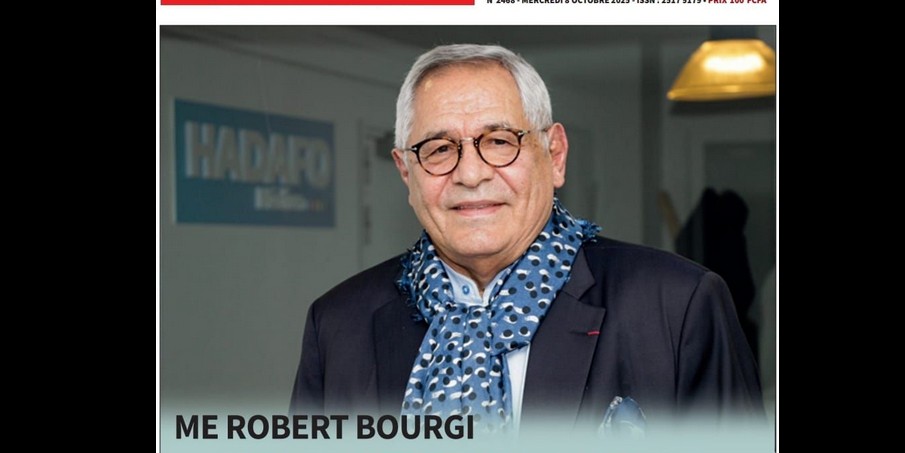
Robert Bourgi Turns on Paul Biya, Declares Him a Political Corpse
- News Team
- 10.Oct.2025
- Details
- Editorial
Heat in Maroua: What Biya’s Return Really Signals
- News Team
- 08.Oct.2025
- Details
- Editorial
Issa Tchiroma: Charles Mambo’s “Change Candidate” for Cameroon
- News Team
- 11.Sep.2025
- Details
- Editorial