Headlines
- Details
- Headlines
Professor Tazoacha Asonganyi had a PhD in Biochemistry since 1980 from the University of London (UK). He did his PhD research in a Laboratory at Gower’s Street a few meters from Dillon’s Bookshop London, which he visited nearly every day. During the same period he also worked with an Africanist Community Group (“Headstart Books & Crafts” London N15) which dealt in books on the history of peoples of African origin.
These two contacts with book in domains outside his area of specialization caused a profound change in his education, influenced principally, as he says, by Cheikh Anta Diop whose books and many others with the same thrust he read during that time.
He has taught in the Faculty of Medicine and Biomedical Sciences of the University of Yaoundé 1 since 1985, training medical students for over 30 years. He is a Visiting Professor to some Universities outside of Cameroon. He has published some 90 peer-reviewed articles and still publishing.
His scientific research interests are in Sleeping sickness/Trypanosomiasis, River blindness/Onchocerciasis, HIV/AIDS.
At the early onset of partisan politics in Cameroon he emerged and became Secretary General of the SDF, 1994-2005, He then became the Permanent Secretary of the opposition CNRR in 2004.
He parted ways with the SDF in 2006. Since then, he has published over 100 articles in Newspapers and other media analyzing the political situation in Cameroon and African countries.
He has observed elections for the Carter Center (USA) in Ghana, and for the National Democratic Institute (NDI) of Washington DC in Nigeria
- Details
- Tapang Ivo
- Hits: 2241
- Details
- Headlines
Many migrants from Africa do not know what awaits them in Europe. Upon arrival they are faced with the bitter reality that Europe is not paradise. Some opt to return home and try to make it there after all.
The vast majority of migrants from sub-Saharan Africa are trying to escape poverty, unemployment and food insecurity. The warmer weather and calmer seas of summer result in a surge in the number of asylum seekers putting their lives at risk while attempting to cross the Mediterranean Sea by boat. When the European dream does not turn out as expected for those who survive the trip, some opt to make a U-turn and return home.
Mantany Dieye from Senegal is one of those who decided to return. He spent 11 years living in Spain as an illegal immigrant. While there, he sold cheap knock-off watches and bags on the beaches for a living. He returned to Senegal six months ago through a voluntary repatriation scheme. Dieye, now 46, received a small grant to set up a grocery business in one of Dakar's markets. He told DW he had left at the end of 2005 to go to Europe to be able to find work to feed his family. " I knew no one and I didn't know where I was going. I left by boat. I don't know where the boat left from, I didn't know Dakar, they just told me we were going to Spain," Dieye said.
Hopes dashed
As a young man living in northern Senegal, he thought travelling to Europe by boat was his only way to secure a better future.
"I thought it was paradise there because when you work you get paid. But with the financial crisis it wasn't like that. I was an illegal, I had nothing. I tell those who plan to leave that they should stay here and find a solution here. But it's so hard here that they don't believe me," he said.
Like many others, Dieye saved as much as could for 10 years until he had 800 euros ($887) that would buy him a sea crossing to Spain. It took him and 95 others seven days to reach Spain's Canary Islands. Those planning to travel to Europe often keep it secret. Dieye did the same, "I didn't tell anyone that I was leaving," he said. "My wife wouldn't have let me go. I didn't want my family to sense what I was going to do, they would have stopped me. I called them once I arrived. They cried because they didn't want me to go." In Spain Dieye lived in a cramped four-room apartment with seven other Senegalese. After deciding to return to Senegal, Dieye approached the repatriation operation jointly organized by the International Organisation for Migration (IOM) and the Senegalese government, who flew him back.
Today, he says it was the best decision he had ever made. "I am never going back, I'm done. Every day over there I was suffering. I regret going and leaving my wife for 11 years. What I thought I would make working in Europe I never made - I had no money and the work was hard."
Patrols have now been put in place to stop boats leaving from the coast of Senegal, so would-be migrants now travel overland. The IOM puts the number of Senegalese who reached the Mediterranean coast in 2015 at 5,000.
Little help for returnees
According to Jo-Lind Roberts-Sene, country director for IOM in Senegal, "There's a slight increase of Senegalese arrivals in Italy. The increase has been sort of gradual from 2014 onwards. The route has very much changed. 10 years ago it was almost only by sea, attempting to reach the Canary Islands, and now it's very much Senegalese leaving from Senegal over to Niger and Burkina Faso and then going up towards Libya. The sea route is now unused." Since the beginning of this year, more than 2,500 Senegalese made it to detention centers in Italy, but for thousands of others the journey stops in Libya. Some then opt to go back home. A handful of migrants receive financial support from the IOM. Roberts-Sene said that the beneficiaries of this program often turn to IOM as the last resort.
Back in Dakar, returnees are given just a sandwich and 150 euros in aid from the government. Boubacar Seye, president of the organization Horizon Sans Frontiere, says this is deplorable. Speaking to DW, Seye said that, "Today there is a need to create training and job opportunities to retain these young people through a strategic approach. But all that suits them here is when they get a call from Europe to give them funds to fight illegal immigration. These funds do not benefit those who need to be helped. And this is where we call for these funds to be audited because if there is no monitoring, then it's absolutely useless."
Since the beginning of 2015, Senegal has repatriated more than a thousand migrants. In Europe, the migration crisis has caused significant political rifts within and between the countries most affected. Some have put up fences and re-imposed border controls.
DW
- Details
- Rita Akana
- Hits: 2455
- Details
- Headlines
Cooperation between Cameroon and the United States was again balanced on the scale yesterday, June 30, during a one-hour audience; the Head of State President Paul Biya accorded the U.S Ambassador, Michael Hoza. The meeting which stretched from 12 noon to 1pm was occasion for President Biya and Michael Hoza to renew the commitment of the two countries to fight terrorism in the Far North Region and to take the fight right to the end.
“As I have said before, Boko Haram is more dangerous than ever. We have had some success but the fight continues”, Hoza told pressmen after the audience. The United States which has so far supported Cameroon as well as the establishment of the Multinational Joint Task Force (MNJTF) and which is actively partnering with the MNJTF signatory countries (Cameroon, Chad, Niger, Nigeria, and Benin) in their counter Boko Haram efforts by providing advisors, intelligence, training, logistical support and equipment is visibly determined to provide additional support in the same vein. “We spoke about expanding cooperation between our two countries notably security services and also additional support for the Cameroon military in terms of equipment and training, the details of which will become evident in future”, Michael Hoza said.
Cameroon it should be recalled has been quite appreciative of the support the United States has been sending in to help in the fight against the terrorist group. Memories are still fresh on the 300 American troops sent to Cameroon along with surveillance drones to bolster effort to counter the insurgents. The troops have been assigned by the American government to conduct airborne intelligence, surveillance, and reconnaissance operations in the areas targeted by Boko Haram. In spite of the positive results registered so far, the U.S government wants to go the extra mile to ensure that the war is fully won. Without giving further details, the American diplomat sounded assuring in the following conclusive words, “rest assured that our cooperation is growing.”
Cameroon Tribune
- Details
- Rita Akana
- Hits: 2556
- Details
- Headlines
In April, when Ms Power was travelling near the remote, northern Cameroon city of Mokolo, an armoured jeep in her caravan struck a 7-year-old at high speed after he darted into the road. Birwe Toussem was killed instantly.
Ms Power, who was at that time visiting the front lines in the war against Boko Haram, returned later that day for a tense and emotionally fraught gathering with Birwe’s family and community members. She promised to compensate them for their loss.
US state department officials said the cash payment was 1 million Central African francs, roughlyDh6,250. Cameroon’s GDP per person is about Dh4,800.
Cameroon’s government, aid organisations operating in the area and the UN — which also had officials in the convoy — contributed another 5 million francs, bringing the total cash payout to more thanDh36,700.
In addition to money, officials said the US government provided a pair of cows; hundreds of kilograms of flour, onions, rice, salt and sugar; and cartons of soap and oil. Still to come is a well that will provide the village with fresh drinking water.
State department spokesman Jeffrey Loree called it a “compensation package commensurate with local custom, as well as the needs of the family and village".
“This package included a potable water well in the boy’s community that will serve as a lasting memory and some monetary, food, and other support," Mr Loree said. “US diplomats have visited the family on several occasions following the accident and will continue to provide all support possible."
Ms Power was on the first leg of a week-long trip through West African countries bearing the scars of Boko Haram’s insurgency. Travelling through territory that had witnessed previous Boko Haram attacks, Ms Power’s motorcade was moving at a fast clip, at times exceeding 60mph. Villagers lined up along the sides of the road to greet the ambassador as US and Cameroonian special forces ensured her security.
But when Birwe darted onto the two-lane motorway, perhaps distracted by a Cameroonian helicopter monitoring overhead, there was no time for the sixth vehicle in Power’s convoy to react.
The vehicle that hit the boy initially stopped, only to be ordered by American security forces to continue travelling through the unsecured area. An ambulance in the caravan immediately attended to Birwe, though it was apparent his condition was hopeless.
AP
- Details
- Rita Akana
- Hits: 1925
- Details
- Headlines
The newly proposed Cameroonian PENAL Code has been adopted by CPDM Senators at the Cameroon's National Assembly with the main opposition party (SDF)Senators walking out on Tuesday June 28,2016. The law was adopted 3 hours, 7 minutes behind schedule. The President of the Senate Niat Marcel is reported to have been called at the presidency where he spent much time. According to Equinoxe radio.
Justice Minister was Stranded at the senate as he also had to hold talks with the Senate president who at that time was still at the presidency of the Republic. After lengthy discussions with the President of the Republic,Cameroon's Senate Boss had a one to one close door meeting with Justice Minister Laurent Esso before adopting the bill.
At the Bar council meeting in Douala on Tuesday 28 June 2016,Cameroonian lawyers stated that, "the draft Penal Code submitted to Parliament is different in several points to the draft discussed in back in December of 2011". The Cameroonian lawyers association further lays as rejection the fact that the new amendmends in the bill gives privileges to the rich and powerful over the weak and poor, including the criminalization of non-payment of rents .
BAR COUNCIL STANDS FIRM
The Bar Council holding an extra ordinary session in Douala Tuesday with presence of former Batoniers, president of General Assembly. The Bar president Barrister Jackson Gnie Kamga says because :
A. The PENAL Code presented violates international conventions.
B. The PENAL Code is different from what was presented to the Bar in December 2011.
C.The new PENAL CODE has discriminatory justice.
D. Puts national cohesion in peril
E. Jeopardizes the bi cultural nature with wrong translation and interpretation.
F. Does not condemn illicit enrichment and does not reinforce article 66 of the Constitution on declaration of assets.
The Bar has called on the president not to promulgate the PENAL Code into law without sending back to the National Assembly for correction. The lawyers will forward their decision to the presidency.
- Details
- Prince Nfor Hanson
- Hits: 2446
- Details
- Headlines
The first ordinary session of the National Decentralisation Council for the year 2016 opened at the Prime Ministers Office in Yaounde on Tuesday, June 28, 2016. The session was chaired by the Prime Minister, Philemon Yang. The Decentralisation Council brought together members of government, parliament, local magistrates, representatives of the Economic and Social Council and civil society.
The National Decentralization Council is responsible for monitoring, evaluating and implementing the decentralization process in Cameroon.
- Details
- Rita Akana
- Hits: 1827
Breaking News Article Count: 2
# Breaking News
Get the latest and most urgent news from Cameroon and the world with our breaking news section. We deliver you the news as it happens, with live updates, alerts, and analysis. You'll find out about the major events and incidents that affect Cameroon and its people, such as conflicts, disasters, elections, and protests. Our breaking news section also provides you with the reactions and responses from the authorities, experts, and the public. Stay tuned and stay informed with our breaking news section.
Out of Cameroon Article Count: 10
# Top Stories out of Cameroon
Don't miss the most important and trending news out of Cameroon and beyond Africa with our top stories section. We bring you the latest and breaking news from various domains, such as politics, economy, health, security, and diplomacy. You'll also find exclusive reports, investigations, and features that showcase the diversity and challenges of Cameroonians in the diaspora. Our top stories section is updated regularly to keep you informed and aware of the current affairs and developments in the world.
Local News
- Details
- Society

Kribi II: Man Caught Allegedly Abusing Child
- News Team
- 14.Sep.2025
- Details
- Society

Back to School 2025/2026 – Spotlight on Bamenda & Nkambe
- News Team
- 08.Sep.2025
- Details
- Society

Cameroon 2025: From Kamto to Biya: Longue Longue’s political flip shocks supporters
- News Team
- 08.Sep.2025
- Details
- Society

Meiganga bus crash spotlights Cameroon’s road safety crisis
- News Team
- 05.Sep.2025
EditorialView all
- Details
- Editorial
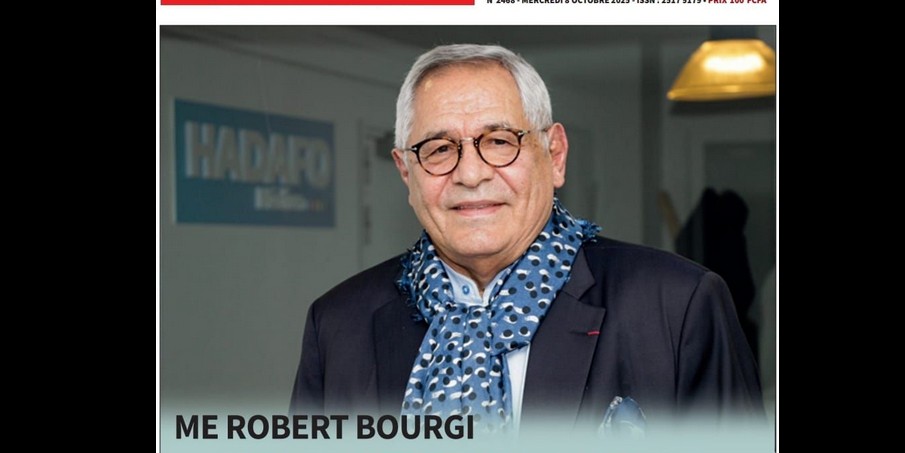
Robert Bourgi Turns on Paul Biya, Declares Him a Political Corpse
- News Team
- 10.Oct.2025
- Details
- Editorial
Heat in Maroua: What Biya’s Return Really Signals
- News Team
- 08.Oct.2025
- Details
- Editorial

Issa Tchiroma: Charles Mambo’s “Change Candidate” for Cameroon
- News Team
- 11.Sep.2025
- Details
- Editorial


