Headlines
- Details
- Headlines
YAOUNDE, CAMEROON—
Cameroon's government is working to stop the trafficking of young women to the Middle East. The government says hundreds of women and girls have been lured to Kuwait, the United Arab Emirates and other countries in the past five years.
Several students stand at the entrance to the University of Yaounde. They read posters advertising jobs in Kuwait, Qatar, Lebanon and the United Arab Emirates. The ads promise monthly salaries of up to $700.
"If I work for a year, I will be able to save 3.6 million francs so I am ready to sacrifice five years before I return to create a business back here," said Carole Yemngang, a 19-year-old student. "Why should I continue with my studies when thousands of others graduate and are never recruited?"
VOA called the number listed on a poster offering jobs of sales agents, nurses and teachers.
"Everybody who comes will never regret because the opportunities are good…”
The man declined to give his name. VOA went to the address he indicated but was told the company had moved.
Police said the phone number belongs to a Cameroonian under investigation as a middle man for traffickers.
Many of the women go to Kuwait, like 30-year-old Pauline Manyi.
She says her father had died and she was looking for a better life, an adventure. She says she was told Arabs needed translators from the English to the French and vice versa.
Instead she says her passport was taken and she was sold to a family where she was raped and forced to do housework.
Another woman, 24-year-old Kebam Eucharia, just returned to Cameroon in April.
She says her family had borrowed money to send her to Kuwait to work but she was sold to a man at the airport when she arrived.
“I had no rest, working round the clock," ssaid Eucharia. "I will finish work around 3 o'clock in the night. There is no food. Then the next morning, they come and wake me up at six o'clock. They say yela, get up. Start your work. The only thing they give you as food is one of their bread and a small cup of tea. That is it for the whole day.”
Both women escaped and made it to the embassy of the Central African Republic in Kuwait City to phone their families.
In April, Cameroon appointed its first ever ambassador to Kuwait and Qatar and announced that it will soon open its own embassy in Kuwait City. Families of trafficked women told VOA they hope the diplomatic presence will make it easier to intervene.
Lawmakers and journalists brought the matter up with a Kuwaiti parliamentary delegation that visited Yaounde in March. The delegation said they would investigate but that it was not the purpose of their visit.
Cameroonian airport authorities now screen women and girls heading to the Middle East.
Francisca Awah is president of the Association Against Human Trafficking.
"Since they have blocked the girls from going to Kuwait from all international airports in Cameroon, they pass through Nigeria to go to Kuwait. So that is the new means. They are still going and most of them go there to be prostitutes," Awah said.
Awah and other survivors give talks at schools and universities warning of the dangers of trafficking. They told their stories on state radio and television April 21st.
The next day, VOA returned to the university to find that the posters advertising jobs in the Middle East had been pulled down.
voa
- Details
- Elangwe Pauline
- Hits: 3528
- Details
- Headlines
The Yaounde-based Special Criminal Court, SCC, on Monday, April 25, 2016, sentenced Yves Michel Fotso to life imprisonment for embezzling 32.4 Billion FCFA during his tenure as General Manager of the defunct national carrier, Cameroon Airlines, Camair. The ruling was for the second of two matters for which Fotso is standing trial at the SCC. Fotso was also fined 19 Billion FCFA for the financial losses caused Camair as a result of the embezzlement. Also, money in about 15 frozen Fotso bank accounts was confiscated.
The ruling, just like recent court sittings, took place in the absence of Yves Michel Fotso and all his five counsel. The lawyers wrote to the court last February to announce their withdrawal from the trial, alleging unfair hearing. Their decision came after Fotso wrote to the SCC to announce that he will no longer appear in court because the trial was being conducted in a biased manner.
The judgement was delivered by a trial team headed by Mrs. Justice Virginie Eloundou, assisted by Mrs. Justice Siewe Yvette and Mrs. Justice Hayatou Zakiatou. The Advocates General were Mr. Justice Tagim and Mr. Justice Omam Fils. Earlier, after declaring Yves Michel Fotso guilty of embezzlement, Advocate General Omam Fils asked for the maximum jail term for the accused and the confiscation of his seized property and frozen bank accounts.
Counsel for the State, Barrister Sama Francis Asanga, supported the position of Mr. Justice Omam Fils, but also requested commensurate losses for his client caused by the embezzlement. Barrister Ngongo Ottou, lawyer for Camair Liquidation, asked for losses equivalent to 6 per cent annual interest on the embezzled amount of 34.4 Billion from 2010 to 2016. He also demanded 500 Million FCFA as cost for moral losses caused the Camair Liquidation Committee.
Prior to Monday’s sentence, Yves Michel Fotso was already serving a 25-year jail term for alongside others, embezzling about 21 Billion FCFA meant for the purchase of a presidential aircraft, the Bbjet 2. They were sentenced on September 12, 2012 by the Mfoundi High Court in Yaounde.
Cameroon Tribune
- Details
- Elangwe Pauline
- Hits: 3070
- Details
- Headlines
Presidential planes are one of the perks of holding a country’s top post. In Africa, the relationship between some leaders and their aerial fleets can serve as a manual on how power is wielded – and often abused.
The US president has “Air Force One” – or more specifically, two customised Boeing 747-200B aircraft fitted with secure communications equipment, a large office, a conference room and a medical suite that can function as an operating room. In Africa, the fleet of presidential planes is diverse, as one might expect. Ivorian President Alassane Ouattara, for instance, has not less than ten airplanes in his presidential fleet. On the other hand, some African leaders – such as Cameroon’s Paul Biya – prefer to charter luxury planes.
Behind a number of these presidential planes lie stories that provide insight into how power is wielded on the African continent.
In a recent cover story on African presidential planes, “La Lettre du Continent,” a respected French bimonthly, examines the relationship between some African leaders and their magnificent flying machines."The plane [is a] symbol of sovereignty, of power," noted the journal. “But not all presidents are traveling under the same flagship."
As the leader of the cocoa-rich, West African economic powerhouse Ivory Coast, Ouattara tops the regional list of presidential aerial dominance with his 10 aircraft. Chad’s Idriss Deby, in contrast, has only four presidential planes – a Boeing Business Jet, a Gulfstream II, a Beechcraft 1900 and a Fokker.
But it's not just the number of aircraft in a presidential fleet that matter. The real story often has more to do with how these multi-million dollar flying machines are acquired, abandoned or upgraded.
Zuma’s ‘gravy plane’
The fracas around South African President Jacob Zuma’s bid to acquire a luxury presidential jet never seems to end.
Earlier this month, stories of the new presidential jet found their way into local news again after it emerged that around 800 South African peacekeeping troops in Darfur, Sudan, had been stranded as the military scrambled to bring them home. The problem, according to local reports, was the military’s “unoperational” C130 heavy-lift aircraft. As an editorial in South African daily “The Times”, noted, “Finding the money to replace the ageing C130 fleet has to take precedence over vanity projects such as buying a new presidential jet.”
Zuma’s predilection for luxury – including opulent private residential upgrades – is well known and comes at a time when budgets are being slashed and students have been protesting fee hikes.
Given the circumstances, his administration’s bid to acquire a new presidential jet with a long-haul fuel range of 13,800 kilometers complete with a luxury bedroom suite and a conference room was not about to go down well with the opposition.
Sure enough, the estimated bill of around $280 million sparked howls of protest and calls to scrap the new aerial acquisition plan.
South Africa’s Defense Department, however, argues that the current presidential plane – a Boeing 737 called “Inkwazi” after the Zulu word for the African fish eagle – is outdated and has been grounded a number of times due to mechanical problems.
The continuing furore has sometimes left South African authorities with a myriad of bad choices. When Deputy President Cyril Ramaphosa had to visit Japan in November, for instance, the military had to choose between chartering a plane from companies associated with corruption scandals, arms manufacturing or colonial-era exploitative mining. It looks as though Zuma’s bid to get on a gravy plane does have some merit. But the problem seems to be the price of the fixtures.
Issoufou of Niger gets a ‘prestige purchase’
The opposition does not count for much in Niger, one of the world’s poorest countries, which consistently ranks at the bottom of the UN Human Development Index. Earlier this year, President Mahamadou Issoufou was sworn in for a second term in office following an election boycotted by the opposition.
But back in 2014, when Issoufou announced the acquisition of a $40 million Boeing 737-700 to replace the existing presidential jet, it sparked howls of protest from the opposition.
"With our country facing a new famine and with further serious flooding this year, the state decides to spend billions [of CFA or Central African Francs] on a prestige purchase," Ousseini Salatou, spokesman for the Nigerien opposition coalition, told reporters.
By then of course, it was already too late.
Defending the purchase, then Defense Minister Karidjo Mahamadou said the new presidential jet would help improve “the influence of our illustrious republic”.
Meanwhile the old presidential jet – a Boeing 737 bought in the 1970s by former president Seyni Kountche – remains in service despite one aviation expert likening it to “a flying coffin”.
But that’s an analogy that was also used in Cameroon – to disastrous effect.
Cameroon’s tale of aerial greed and intrigue
The acquisition of pricey presidential planes in a continent dogged by poverty and corruption is bound to kick off an occasional stir. But few aerial controversies come close to the Cameroonian experience in terms of sheer intrigue, greed, paranoia and retribution.
It all began in 2001, when longstanding Cameroonian President Paul Biya decided he wanted a new plane to replace the existing presidential plane – called “the Pelican” – for his personal and official trips. But the impoverished West African nation at that time was trying to reduce its debt under a World Bank and IMF programme. The bill for a Boeing Business Jet class aircraft was not going to pass muster with the international financial institutions.
So, the country’s elites came up with a strategy to appease their “Big Man”.
The aircraft would be bought by the country’s national carrier, Camair. A financial package was duly set up, with the money – $33 million – coming from the National Oil Corporation, known by its French acronym, SNH.
Three years later, with the jet duly delivered, Biya – along with First Lady Chantal and the couple’s children – boarded the new presidential plane for an inaugural flight bound for Geneva. But the aircraft developed technical problems and had to make an emergency landing in the Cameroonian port city of Douala.
The saga of the Albatross, as the plane was called, had just begun.
The plane Biya and his family had boarded turned out not to be new at all. Through a series of intermediaries and shady negotiations, the Cameroonian state had merely leased the Albatross, an old Boeing 767-212. And the $33 million coughed up for a spanking new presidential plane had disappeared.
A darker chapter began shortly after that doomed April 24, 2004 "inaugural" flight of the presidential plane. Was the acquisition – or rather non-acquisition – of the faulty aircraft part of a grand plot to overthrow or bump off the president?
“The Albatross Affair” – as the scandal came to be called – suddenly had all the elements of a high-profile murder plot. Ministers – who also happened to be threats to Biya’s grip on power – were arrested in succession and thrown into the high-security Kondengui prison in the Cameroonian capital of Yaounde.
The senior officials in jail included a politician a 2007 WikiLeaks cable revealed to be the man favoured by the US, France, and other Western diplomats to lead the country. Some in Yaounde joked that there were enough top politicians in the country’s high security jail to form a parallel government in Kondengui.
Since then, La Lettre du Continent notes, Biya has "not dared" buy a presidential plane. The Cameroonian strongman instead relies on luxury private charter jets to ferry him back and forth from Cameroon to Europe. This happens alarmingly often since the octogenarian leader spends extended periods living in a Swiss hotel, which has earned him the moniker “the absentee landlord” in diplomatic circles.
A presidential plane waiting to be used
Sometimes intrigue and presidential planes go hand in hand and one of Africa’s newest leaders is apparently not above the fray.
Benin’s President Patrice Talon – a tycoon-turned-politician who was sworn into office on April 6 – is not enthusiastic about using the country’s new presidential plane, according to La Lettre du Continent.
The jet, a Boeing 737, was ordered by Talon’s predecessor and arch rival, Boni Yayi and delivered just 24 hours before the new president was sworn in.
According to the French bimonthly, Talon has requested a technical investigation of the aircraft.
But the paranoia between Talon and Yayi runs both ways. In 2013, the current Beninese president was accused of trying to poison his predecessor. Talon was forced to flee Benin for France, where he stayed until a presidential pardon was issued a year later.
Under the circumstances, Talon probably has good reason to be suspicious. Meanwhile, the spanking-new Boeing 737 lies waiting to be used.
Goodbye ‘La Pointe de Sangomar’
In Senegal, the saga of the presidential aircraft dubbed “La Pointe de Sangomar” [a narrow sandbar in the Atlantic Ocean west of Senegal] finally ended in June 2014, when President Macky Sall donated the plane to the country’s air force after failing to find a buyer.
A Boeing 727-2M1 fitted with a private bedroom, a shower as well as presidential and ministerial meeting rooms, “La Pointe de Sangomar” served three presidents – including Senegal’s founding father, Leopold Sedar Senghor, and his successors, Abdou Diouf and Abdoulaye Wade.
The controversy around “La Pointe de Sangomar” erupted during Wade’s last term in office, when the increasingly unpopular octogenarian leader announced his plan to buy a new presidential carrier, arguing that “La Pointe de Sangomar” was outdated and frequently ran into mechanical problems.
Wade replaced the presidential aircraft with a new Airbus 319 christened “La Pointe de Sahel” in 2011, sparking an outcry, with opposition leaders noting that the $43 million for the new acquisition was not authorised in the country’s budget.
Two years later, Wade’s successor Sall came to power. After several unsuccessful bids to sell the “La Pointe de Sangomar”, the aging presidential plane was finally donated to the Senegalese Air Force. The aircraft is expected to spend its last days in an army museum, where the exhibits include three presidential limousines.
France24
- Details
- Elangwe Pauline
- Hits: 3612
- Details
- Headlines
Congo:President Denis Sassou Nguesso names former finance minister Clement Mouamba as prime minister
Congo's President Denis Sassou Nguesso named former finance minister Clement Mouamba as prime minister, bringing a one-time opposition leader into the government, state television said on Saturday.
The appointment comes a month after Sassou Nguesso was elected to a five-year term that extends his long rule over the oil producing country. Sassou Nguesso led Congo between 1979 and 1992 and returned to power after a civil war in 1997.
Mouamba was a senior member of the Pan-African Union for Social Democracy (UPADS) but was expelled from the opposition party for participating in consultations that preceded a referendum last October on changing the constitution to allow Sassou Nguesso to serve a third term.
"I have no complex about coming to greet the head of state, the head of the village. Whatever the nature of the problems, I take responsibility for what I have done," he said at the time.
The central African country has been gripped by political violence since the election. Human rights group Amnesty International said on Monday the government bombed residential areas in the country's south, reportedly killing at least 30 people.
There was no immediate comment from the government, which has in the past denied targeting civilians.
Reuters
- Details
- Elangwe Pauline
- Hits: 2877
- Details
- Headlines
President Teodoro Obiang Nguema has ruled Equatorial Guinea for almost 37 years, longer than any African head of state. Elections on April 24 will likely secure him another seven year term in office.
Even on the darkest nights, gas flames can be seen from miles away. Punta Europa is one of the largest oil fields in Equatorial Guinea. It's situated in the north of Bioko Island, 200 kilometers away from the mainland on central Africa's western coast. The island is also home to the nation's capital, Malabo. The country is dripping with oil and gas wealth. According to the World Bank, the average income per capita is more than $23,000 per year (20,000 euros). That's ten times what the average Tanzanian or Senegalese earns – it's a figure comparable with the average yearly earnings in a European country such as Hungary.
But the gas flames burning in the distance are all most Equatorial Guineans see of the country's wealth from natural resources. "There's a lack of hospitals, education is poor, and the majority of the population can only dream of having electricity and running water in their homes," says Tutu Alicante. The lawyer has spent years fighting for human rights in his homeland with his US-based NGO, EG Justice.
Opposition: intimidated, powerless
Equatorial Guinea's president Teodoro Obiang Nguema is Africa's longest serving leader. He has been in office since August 3, 1979, the day he overthrew his uncle Francisco Macías Nguema in coup ending a regime of terror and sending the former leader to his death. But those hoping Teodoro Obiang Nguema would bring democracy to the country were quickly disappointed. The new president put a stop to the public executions commonplace under his uncle's regime. But human rights organizations like Amnesty International continue to accuse the country of routine torture and the arbitrary detention of government critics.
At the last elections in 2009, Teodoro Obiang Nguema won 97 percent of the vote, securing another seven year term in office. His party PDGE regularly wins parliamentary votes with a similar majority, always falling just short of 100 percent. There are only two members of the opposition in the country's parliament: one in the Senate and one in the Chamber of Deputies.
"Equatorial Guinea has a long history of manipulating elections," says João Paulo Batalha from Portuguese NGO TIAC (Civic Association for Transparency and Integrity), which has a focus on Equatorial Guinea. Batalha describes the upcoming elections as a political "show, which only serves the fiction that Equatorial Guinea is a democracy. That's the last thing the country is."
Call for election boycott
Observers are not expecting the presidential elections on April 24 to be free and fair. One of the most promising opposition politicians, Gabriel Nse Obiang Obono, leader of the party Citizens for the Innovation of Equatorial Guinea, was not permitted to run in the elections. The electoral commission said he had not lived in the country continuously for the last five years, as the constitution demands.
Obono's party then called for a boycott of the elections, following the lead of the Democratic Opposition Front (FOD), representing several opposition parties, which called for a poll boycott back in March.
"The President controls everything: the organization of the elections, the whole apparatus of the state, and the media," says Batalha. The president is the only one in a position to spread his political messages – unlike the few remaining opposition candidates. "The opposition has absolutely no chance. Equatorial Guinea has an extremely repressive regime," Batalha says.
A family-owned country?
"If the elections are boycotted, Obiang will win. If the elections aren't boycotted, Obiang will also win," says Tutu Alicante from the NGO EG Justice. But while a boycott cannot change the election results, it does make a point, Alicante emphasises: "Obiang has no legitimacy as president."
Obiang himself announced as campaigning began at the end of April that it would be his last term in office and that he would not run for presidency again after the next term ends in 2020. Tutu Alicante is sceptical: "We are concerned that he will try to appoint his son "Teodorin" Obiang, the current vice president, as his successor."
If that were to happen, the country would have been ruled by a single family - Francisco Macías Nguema, Teodoro Obiang Nguema and "Teodorin" Obiang – since its independence from Spain in 1968.
DW
- Details
- Elangwe Pauline
- Hits: 2705
- Details
- Headlines
There are reports of ‘panic’ at the Cameroon High Commission, 80 Marais Street, Brooklyn Pretoria, South Africa, at a planned protest demonstration by opposition parties and Cameroonians on April 22, 2016. Sources at the embassy said though their services would function normally, the tensed atmosphere the demonstration would create , remains a concern. The organizers of the picket, dubbed ‘Black Friday,’ said they intend to warn Yaoundé authorities, that they have had enough from the regime.
“We are protesting as Cameroonians in the Diaspora who want political and other reforms in our country. We have had enough. We are charting a path for the Third Republic post Biya era,” said the SDF Chairman for South Africa, Milton Taka.
The message from the Chairman of the Cameroon Renaissance Movement, CMR, SA is almost the same. "We are sending a signal to the BIYA regime that 34 years at the helm of our beloved country has contributed to the deterioration and disintegration of the country. He should retire. Let Cameroonians come out in their numbers," said Nestor Djomatchui. The Cameron People’s Party, CPP’s Chair for SA, Sofa Augustine corroborates. “The protest is part of our struggle for a better Cameroon with no water no electricity amid abundant natural resources. We want economic and social transformation of our country,” said Sofa Augustine. The three political parties are preparing to hand over a memorandum to the Cameroon High Commissioner for South Africa, Adrien Kouambo after the protest. The CPDM South Africa is condemning the protest arguing that Cameroonians are not supposed to wash their dirty linings in public.
Below are full declarations from both the opposition parties and the ruling Cameroon People’s Democratic Movement, CPDM ahead of the April 22 2016 Black ‘Friday’ Protest.
WE WANT ‘BIYAISM’ TO STOP The theme of the protest is #Stop Biyaism# which captures all what Cameroonians believe has stalled their developmental process as a country. We are organizing this march as Cameroonians in the diaspora.’ "Black Friday.’...black symbolizes mourning for our nation. We are mobilizing all Cameroonians to adopt Fridays in the diaspora as a protest day. We need government to revisit health policies and procedures, our social security system and ensure the poor are properly catered for by our health system. We need justice for Monique Koumateke. All involved in wrong doing must not only be fired by have their day in court. We will be highlighting the deplorable future for Cameroon and the increasing hopelessness of our youths and creating paths for the 3rd Republic post Biya. We will be launching an international campaign on Biya to sign the dual nationality bill.Those are the 4 pillars of the #Stop Biyaism or # Down with Biyaism campaign. SDF SA and the SDF Youth League, are mobilising Cameroonians to join us restore dignity to our country.
MILTON TAKA, SDF CHAIR, SOUTH AFRICA WE NEED WATER, ELECTRICITY
The CPP has always stood for change; a change of the status quo and the political climate in Cameroon. Our recent 'Standup 4 Cameroon' initiative to wear Black every Friday to demand for water, electricity and health has been gaining momentum worldwide. We did protest at the Douala Laquantinie hospital debacle after which our President, Comrade Kah Walla and others were arrested. The CPP sees this protest at the Cameroon Embassy in Pretoria, South Africa as an opportunity to join hands with all Cameroonians who want social and economic transformation for all. This therefore gives us a platform to continue the struggle for a better Cameroon.The CPP shares a common goal with other political parties fighting for change in Cameroon SOFA AUGUSTINE, CPP CHAIR, SOUTH AFRICA WE EXPECT BIYA TO RETIRE AFTER 34 YEARS Cameroon Renaissance Movement,CMR, in South Africa will take part of the protest demonstration on April 22 at the Cameroon Embassy in Pretoria. We are sending a signal to the BIYA regime that 34 years at the helm of our beloved country has contributed to the deterioration and disintegration of the country.
No electricity, no water, no roads, no health system for the poor. We want to tell him and his regime that enough is enough and that we expect him to retire. We have continued the struggle to demand for a reformation of the electoral laws. All the opposition parties have a common enemy which is the dictatorship of the BIYA regime. There is need for the opposition parties to come together and talk with one voice and have a common strategy to remove the regime in power. All the political parties MUST leave their partisan views aside and focus on the enemy of our nation. Without a coalition of all opposition parties, we are doomed to fall and by so doing , extending BIYA regime.
Since the beginning of the campaign, I am wearing Blaclack every Friday. We hope to continue wearing black until the regime crumbles. We hope to see as many Cameroonians as possible at the embassy for the protest.
NESTOR DJOMATCHUI, CRM CHAIR , SOUTH AFRICA WASHING OUR DIRTY LININGS IN PUBLIC
Cameroon is a democratic country and it is their democratic right to demonstrate. CPDM-SA COM OFFICER , KUM BEZENG Nevertheless we as as CPDM condemn such protests which to us symbolizes washing our dirty linings in public. The opposition parties like the SDF is in parliament and we think that is the appropriate avenue to channel grievances. The problems at the hospital in Douala were condemned by the CPDM party which also wants health reforms. Remember that we also had elections of the CPDM party here in South Africa and we are not opposed to dual nationality. The President had said he would address it and we the militants continue to lobby. I just think that we should avoid embarrassing ourselves and our country. KUM BEZENG, CPDM COM, SOUTH AFRICA
- Details
- SOLOMON AMABO
- Hits: 3238
Breaking News Article Count: 2
# Breaking News
Get the latest and most urgent news from Cameroon and the world with our breaking news section. We deliver you the news as it happens, with live updates, alerts, and analysis. You'll find out about the major events and incidents that affect Cameroon and its people, such as conflicts, disasters, elections, and protests. Our breaking news section also provides you with the reactions and responses from the authorities, experts, and the public. Stay tuned and stay informed with our breaking news section.
Out of Cameroon Article Count: 10
# Top Stories out of Cameroon
Don't miss the most important and trending news out of Cameroon and beyond Africa with our top stories section. We bring you the latest and breaking news from various domains, such as politics, economy, health, security, and diplomacy. You'll also find exclusive reports, investigations, and features that showcase the diversity and challenges of Cameroonians in the diaspora. Our top stories section is updated regularly to keep you informed and aware of the current affairs and developments in the world.
Local News
- Details
- Society

Kribi II: Man Caught Allegedly Abusing Child
- News Team
- 14.Sep.2025
- Details
- Society

Back to School 2025/2026 – Spotlight on Bamenda & Nkambe
- News Team
- 08.Sep.2025
- Details
- Society

Cameroon 2025: From Kamto to Biya: Longue Longue’s political flip shocks supporters
- News Team
- 08.Sep.2025
- Details
- Society

Meiganga bus crash spotlights Cameroon’s road safety crisis
- News Team
- 05.Sep.2025
EditorialView all
- Details
- Editorial
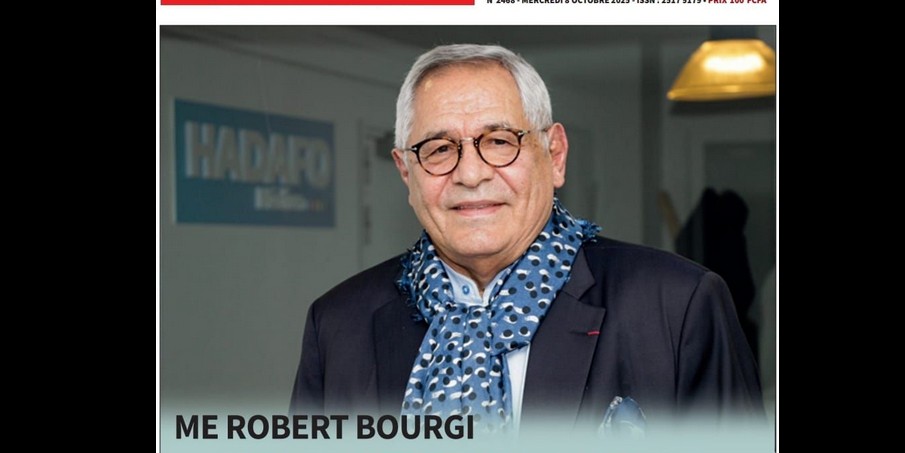
Robert Bourgi Turns on Paul Biya, Declares Him a Political Corpse
- News Team
- 10.Oct.2025
- Details
- Editorial
Heat in Maroua: What Biya’s Return Really Signals
- News Team
- 08.Oct.2025
- Details
- Editorial

Issa Tchiroma: Charles Mambo’s “Change Candidate” for Cameroon
- News Team
- 11.Sep.2025
- Details
- Editorial


