Headlines
- Details
- Headlines
Congo Republic President Denis Sassou Nguesso will seek to extend his long years of rule in polls on Sunday, falling back on his stranglehold over national institutions and his image as a stabilizing force to fend off festering discontent.
His re-election, which analysts say is all but assured, would mark a setback for efforts to foster democratic transition in African countries with long-ruling leaders.
Sassou Nguesso pushed through changes to the constitution in a referendum last September, altering the term and age limits that would have barred the 72-year-old from standing for another five-year mandate.
Having ruled the oil-producing nation from 1979 to 1992, when he lost an election, Sassou Nguesso regained power in 1997 after a brief civil war and then went on to win disputed elections in 2002 and 2009.
His supporters credit him with restoring stability and developing the country's infrastructure.
"He has brought us peace," said Claire Epany, a street vendor in northern Brazzaville's Ouenze neighborhood, where many pedestrians wore hats and T-shirts emblazoned with the president's face. "If he leaves, who will finish his work?"
Critics, however, say Congo's oil wealth has enriched a small elite. Around half of the population of 4.5 million lives in poverty.
Eight opponents are running in the first round, including General Jean-Marie Mokoko, a popular military man who once served as security adviser to Sassou Nguesso. Each has promised to support the opposition candidate who advances to a run-off.
Yet even some of the president's fiercest critics think this is unlikely to overcome obstacles including an electoral commission they claim is packed with his loyalists.
"The president is going to use the machinery of the state to cheat," said Joe Washington, president of the Ebina Foundation, an activist group in Brazzaville. "The result of the election is already known."
STABILITY VERSUS DEMOCRACY
In a bellwether for Sunday's vote, September's referendum passed with more than 92 percent support and 72 percent turnout, according to the electoral commission, in spite of an opposition boycott.
Former colonial power France criticized the conditions of the vote, saying they did not allow an accurate assessment of the result. And the European Union has decided not to send a mission to observe Sunday's vote.
None of this bodes well for recent grassroots efforts across Africa to pressure long-ruling leaders to respect constitutional term limits and step down.
Activists have chalked up successes in Burkina Faso and Benin, and the United States and France have denounced the presidents of Burundi and Rwanda for altering their national charters.
However, oil companies including France's Total, Italy's ENI, London-listed Tullow and the U.S. firm Chevron operate in Congo, making western governments less willing to rock the boat, analysts say.
"Western powers have been relatively silent on Sassou's third-term aspirations, in part because of more entrenched economic interests in Congo," said Christoph Wille, Congo analyst at Control Risks.
A Sassou Nguesso victory is no guarantee of stability.
Security forces killed at least 18 demonstrators ahead of the referendum, and in southern Brazzaville's Bacongo neighborhood, the epicenter of the protests, some said they were prepared to take to the streets again if he wins.
"Usually, an army stands behind the people," said Flore Tchicaya, a small businesswoman, hinting at the specter of a violent face-off. "But here, the army stands behind one party."
(Reuters)
- Details
- Elangwe Pauline
- Hits: 2926
- Details
- Headlines
Two ministers from Paris visited Ivory Coast within two days of a jihadist attack. An anti-terror unit is being sent to Burkina Faso. So why does France have such a strong interest in the region?
The attack on the beach resort Grand Bassam was an answer to France's military presence in West Africa - that is what the terrorist network Al-Qaeda in the Islamic Maghreb (AQIM) claimed. Theattack in Ivory Coast on Sunday (13.03.2016) left 19 people dead, four of whom were French. The terrorist group confirmed that its gunmen had targeted a beach frequented by foreigners.
The presidents of nearby Togo and Benin visited Ivory Coast in the days after the attack. Yet France was the only non-African nation to send both its foreign and interior ministers, Jean-Marc Ayrault and Bernard Cazeneuve to the West African country (as seen in Ayrault's post on Twitter below). The ministers announced that France would deploy a dozen gendarmes to Burkina Faso's capital Ouagadougou.
These are, however, not members of France's conventional police force, Dakar-based reporter Bram Posthumus told DW. They are France's National Gendarmerie Intervention Group (GIGN), an anti-terrorist unit. They are also not the only French forces in Burkina Faso. Together with Ivory Coast, Chad, Mali, Mauritania and Niger, Burkina Faso hosts 3,500 French troops who are part of Operation Barkhane - France's counter-terrorism operation.
Do West Africans feel more or less safe?
Reactions to France's deepening engagement in West Africa and the Sahel region are mixed. "Some people say that rather than preventing terrorists from coming to this part of the world, they attract them," said Posthumus. The mandate for these new forces is as yet unclear. It is not known whether they will be able to pursue suspected terrorists in Burkina Faso or neighboring countries on their own or only in collaboration with national forces.
France has a very strong presence in the region. When gunman attacked Ouagadougou's Hotel Splendid, units of Burkina Faso's army were said to have been told to wait for the French before they could step into action. "These are the kind of actions that are seen as an interference in the internal affairs of Burkina Faso and such interference would be massively unwelcome," Posthumus said, referring to the sentiments amongst young Burkinabes.
According to Nigerien journalist Seidick Abba from the Agence de Panafricaine de Presse, the visit by the French ministers less than 48 hours after the attack, reflected the special relationship between France and Ivory Coast. France, he said, has good economic and political ties to the country. France's military presence through Operation Barkhane has been very effective, although, in the long-run, this presence could become problematic. "West African countries should in the future ideally be able to ensure their own security, instead of becoming dependent on others," Abba told DW.
Why take interest in West Africa?
French President Francois Hollande has tried to put the relationship between fromer colonial power France and the West African nation on a very pragmatic, modern footing between equal partners," Chatham House expert Paul Melly told DW.
A research paper written by Melly and his colleague Vincent Darracqc in 2013 concluded: "France wields a level of influence in sub-Saharan Africa that it cannot command anywhere else in the world. In crisis situations, it is still seen as a key source of diplomatic, military or even financial pressure on - or support for - the countries in the region."
People used to refer to the "vested interests" that France had in West Africa in the post-colonial period, Melly said. Hollande's predecessor Nicolas Sarkozy shut down French military bases in Senegal. Hollande initially tried to follow the same path, until the crisis in Mali flared up. "France intervened in Mali at the request of the Malian government with the practically universal welcome of other African governments in order to end the Jihadist takeover of northern Mali," he said.
France has business interests in the region, it trades in coffee and cocoa, but it has stayed out the mining sector, which is dominated by British, US Australian companies, Melly explained. The one exception is its stake in Niger's Uranium extraction. It is only when you leave the leave Sahel region and venture into Central Africa, that you see French companies like Total dominating the oil sector.
France's military presence in Central African Republic and the country's heavy reliance on France for stability, is viewed by Abba as problematic. West Africa, he argued, should not go down that route.
Is France making the region unsafe?
According to Ryan Cummings, director of the South African risk analysis group Signal Risk, France's strong engagement against militant groups during the Malian crisis, was extremely effective. However, when France handed the controls over to ill-equipped Malian and UN peacekeeping troops in 2014, militant groups regained strength.
Fundamental Jihadism is targeting people who collaborate with the international community, Melly noted.
(DW)
- Details
- Elangwe Pauline
- Hits: 2372
- Details
- Headlines
Russian President Vladimir Putin has hailed Russia’s military forces returning from Syria, saying their achievements in the militant-riddled Arab country has laid the ground for peace there. Speaking on the occasion of Russia’s military pullout from Syria, Putin said his country succeeded in strengthening Syrian army through months of aerial campaign against militant groups in Syria. Putin said despite Russia’s partial withdrawal, which he said was agreed with Syrian leader Bashar al-Assad, the battle against terrorism in Syria will continue.
The Russian president said his military forces created conditions for a peace process in Syria. Putin further vowed that Russia will monitor Syria’s situation and will leave its advanced S-400 air defense missile system there as a means of precaution. He also warned that Russia can ramp up its military presence in Syria within "several hours" if needed. "If there's a need, Russia literally within several hours can ramp up its presence in the region to the size required for the unfolding situation," Putin said in the Kremlin on Thursday.
The comments came as he decorated officers who served in the war-torn country. On Tuesday, President Putin announced that "the main part" of the Russian forces would start to withdraw from Syria, and that diplomats had been called upon to increase their efforts for a peaceful solution to the five-year-long conflict. Russia launched its campaign against Daesh and other terrorist groups in Syria last September upon a request from the Damascus government. The air raids have expedited the advances of Syrian forces against militants.
Syria has been gripped by foreign-backed militancy since March 2011. According to a February report by the Syrian Center for Policy Research, the conflict has claimed the lives of over 470,000 people, injured 1.9 million others, and displaced nearly half of the country’s pre-war population of about 23 million within or beyond its borders.
- Details
- Presstv
- Hits: 1713
- Details
- Headlines
Iran’s President Hassan Rouhani says the country’s ballistic missile serves defensive and deterrent purposes, stressing that the Islamic Republic has never sought to launch aggression against any country. “We have had and no intention of invading any country, particularly our neighbors, with our missiles and we will not do so, and our arms are [designed] solely to defend our nation and country,” Rouhani said on the sidelines of a cabinet session on Wednesday. The Iranian president further expressed satisfaction that US “hardliners and hawkish” officials, who unjustly took the Iranian missile test to the UN Security Council (UNSC), failed to achieve their objectives.
Earlier on March 14, Washington vowed to continue pushing for UN Security Council action on Iran’s recent ballistic missile tests and accused Russia of looking for reasons not to respond to Tehran’s missile launches. “This merits a Council response,” US Ambassador to the UN Samantha Power told reporters on Monday after a closed-door meeting of the 15-nation Security Council convened at Washington’s request. Power was referring to comments from Russian Ambassador Vitaly Churkin, who made clear that in the view of veto-wielding Russia, Iran’s ballistic missile tests did not violate resolution 2231, adopted last July, which endorsed a nuclear agreement between Tehran and six world powers.
Meanwhile, the director general for political and international affairs at Iran's Foreign Ministry, Hamid Baeedinejad, wrote in his telegram channel on Monday that the UNSC has agreed that the country’s recent missile tests are not in breach of UN resolutions. Last week, Iran fired Qiam ballistic missile from silo-based launchers in different locations across the country and successfully test-fired two more ballistic missiles of the Qadr family. Washington claims that Tehran’s missile program is a threat to global security but Iran categorically denies the claim, arguing that its missile program is solely defensive. Resolution 2231 “calls upon” Iran not to undertake any activity related to ballistic missiles designed to be capable of delivering nuclear weapons, including launches using such ballistic missile technology.
- Details
- Presstv
- Hits: 1906
- Details
- Headlines
Police arrested 18 protesters on Tuesday in the eastern Democratic Republic of Congo city of Goma during a peaceful demonstration over the jailing of two fellow activists, the United Nations said. Arrests of critics of President Joseph Kabila have become common in Congo amid heightened political tensions.
Kabila is required by the constitution to step down in December after 15 years in office but the opposition accuses him of trying to cling to power by delaying a presidential poll set for November.
The activists were detained just after they began marching to demand the release of fellow members of the Struggle for Change (Lucha) group a year ago in the capital, Kinshasa, Jose Maria Aranaz, director of Congo's UN human rights office, said.
- Details
- Reuters
- Hits: 1430
- Details
- Headlines
The Russian Foreign Ministry has blasted the European Union (EU) for setting conditions for its normalization of ties with Moscow, including one involving Ukraine. “Brussels is, in fact, making the fate of Russia-EU relations hostage of the Ukrainian authorities,” said the Russian ministry in a Tuesday statement. The EU has said that the normalization of ties with Russia hinges on, among four other things, the implementation of the Minsk accord on the conflict in eastern Ukraine. “The absurdity of this commitment is becoming more and more apparent,” it said, adding that it is not Moscow but the Western-backed government authorities in Kiev that resort to all measures to avoid fulfilling their part of the Minsk agreements.
The agreement, which entails a ceasefire, was signed in February 2015 following the intensification of armed clashes between Ukrainian forces and pro-Russia fighters in eastern Ukraine. The Russian Foreign Ministry also slammed the EU’s other “guiding principle” of enhancing its ties with former Soviet bloc countries—Russia’s neighbors—before upgrading ties with Russia, saying that the EU aims to undermine the neighborly relations between Russia and those countries. “Brussels seems to be planning to force the Central Asian countries to make the bogus choice—either the EU or Russia,” as it happened with Ukraine, the statement read. The development came after the EU’s foreign policy chief Federica Mogherini said on Monday that there were “unanimity among the 28” EU members on five broad “principle” for upgrading ties with Moscow.
Apart from the condition on Ukraine, the principles also include enhancing ties with eastern European and Central Asian nations, the strengthening of EU resilience in the energy and other sectors, “selective engagement” with Russia on foreign policy issues vital to the EU, as well as boosting people-to-people contacts and supporting Russia’s civil society. Moscow said that “selective engagement” is unlikely to work for the EU in relations with Russia. As for support for civil society, the Russian ministry also said that Moscow “won’t allow any interference in Russia’s internal affairs.”
The Russian Foreign Ministry said, however, that it is ready to strengthen ties with the EU based on mutually accepted terms, not unilateral approaches. Ties between the EU and the Kremlin deteriorated following the Ukrainian crisis, leading the EU to impose a wave of sanctions on Russia, alleging that it was involved in the conflict. Moscow has consistently rejected such claims and imposed its own restrictive measures in response, including a ban on food imports from the EU.
- Details
- Presstv
- Hits: 1595
Breaking News Article Count: 2
# Breaking News
Get the latest and most urgent news from Cameroon and the world with our breaking news section. We deliver you the news as it happens, with live updates, alerts, and analysis. You'll find out about the major events and incidents that affect Cameroon and its people, such as conflicts, disasters, elections, and protests. Our breaking news section also provides you with the reactions and responses from the authorities, experts, and the public. Stay tuned and stay informed with our breaking news section.
Out of Cameroon Article Count: 10
# Top Stories out of Cameroon
Don't miss the most important and trending news out of Cameroon and beyond Africa with our top stories section. We bring you the latest and breaking news from various domains, such as politics, economy, health, security, and diplomacy. You'll also find exclusive reports, investigations, and features that showcase the diversity and challenges of Cameroonians in the diaspora. Our top stories section is updated regularly to keep you informed and aware of the current affairs and developments in the world.
Local News
- Details
- Society

Kribi II: Man Caught Allegedly Abusing Child
- News Team
- 14.Sep.2025
- Details
- Society

Back to School 2025/2026 – Spotlight on Bamenda & Nkambe
- News Team
- 08.Sep.2025
- Details
- Society

Cameroon 2025: From Kamto to Biya: Longue Longue’s political flip shocks supporters
- News Team
- 08.Sep.2025
- Details
- Society

Meiganga bus crash spotlights Cameroon’s road safety crisis
- News Team
- 05.Sep.2025
EditorialView all
- Details
- Editorial
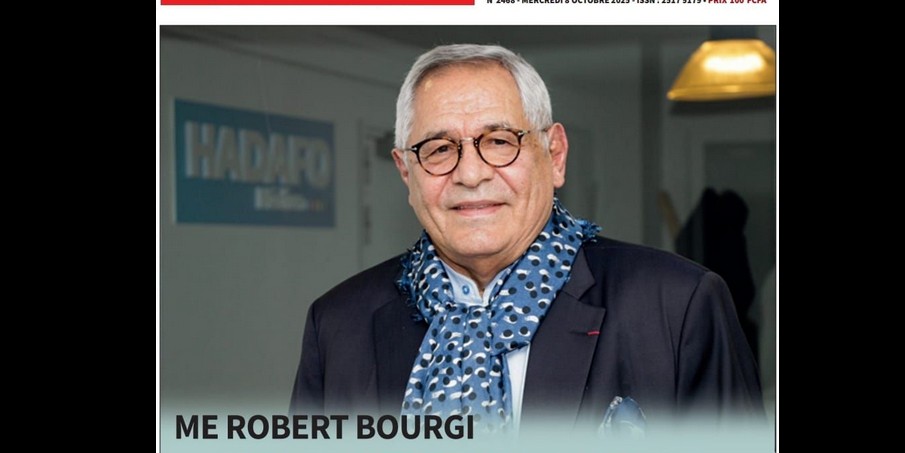
Robert Bourgi Turns on Paul Biya, Declares Him a Political Corpse
- News Team
- 10.Oct.2025
- Details
- Editorial
Heat in Maroua: What Biya’s Return Really Signals
- News Team
- 08.Oct.2025
- Details
- Editorial

Issa Tchiroma: Charles Mambo’s “Change Candidate” for Cameroon
- News Team
- 11.Sep.2025
- Details
- Editorial


