Headlines
- Details
- Headlines
Southern Cameroonians in the diaspora keep building momentum.
From Brussels to UK, now we have Southern Cameroonians coming out strongly in USA Washington DC protesting at the UK embassy. The struggle continues with massive demonstrations planned for Monday December 5th at the Embassy of Cameroon in Berlin Germany.The demonstrations will start from 9 AM-11 AM infront of the Cameroonian Embassy.Address: Ulmenallee 32, 14050 Berlin.
In the UK, English-speaking Cameroonians based also announced a peaceful protest at the Commonwealth Secretariat in London on Friday December 9. During the demonstration, according to Cameroon Journal, the protesters will amongst other things be brandishing placards calling for an end to Anglophone marginalisation in Cameroon.
- Details
- Rita Akana
- Hits: 2768
- Details
- Headlines
For nearly three decades every December 1, we’ve heard about the tragedy of AIDS. Activists the world over put a spotlight on the AIDS virus on this day. They encourage testing and distribute leaflets with information on HIV, the virus that causes AIDS, including how it spreads and how to keep from getting it. The United Nations Secretariat Building in New York is lighted with the red AIDS ribbon.
AIDS has killed 35 million people since the start of the pandemic. It’s left millions of orphans in its wake. Every year, 2 million people acquire the virus, and the U.N. estimates that more than 1 million people die from the virus annually.
Still, a lot has happened since the first World AIDS Day in 1988. Countries in which the topic was once taboo now offer testing and treatment. Mothers with HIV can have healthy babies and live to raise them. Drugs can keep the virus from spreading. More than 18 million people are on lifesaving anti-retroviral drugs that keep HIV in check. And now, scientists are talking about vaccines and a cure
A large-scale trial of a potential vaccine is underway in South Africa. The study will involve more than 5,400 sexually active men and women ages 18 to 35 in a number of areas around South Africa, a country where more than 1,000 people a day are infected with HIV. The trial will last for four years.
The study is funded by the U.S. government’s National Institute of Allergy and Infectious Diseases, which Dr. Anthony Fauci has directed for the past 32 years. While there’s a lot of hope that this vaccine could help bring an end to HIV/AIDS, Fauci is a realist.
“We have no idea whether it will work or not,” he said. “More vaccine trials fail than are successful ... the whole rationale for doing a trial is to see if it does work.”
Treatment comes a long way
The greatest success since the first World AIDS Day is in treatment. In 1988, a person with advanced AIDS could expect to live a year to a year-and-a-half.
“Today, the combinations of therapies we have for individuals, for someone who is in their 20s and gets infected and comes in and gets on a combination of drugs, you could predict that they could live an additional 50 years. That is one of the most extraordinary advances in the transition from basic research to an applicable intervention in any field of medicine,” Fauci said.
New, promising treatments for HIV/AIDS also are on the horizon. One study at the University of Pennsylvania School of Medicine is looking at whether the body’s immune system can keep the virus in check. Dr. Pablo Tebas is the lead researcher and spoke to VOA by Skype.
“We infuse antibodies into the patients, the participants in the study, and we want to see if those antibodies will control the HIV virus … keep it quiet, and prevent the virus from coming back when we stop anti-retroviral therapy.”
Immunotherapy shows promise
The research is similar to the immunotherapy being done in the field of cancer. The technique uses proteins — antibodies — to attack cancer cells.
“When you think about oncology and cancer therapy with these immune-based therapies, what people are doing now in that field is to try to boost the immune system to eliminate the cancer cells. The problem of eliminating the HIV hideout is similar. You want to eliminate the cells that harbor the virus, and by making the immune system more active, in finding and eliminating those cells,” Tebas explained.
Researchers found that the antibodies suppressed the HIV virus for 21 days. The goal is to find a combination of antibodies that can suppress the virus for six months to a year. Then people infected with HIV will no longer have to take medicine every day for the rest of their lives.
A new trial using two antibodies should start in the next couple of months.
VOA
- Details
- Rita Akana
- Hits: 1385
- Details
- Headlines
The over two hundred students who were arrested Monday 28 November after riot break out at the University town of Buea have been reunited with their families after spending close to 48hours in police custody.
The students were released yesterday, Wednesday 30 November on instructions of the state counsel for Buea after they were ferried to his office by elements of the National Gendarmerie.
At about 10AM yesterday, the first truck carrying students arrived at the state counsel’s office where a group of lawyers even though on strike decided to storm the state counsel’s office to ensure that all arrested students are given the maximum support they require.
After over 6hours of deliberation at the state counsel’s office, it was resolved that all the arrested students with their National Identification cards on them be released immediately while those without were asked to make phone calls for their ID cards to be brought to them.
At the time of this report, some of the student were already released and could be spotted limping to their various residences after been tortured by irate police officers. It is however important to note that not all those arrested were UB students as just anyone who was spotted around the University junction that faithful Monday was bundled by the combat ready riot police officers.
As a result of last Monday’s strike action even though the vice chancellor of the University of Buea, Nalova Lyonga emphasised that lectures were on, the student residential town of Buea was completely deserted as some few students could be spotted with their travelling bags rushing out of Buea. Most of them saying they will only return to Buea in January 2016.
It is worth nothing that after last Mondays strike action, parents and guardians have called on their students studying at the University of Buea to return home immediately.
Walking through the university town of Buea which at this time is often characterized by a lot of fanfare as hundreds of students are often spotted after ever one hundred meters, one might be tempted to compare Buea these days to the Gaza strip suffering the aftermath of a war which is deserted towns and streets.
- Details
- Rita Akana
- Hits: 2243
- Details
- Headlines
Reports reaching us from Bamenda holds that one of the main organizers of the strike which took place on November 21.2016 in Bamenda has been arrested and detained at the Bamenda Judicial police.
Bike riders from around the city centre rushed behind the police Van and are presently at the police headquarters swearing not to bulge until he is released. Further reports say Opposition leader, Fru Ndi has arrived at the Police headquarters.The reports further say there is tension in the city as a result of the arrest.Cameroon Concord is closely monitoring the events in Bamenda.Stay connected for more updates.
- Details
- Mbi James
- Hits: 4738
- Details
- Headlines
Presidents of Mexico, Ecuador, South Africa and Zimbabwe, but not those of America, Canada or Britain, join Cubans to say goodbye to revolutionary
With sombre speeches and a thunder of cannon, Havana held a mass eulogy for Fidel Castro on Tuesday night in a ceremony that underscored the polarising influence of the dead Cuban revolutionary.
President Raul Castro, dressed in his military uniform, led the memorial for his brother, who seized power in 1959 and turned the Caribbean island into a bastion of anti-imperialism and a focus of Cold War tensions with the United States.
Ideological allies, including Venezuela’s Nicholas Maduro, Bolivia’s Evo Morales, Zimbabwe’s Robert Mugabe and South Africa’s Jacob Zuma came in person to say farewell to Castro, who died on Friday aged 90, whilst nations on the other side of the political divide sent lower-ranking representatives.
“We and our self-sacrificing, combative and heroic people say to you: Ever onward to victory,” Castro said in a tribute to his brother.
Castro embraced Maduro, his ideological ally, as the ceremony got underway.
“They could overcome neither Fidel, nor the people of Cuba nor the dreams and hopes of this great nation,” Maduro said in a tribute, chanting a refrain about the iconic revolutionary fending off imperialists that the crowd then finished.
“He fulfilled his mission on this earth,” he added. “Few lives have been so complete, so bright. He has left unconquered.”
As well as tens of thousands of Cubans, the great and the good of the nation’s cultural and sporting world were also in attendance. Among them was Ana Fidelia Quirot, a two-time world 800m champion, who arrived in the colours of the national athletics team.
She recalled how Castro had visited her bedside every day while she was recovering from a life-threatening accident. “In my toughest moments he was always there for me,” she said. “I have come to honour an exceptional humanist. He may not be here physically but he will stay in my heart.”
A group of elderly veterans paused on their way to the square to share reminiscences and sentiments as chants of “Viva Fidel!” resounded.
Eighty-year-old Armando Vasquez fought for Castro in the Sierra Maestra in the early days of the revolution. “He was like a father. When he gave an order you knew you could do it, because he had already showed that it could be done.”
Another pulled out his wallet and showed the Castro photograph he keeps inside. “Look at this. I don’t keep a picture of my wife or daughter. That’s how much Fidel means to me,” said Gilberto Gonzalez. “We Cubans have been privileged to have a leader like this.”
Sandra Calvo – a Cuban-Mexican resident – arrived with her sister Patricia, pushing her 11-month-old son who was holding a Cuba flag. “It’s the end of an era but something more than that,” she said.
Raul Castro closed the rally with a speech thanking world leaders for their words of praise for his brother, who he called the leader of a revolution “for the humble, and by the humble.”
Earlier in the day, lines stretched for hours outside the Plaza of the Revolution, the heart of government power and the place where Castro delivered fiery speeches to mammoth crowds after he seized power.
In Havana and across the island people signed condolence books and an oath of loyalty to Castro’s sweeping May 2000 proclamation of the Cuban revolution as an unending battle for socialism, nationalism and an outsize role for the island on the world stage.
Tribute sites were set up in hundreds of places across the island as the government urged Cubans to reaffirm their belief in a socialist, single-party system that in recent years has struggled to maintain the fervour that was widespread at the triumph of the 1959 revolution.
Many mourners came on their own accord to Havana but thousands were sent in groups by the communist government, which still employs about 80% of the working people in Cuba despite the growth of the private sector under Raul.
“I am a graduate of political science and I can’t think of any case where the loss of a former president has generated so much genuine sadness. People aren’t forced to come here. They want to respect him and his achievements. There aren’t many countries where people can become doctors and philosophers regardless of their economic position.”
Raul Castro closed the rally with a speech thanking world leaders for their words of praise for his brother, who he called the leader of a revolution “for the humble, and by the humble.”
Earlier in the day, lines stretched for hours outside the Plaza of the Revolution, the heart of government power and the place where Castro delivered fiery speeches to mammoth crowds after he seized power.
In Havana and across the island people signed condolence books and an oath of loyalty to Castro’s sweeping May 2000 proclamation of the Cuban revolution as an unending battle for socialism, nationalism and an outsize role for the island on the world stage.
Tribute sites were set up in hundreds of places across the island as the government urged Cubans to reaffirm their belief in a socialist, single-party system that in recent years has struggled to maintain the fervour that was widespread at the triumph of the 1959 revolution.
Many mourners came on their own accord to Havana but thousands were sent in groups by the communist government, which still employs about 80% of the working people in Cuba despite the growth of the private sector under Raul.
Cuban state media reported that an urn containing Castro’s ashes was being kept in a room at the defence ministry where Raul Castro and top Communist party officials paid tribute the previous evening.
Inside the memorial thousands walked through three rooms with near-identical displays featuring the 1962 Alberto Korda photograph of the young Castro in the Sierra Maestra mountains, bouquets of white flowers and an array of Castro’s medals against a black backdrop, framed by honour guards of soldiers and children in school uniforms. The ashes of the 90-year-old former president did not appear to be on display.
Signs read: “The Cuban Communist party is the only legitimate heir of the legacy and authority of the commander in chief of the Cuban Revolution, comrade Fidel Castro.”
“Goodbye commander. Your ideas remain here with us,” 64-year-old retiree Etelbina Perez said between sobs, dabbing at her eyes with a brown handkerchief. “I feel great pain over his death. I owe my entire life to him. He brought me out of the mountains. I was able to study thanks to him.”
The White House announced on Tuesday that Obama would not send a presidential delegation. Instead, the United States will be represented by Jeffrey DeLaurentis, chief diplomat at the US embassy in Havana, and Ben Rhodes, an Obama aide who represented the United States in 18 months of secret talks that led to detente.
African leaders included Zimbabwe’s Robert Mugabe.
Mugabe, 92, himself a former Marxist guerrilla who has led Zimbabwe as prime minister or president since 1980 despite financial and health crises, praised Fidel Castro’s government for having trained thousands of Zimbabwean doctors and teachers.
“Fidel was not just your leader. He was our leader and the leader of all revolutionaries. We followed him, listened to him and tried to emulate him,” Mugabe told reporters as he arrived in Havana. “Farewell, dear brother. Farewell, revolutionary,” he said.
AP
- Details
- Rita Akana
- Hits: 1861
- Details
- Headlines
The Attorney General (also called Procurer Generale, PG in French) of the Buea court of Appeal, magistrate Emile Essombe has in an interview with Cameroon Concord revealed that the on-going strike by lawyers of the common law extraction in the North West and South West regions of the country is indeed grounded. Speaking to a cream of reporters who took to the court yard in Buea on Friday November 25, 2016 to ascertain the atmosphere of the courts six weeks into the lawyers strike, the attorney general noted that the strike action is really affecting business at the court. While affirming that since the lawyers embark on their strike action, not one out of the over 300 found in Fako had shown up to court, the PG pointed out that the strike has greatly affected a lot of people especially those who were awaiting trial.
The magistrate who had earlier convened some prominent common law lawyers, among them the president of the Fako Lawyers Association, FAKLA, Agbor Felix Nkongho to his office for a chat after their strike went effective, told pressmen that he was abashed by what he read in the papers concerning their discussion at the meeting. While grinning as much as his jaws could permit him, the PG noted that he simply called on them to discuss about the strike were-in he cautioned them that him being the attorney general and charged with all legal issues, it was just but normal for them to have addressed their worries first to him before taking on themselves to go on a sit-in strike. He reiterated the fact that there was no intimidation at all but just a talk.
The attorney general however noted that the doors of the courts remain open as most of the court cases are adjourned. While pointing out that it is only cases at the Supreme Court that requires the presence of a lawyer before it presided, the attorney general regretted the fact that even for the smallest of cases people insist they must have their lawyer before setting foot in court. Quizzed to buttress on why after the lawyers went on strike rather than negotiating with them, riot police and water cannons where used on the lawyers by the government, Emile Essomba ranted and put the blame on the door steps of some irate police officers who to him acted not on instructions form the states.
He however noted that the lawyers would have informed the state of their problem and wait quietly for their reply. Clarified on while the OHADA text which happened to be one of the working tools of lawyers was made only in French despite the fact that Cameroon was a bilingual country, the senior magistrate told pressmen that the first translation was rejected because of the poor nature at which it was done. He equally noted that the OHADA law which is made up of the nine uniform acts including the uniform act on security, commercial companies and economic interest groups, arbitration and the uniform act on the carriage of goods by road just to name but these; despite it cumbrous size had already being translated as announced by the Minister of Justices and keeper of the seals, Laurent Esso. He however made mentioned that the laws where yet to be made public because they had being deposited at the secretariat of OHADA which is found in Yaounde for its approval.
As our reporter exited the court arena in Buea, the impact and losses inquired as a result of the lawyers strike was inevitable as grasses and papers flooded the deserted court rooms. Businessmen who earn a living out of the sale of legal materials and gadgets such as LEGALCOM Buea noted told this reporter that business had gone from slow to limping.
On the part of the population, dozens of Cameroonians who were supposed to be free now are still being held behind bar awaiting trial and hoping that a compromise could be established between the state and the common law lawyers.
- Details
- Amos Fofung in Buea
- Hits: 2978
Breaking News Article Count: 2
# Breaking News
Get the latest and most urgent news from Cameroon and the world with our breaking news section. We deliver you the news as it happens, with live updates, alerts, and analysis. You'll find out about the major events and incidents that affect Cameroon and its people, such as conflicts, disasters, elections, and protests. Our breaking news section also provides you with the reactions and responses from the authorities, experts, and the public. Stay tuned and stay informed with our breaking news section.
Out of Cameroon Article Count: 10
# Top Stories out of Cameroon
Don't miss the most important and trending news out of Cameroon and beyond Africa with our top stories section. We bring you the latest and breaking news from various domains, such as politics, economy, health, security, and diplomacy. You'll also find exclusive reports, investigations, and features that showcase the diversity and challenges of Cameroonians in the diaspora. Our top stories section is updated regularly to keep you informed and aware of the current affairs and developments in the world.
Local News
- Details
- Society

Kribi II: Man Caught Allegedly Abusing Child
- News Team
- 14.Sep.2025
- Details
- Society

Back to School 2025/2026 – Spotlight on Bamenda & Nkambe
- News Team
- 08.Sep.2025
- Details
- Society

Cameroon 2025: From Kamto to Biya: Longue Longue’s political flip shocks supporters
- News Team
- 08.Sep.2025
- Details
- Society

Meiganga bus crash spotlights Cameroon’s road safety crisis
- News Team
- 05.Sep.2025
EditorialView all
- Details
- Editorial
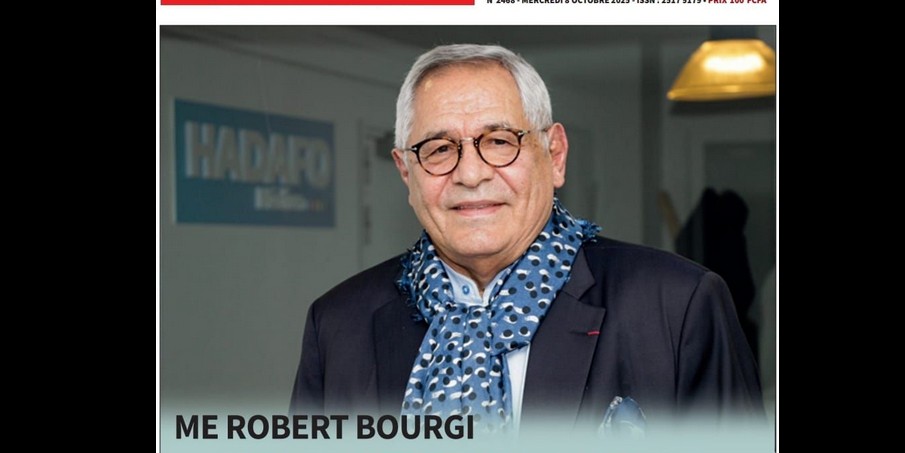
Robert Bourgi Turns on Paul Biya, Declares Him a Political Corpse
- News Team
- 10.Oct.2025
- Details
- Editorial
Heat in Maroua: What Biya’s Return Really Signals
- News Team
- 08.Oct.2025
- Details
- Editorial

Issa Tchiroma: Charles Mambo’s “Change Candidate” for Cameroon
- News Team
- 11.Sep.2025
- Details
- Editorial


