- Details
- Religion
Conversion and the Kindly Light of John Henry Newman
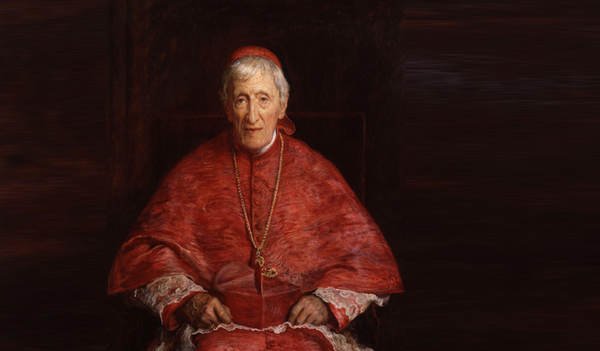
By Agbaw-Ebai Maurice Ashley (AMDG) The Catholic tradition, rightly understood, sees the Sacrament of Confession as a sacrament of healing. This was one of the great explicit achievements of the Catechism of the Catholic Church. This process of conversion, according to the spirit and theology of the Catechism, presupposes a sincere and profound act of conversion (CCC 1427-1433). The invitation of the Carpenter’s Son could not have been clearer: “The time is fulfilled, and the kingdom of God is at hand; repent, and believe in the gospel” (Mark 1:15).In the common Catholic imagination, this call to conversion has come to be identified with a moral or spiritual bankruptcy needing urgent, and sometimes, dramatic attention. Pentecostals talk of “when I became born again”! While there is room, in all things Catholic, for such spiritual experiences and in most cases, exhibitions, Catholicism encountered a unique insight of conversion in the great and refined Englishman, John Henry Cardinal Newman, famously known for his hymn, Lead Kindly Light. In a deeply spiritual and spectacular experience, Benedict XVI beatified Newman on the 19th of September 2010, on a papal trip to England. What might be some lessons that indebt the Catholic of today to this best fruit of English Catholicism? In the religious school of Newman, conversion is primarily at act of the human conscience. Vatican II became Newman’s Council when it observed that “in the depths of his conscience, man detects a law which he does not impose upon himself, but which holds him to obedience. Always summoning him to love good and avoid evil, the voice of conscience when necessary speaks to his heart: do this, shun that. For man has in his heart a law written by God; to obey it is the very dignity of man; according to it he will be judged” (Gaudium et Spes, 16). Newman teaches the Catholic of today that conversion is a path of conscience, not a path of self-asserting subjectivity but, on the contrary, a path of obedience to the truth that was gradually opening up to him. And this already brings us to another reality of Newman’s religious school: conversion is about the truth. Newman never sought his own ego; he never was interested in himself. It is important to note that what led to the writing of his spiritual classic, Apologia Pro Vita Sua, was the charge made against Newman and the clergy of the Roman Church by Dr. Charles Kingsley, professor of history at the University of Cambridge, that “truth, for its own sake, had never been a virtue with the Roman clergy” (Apo, 4). I am tempted to see the Apologia of Newman as an autobiography about truth, which to me, is the great lesson that comes to us from Newman’s religious experience of conversion. Newman’s life was marked by three conversions, so to say. At aged, fifteen (1816), Newman experienced in a new way the influence of the Creed and the life-giving source of dogma. His second conversion was his turning to the faith of the early Fathers to combat the growing liberalism in Anglicanism, which, unfortunately, has led that Christian Confession, in the form of the Church of England, to the pathetic state of moral and spiritual commotion and cluttering that marks it today. Newman founded the Oxford Movement for this purpose. His last conversion was to cross the Tiber, to enter the bark of Peter, the Church of Rome. These conversions of Newman are a sharp reminder to the Catholic of today that conversion is a gradual process. It is not often automatic and spectacular. There might be unique moments, but it takes a gradual experience to spiritually mature. Finally, to Newman, Conversion was a turning to the light of God, the most real thing in the world. Contemporary men and women tend to be disciples of empiricism. We understand that which is real to be measured by the laws of physicality. The sense of sight is the greatest of the senses. While not jettisoning the value of empirical data, the Catholic of today can learn from Newman that the most real things are those that the eyes cannot see. The Catholic learns from Newman that God and the spiritual identity of every man, woman and child, constitute what is genuinely real. And because God and the inner life are real, they shed light on how you and I should live in this world. It is this light of God that marked Newman’s life-journey of conversion, sentiments which he expressed en route to the port city of Marseille when he wrote in his hymn, “I loved to choose and see my path; but now lead thou me on! I loved the garish day, and, spite of fears, pride ruled my will: remember not past years!”
If conversion entails obedience to the light of conscience and truth, lived out in a gradual process marked by the kindly light of God, then Newman’s was a great and enduring contribution to Catholicism, and his beatification by Joseph Aloysius Ratzinger, Benedict XVI, another icon of light and truth, constituted a necessary reawakening to these spiritual values and makes us indebted to Newman and grateful to God, for this Englishman, for this soul of English Catholicism, John Henry Cardinal Newman. May the Kindly Light of Newman’s God, continue to invite, inspire and lead the Catholics of today.
- Details
- Ngwa Bertrand
- Hits: 1972
