Headlines
- Details
- Headlines
Prosecutors are calling for a minimum of 25 years behind bars for Bemba. If imposed, it will be the longest sentence ever handed down by the ICC.
In March this year, Bemba was found guilty of five charges of war crimes and crimes against humanity. He’d sent 1500 troops into CAR from October 2002 to May 2003, to help prevent a coup against its then President Ange-Felix Patasse. Those troops carried out a reign of terror, which included murders and the gang rapes of men, women and children.
The ICC has come under criticism from the African Union and some African countries for turning a blind eye to atrocities committed by non-African leaders. Kenya has even threatened to withdraw from the ICC.
- Details
- Rita Akana
- Hits: 1653
- Details
- Headlines
The city of Pretoria is under lock down today after a night of violent political protests. Protesters are back on the streets this morning and several roads have been closed. There’s a heavy police presence. Protesters have set buses alight and there are reports of people trapped inside.
Last night, hundreds of angry residents burnt and stoned buses and cars as they protested against the ruling party’s mayoral candidate choice for the area. Police have opened cases of murder and malicious damage to property.
Municipal elections are taking place in South Africa in August and the country has seen a spate of protests in the run up.
- Details
- Rita Akana
- Hits: 1984
- Details
- Headlines
Sixteen people have reportedly been killed with twenty others injured in clashes between gunmen in the north of the Central African Republic, according to police sources.
The deadly clashes according to an anonymous police officer was between pastoralist Fulani groups of armed men from the former Seleka rebel group. The clashes are believed to have started last Sunday and extended to Monday.
“According to a first report, 16 people for most armed Fulani, were killed and more than twenty others injured in clashes,” the officer stationed in Kaga Bandoro told AFP.
The current situation comes on the back of a Monday night joint security operation that forced people to flee the capital Bangui. The operation followed the kidnapping of six police men and AFP reports that police said the number of casualties was three.
The country has just emerged from ethnic conflict which started with the overthrow of former leader Francois Bozize, following that was retaliatory attacks that destabilized the country leading to international intervention by the United Nations.
Elections earlier this year and a peaceful political transition was seen as a forward step in stabilizing the country, but that has occasionally been threatened by the pockets of tensions in parts of the country.
Last week, at least ten people were killed and several others injured in an attack by suspected Fulani and ex-Seleka rebels in the western part of the country marking the first major violence since the election of President Touadera in February.
AFP
- Details
- Rita Akana
- Hits: 1440
- Details
- Headlines
For months, President Muhammadu Buhari opposed devaluing Nigeria’s currency, saying he wouldn’t support having the naira “killed.”
That stance shifted Monday, when the central bank floated the currency. It promptly lost 30 percent of its value against the dollar, but the move may have saved Nigeria’s oil-dependent economy, which is poised for a recession.
Keeping the naira strong had drained the country’s foreign reserves and scared off investors, economists say. Militant attacks on Nigeria’s vital oil infrastructure and the lingering effects of gasoline and foreign exchange shortages have undermined Africa’s largest economy, making a devaluation inevitable.
Yvonne Mhango, sub-Saharan Africa economist at Renaissance Capital, said the devaluation will help the country recover more quickly from the coming slump.
“It allows for the pain to come off quicker and for recovery to come through sooner,” said Mhango. She estimates the economy will be in recession for at least 12 months.
Oil is Nigeria’s top export, and the economy was battered by the global drop in the price to $50 per barrel from around $100 two years ago.
Attempt to boost local business
Unlike other major oil exporters such as Angola and Russia, Nigeria decided not to devalue its currency. The central bank has held it at about 200 naira to the dollar for more than a year.
Buhari said past devaluations had harmed local industries.
The president, elected last year on a pledge to diversify the economy and fight Nigeria’s deep-rooted corruption, at one point analogized a devaluation to murder.
As oil sales lost value and fewer and fewer dollars flowed into Nigeria, his administration restricted the availability of foreign currencies in a bid to keep the naira strong and preserve foreign reserves.
The strategy backfired.
From rice to radios, Nigeria’s stores are stocked with imported goods. Gasoline, too, is imported, because even though Nigeria is Africa’s top oil producer, its refineries can’t make enough fuel to satisfy demand.
Importers needed to pay wholesalers overseas, but they couldn’t get foreign currencies at the official rate. So they turned to the expensive black market for dollars, passing on the extra cost to consumers.
In the case of fuel, some importers stopped bringing shipments in entirely. For months, gasoline was scarce across Nigeria, and the situation only improved when the state oil company raised prices.
It all took its toll. Inflation reached 15.6 percent in May.
Militant attacks costly
Nigeria’s economy was further harmed by attacks on its vital oil infrastructure by a group calling itself the Niger Delta Avengers. The militants targeted pipelines in the oil-producing Niger Delta, cutting production by half, if not more.
It was all too much for Nigeria’s economy to bear. Buhari shifted course last week, saying in a newspaper op-ed that the central bank would adopt a more flexible foreign exchange policy. He called the regime “a downpayment on our people’s ability to succeed.”
Mhango said Nigeria had few options as its foreign reserves dwindled and the militant attacks stung.
“They’re running out of the firepower, which is the reserves, and secondly, something that they didn’t anticipate, or no one did, was how much oil production would fall,” Mhango said.
The pain, however, may not be over.
Mhango said the currency’s devaluation means inflation will likely increase in the short term, affecting the price of food and eroding the public’s purchasing power. It’s up to the central bank to mitigate that.
“What I’d anticipate or expect are bold rate hikes, which is typically what happens when a currency devalues by such a substantial amount,” Mhango said.
The naira was trading at about 260 to the dollar late Monday.
VOA
- Details
- Rita Akana
- Hits: 1993
- Details
- Headlines
Tanzania has begun building its own helicopters that will be taking to the skies soon. A Tanzanian made two seater chopper is in its final stages of production and will start flying trials once it granted permission by the Tanzania Civil Aviation Authority reports Daily news.
Arusha Technical College, department of Mechanical and Engineering initiated the program so as to build affordable choppers for Tanzanians to ease the country’s transport woes.
“We are complementing President Magufuli’s industrialisation policy in pioneering the first locally made helicopters that will be available to ordinary residents at affordable prices,” explained the man behind the ATC chopper project, Engineer Abdi Mjema
Initiated two months ago with the aim of using the chopper for surveillance, rescue and agricultural purposes but reframed for people transportation.
Now at 50 percent completion the pioneer air craft has a chassis as well as airframe ready and also the popular gasoline powered VW flat engine board that is also used to make the “Robinson” helicopters in the US, but the craft will be ready in three weeks’ time.
“Once we get the aviation authority approval, we shall complete the most sensitive part of the helicopter mounting the main rotor” said the engineer
Arusha city in the northern region of Tanzania is looking to make history as the first region to fly the first-ever Tanzanian manufactured helicopter in July 2016.
With a flying ceiling of 400 to begin with, due to the high altitude in the mountainous region and a non-pressurised cabin, the Prototype ATC helicopter will change things for the East African nation. The engineers will increase the flying height to reach the normal commercial chopper 8,000 feet above sea level heights with more complete and accomplished models.
According to the college, it can produce up to 20 choppers in a year when the project gets a nod from higher authorities.
“The Tanzania-made helicopters will fly before 2020 and specifically 2018, which is two years from now,” said Engineer Mjema
- Details
- Rita Akana
- Hits: 2896
- Details
- Headlines
There was heavy gunfire and chaos in the Central African Republic capital, Bangui, on Monday as residents flee from an operation by security ...
According to AFP correspondent in Bangui, the operation carried out by local and international security forces with heavy firearms in the PK5 Muslim neighbourhood has driven away hundreds of residents in neighbouring communities to other districts of Bangui in the afternoon.
The police said three people have been shot dead in the operation, AFP reports.
According to eye witnesses who were fleeing the gunfire, soldiers of the United Nations Mission in the CAR (Minusca) are also part of the operation.
A PK5 self-defense group held policemen hostage on Sunday following an arrest by the police last weekend at the northern exit of Bangui, a resident said.
The Minister of Public Security, Jean-Serge Bokassa, confirmed the hostage-taking on local Radio Ndeke Luka demanding their immediate release of the six policemen.
The shooting caused the blocking of several roads halting all activities in the capital as helicopters of the international forces are hovering over Bangui.
AFP
- Details
- Rita Akana
- Hits: 1747
Breaking News Article Count: 2
# Breaking News
Get the latest and most urgent news from Cameroon and the world with our breaking news section. We deliver you the news as it happens, with live updates, alerts, and analysis. You'll find out about the major events and incidents that affect Cameroon and its people, such as conflicts, disasters, elections, and protests. Our breaking news section also provides you with the reactions and responses from the authorities, experts, and the public. Stay tuned and stay informed with our breaking news section.
Out of Cameroon Article Count: 10
# Top Stories out of Cameroon
Don't miss the most important and trending news out of Cameroon and beyond Africa with our top stories section. We bring you the latest and breaking news from various domains, such as politics, economy, health, security, and diplomacy. You'll also find exclusive reports, investigations, and features that showcase the diversity and challenges of Cameroonians in the diaspora. Our top stories section is updated regularly to keep you informed and aware of the current affairs and developments in the world.
Local News
- Details
- Society

Kribi II: Man Caught Allegedly Abusing Child
- News Team
- 14.Sep.2025
- Details
- Society

Back to School 2025/2026 – Spotlight on Bamenda & Nkambe
- News Team
- 08.Sep.2025
- Details
- Society

Cameroon 2025: From Kamto to Biya: Longue Longue’s political flip shocks supporters
- News Team
- 08.Sep.2025
- Details
- Society

Meiganga bus crash spotlights Cameroon’s road safety crisis
- News Team
- 05.Sep.2025
EditorialView all
- Details
- Editorial
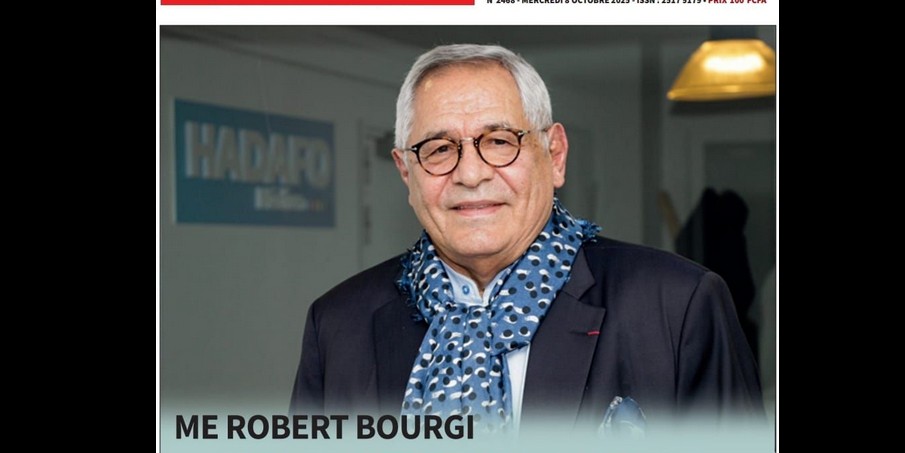
Robert Bourgi Turns on Paul Biya, Declares Him a Political Corpse
- News Team
- 10.Oct.2025
- Details
- Editorial
Heat in Maroua: What Biya’s Return Really Signals
- News Team
- 08.Oct.2025
- Details
- Editorial

Issa Tchiroma: Charles Mambo’s “Change Candidate” for Cameroon
- News Team
- 11.Sep.2025
- Details
- Editorial


