Headlines
- Details
- Headlines

BENI, Democratic Republic of Congo, Feb 2 (Reuters) - At least 60 people were killed in a militia attack early on Wednesday at a displaced persons' camp in eastern Democratic Republic of Congo, according to the head of a local humanitarian group and a camp resident.
- Details
- Reuters
- Hits: 1328
- Details
- Headlines

BUEA, Cameroon, Nov 10 (Reuters) - An explosive device wounded at least 11 university students on Wednesday when it was thrown on to the roof of a lecture hall in a part of western Cameroon where English-speaking separatists are at war with government forces, a university official said.
- Details
- Reuters
- Hits: 1317
- Details
- Headlines

The former Minister of Water and Energy appeared at the Special Criminal Court on December 17, 2019 for the case between him Basile Atangana Kouna versus the State of Cameroon.
- Details
- Thevoicenews
- Hits: 1130
- Details
- Headlines

Ambazonia Struggle For Independence: French Minister Says His Country is Monitoring Situation Keenly
France's Minister of Foreign Affairs, Jean-Yves Le Drian has said his country will continue to keep an eye on the current socio-political crises, going on in the West African nation.
He was responding to questions at the French National Assembly, on Tuesday, where French MP, Sebastien Nadot questioned what France was doing to address humanitarian concerns in the country.
Le Drian said his country was not interested in publishing releases but go to the ground to get first hand information on what is happening. “France is concerned about the situation in Cameroon.
It is not satisfied with making declarations, including at the Security Council. But France goes there. At the request of the President, I went to Cameroon a month ago.", he replied.
- Details
- Rita Akana
- Hits: 1769
- Details
- Headlines

"For now there is only a bloody equilibrium. Separatist militias cannot take the towns; the army cannot take the bush," concluded a report from a forgotten conflict by the authoritative UK-based news magazine, The Economist.
"On a plantation in Tiko, in south-west Cameroon, Adeline rubs the gap in her right hand where her index finger used to be. She arrived in the town in July 2018, having fled Ekona, 15 miles away. In that village soldiers terrified civilians by burning houses and shooting indiscriminately as part of a crackdown on militias that want the primarily English-speaking areas of Cameroon to secede from the predominantly Francophone country. Adeline hoped Tiko would prove a sanctuary.
It was anything but. A year ago Adeline was tending to an oil palm in the plantation when about 20 members of a separatist militia grabbed her, stuffed leaves in her mouth and tied her to the tree. They whipped her and cut off her finger. Her apparent crime: working for the Cameroon Development Corporation (cdc), a state-run company. “As I close my eyes I see the boys coming to get me,” says Adeline. “The trauma is still there.”
Cameroon was until recently a stable country in a fragile region. Today it is battling the jihadists of Boko Haram in the north, dealing with an influx of refugees from the Central African Republic in the east—and, most devastatingly, the “Anglophone crisis” in the west. Adeline’s is one of hundreds of thousands of lives ravaged by this conflict over the past three years. Paul Biya, the authoritarian who has ruled Cameroon for 37 years, had hoped that the crisis would prove short-lived. So did foreign powers, which have been largely quiet. Yet the conflict shows no sign of ending.
The origins of the turmoil began a century ago. After the first world war Britain and France took over different parts of the German colony of Cameroon. Upon independence in 1960 and 1961 the larger French territory joined the southern part of the British one to make modern Cameroon.
It quickly became one of the most centralised countries in Africa. Today just 1% of public spending is devolved to local governments, versus more than 50% in Nigeria. The country is officially bilingual, but the roughly 20% of people (4-5m in a country of 24m) who mainly speak English claim decades of marginalisation. Promises of devolution have been broken.
In late 2016 frustrations boiled over. First lawyers went on strike against the erosion of the English-style common-law system. Teachers soon joined the protests, citing, among other things, the appointment of French-only speakers in classrooms. Protest groups organised “ghost towns”: weekly shutdowns of towns such as Buea, the capital of the south-west region, that continue to this day.
The government hit back hard. The internet was shut off for four months. Groups organising the protests were banned and their leaders arrested. In October 2017 separatists responded by proclaiming the independent state of “Ambazonia”, named after Ambas bay in the south-west.
This led to a massive, violent escalation. International ngos estimate that 3,000 people have been killed during the crisis. But aid workers think the true figure is several times higher. Both separatist militias and security forces have committed atrocities, but the Cameroonian army is believed to be behind most of the bloodshed.
Security forces have burned more than 220 villages in the Anglophone region, according to the Centre for Human Rights and Democracy in Africa (chrda) in Buea. One was Ekona. Formerly the site of a bustling market, today it is an eerie place, where the walls of charred houses are pockmarked with bullets.
“It’s like ‘Full Metal Jacket’,” says one aid worker, in reference to trigger-happy soldiers in a film about the Vietnam war. Ayuk, who lived in Ekona for four years before fleeing in April, says he can recall hundreds of incidents where soldiers fired at villagers. In one case his neighbour and two others were shot in their car on their way back from sowing plantain. “We had to bury him quickly,” Ayuk recalls, in case the army shot them as well.
Tah Mai, a journalist, lost two brothers in separate incidents involving the army. In November last year his brother and his wife were shot outside their house in Buea. A few months later his other brother was shot in the back in his home village in the north-west. “Mine is just like the many stories that you haven’t heard,” says Mr Tah.
No refuge
At least 500,000 people have been forced to leave their homes. Tens of thousands have fled to Nigeria, but most are in the bush, making it hard to count them. Even in the forests displaced people can be found by the army. Frida, who was also forced to flee Ekona, describes how she watched soldiers enter her bush camp. They shot two women accused of cooking for separatist fighters. Then they killed the informer who brought them.
Mass displacement is having grave effects on public health. There are outbreaks of monkey pox and measles, partly because of plummeting vaccination rates. Before the crisis about 70% of women gave birth with medical help in the north-west region. Today 3% do so. The result is more women and babies dying in the course of childbirth. Cecilia Mah, the matron at Mount Mary Hospital in Buea, says that it is hard to run a hospital when soldiers threaten ambulance drivers and seize suspected separatists convalescing in the wards.
The state is, however, not solely responsible for the chaos; separatists share some of the blame. Most of the separatist political groups, such as the Interim Government of the Federal Republic of Ambazonia, and the Ambazonia Governing Council, are based abroad. Their leaders and donors are in America, Germany, Norway and other rich countries. In Cameroon their armed wings control swathes of rural territory. This can lead to surreal moments for aid workers. They may, for example, have to negotiate access to villages not with commanders on the ground but with middle-aged men sitting in living rooms in Washington, Oslo or Dortmund.
Many separatist attacks are aimed at the security forces. But some target Anglophone civilians. “If you disagree with them, they kill you,” says Cardinal Christian Tumi, the archbishop of Douala, Cameroon’s commercial capital. He says that a traditional chief from his home village was “slaughtered like a goat” for allegedly collaborating with the authorities. Like Adeline, many people employed by cdc have been maimed.
Brutality by separatists is likely to increase as armed groups in the country seek their own sources of funding to break away from the patronage of leaders in the diaspora. So-called Amba boys are turning to kidnapping and extortion for funds; other groups are increasingly criminal entities, not political ones. In March the football team of the University of Buea was taken hostage; many parents paid ransoms. Most of the aid groups working on the ground have had workers kidnapped. “I fear we are creating a generation of warlords,” says Felix Agbor Balla, the president of chrda.
While bandits raise cash by extorting, the economy is collapsing. The Anglophone regions contribute about 20% of the country’s gdp. cdc was the second-largest employer in Cameroon, after the state. But most of its rubber and palm-oil plantations, and all of its banana ones, have shut because of attacks. Most workers have lost their jobs. Revenue is 90% lower than before the crisis; cdc has not sold a banana since August 2018. Its leaders get death threats from separatists. Asked how he copes, Franklin Ngoni Njie, cdc’s general manager, says he follows a simple rule: “I pray more. I go out less.”
And yet an even bigger social and economic crisis is looming. Almost 90% of children in the Anglophone regions have not gone to school for three years, a result of forced displacements and the enforcement of a boycott called by separatists who see schools as arms of the state. (According to this twisted logic a six-year-old keen to learn subtraction is a collaborator.) At home-schools set up by brave educators children arrive with homework hidden in their trouser legs, in case they are spotted by Amba boys.
- Details
- Rita Akana
- Hits: 1878
- Details
- Headlines

CPDM Senator Mbella Moki Charles has called for the withdrawal of the bill on the promotion of the two official languages of Cameroon on the basis that the piece of legislation has been poorly drafted.
Addressing the Minister of Culture as well as other members of the Upper House last week on the issue of the adoption of the piece of legislation.The former Mayor of Buea said voting for the adoption of the bill would
be at the expense of his own life.
Disclosing that the bill has been poorly drafted, he noted that it could radicalise even more separatists.
“Popular opinion now, today, amongst our populations of the North West and South West Regions believes that this bill is rather a poorly drafted piece of legislation, ‘wishy-washy’ as some may put it. The bill is
considered as intended to reignite the much talked about or what is commonly described today as the Anglophone problem…It truly betrays the very intentions to deny the people of the North West and South West
Regions the right to have English as an official working language and the right to practice the Common Law in their courts, which is what, sent lawyers to the streets in 2016 and led to the situation we are grappling
with today.” Senator Mbella Moki said.
- Details
- Rita Akana
- Hits: 2315
Breaking News Article Count: 2
# Breaking News
Get the latest and most urgent news from Cameroon and the world with our breaking news section. We deliver you the news as it happens, with live updates, alerts, and analysis. You'll find out about the major events and incidents that affect Cameroon and its people, such as conflicts, disasters, elections, and protests. Our breaking news section also provides you with the reactions and responses from the authorities, experts, and the public. Stay tuned and stay informed with our breaking news section.
Out of Cameroon Article Count: 10
# Top Stories out of Cameroon
Don't miss the most important and trending news out of Cameroon and beyond Africa with our top stories section. We bring you the latest and breaking news from various domains, such as politics, economy, health, security, and diplomacy. You'll also find exclusive reports, investigations, and features that showcase the diversity and challenges of Cameroonians in the diaspora. Our top stories section is updated regularly to keep you informed and aware of the current affairs and developments in the world.
Local News
- Details
- Society

Kribi II: Man Caught Allegedly Abusing Child
- News Team
- 14.Sep.2025
- Details
- Society

Back to School 2025/2026 – Spotlight on Bamenda & Nkambe
- News Team
- 08.Sep.2025
- Details
- Society

Cameroon 2025: From Kamto to Biya: Longue Longue’s political flip shocks supporters
- News Team
- 08.Sep.2025
- Details
- Society

Meiganga bus crash spotlights Cameroon’s road safety crisis
- News Team
- 05.Sep.2025
EditorialView all
- Details
- Editorial
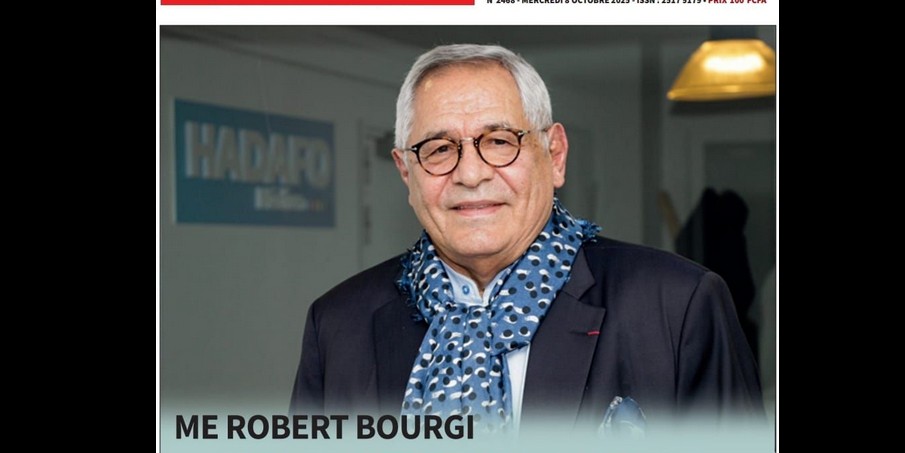
Robert Bourgi Turns on Paul Biya, Declares Him a Political Corpse
- News Team
- 10.Oct.2025
- Details
- Editorial
Heat in Maroua: What Biya’s Return Really Signals
- News Team
- 08.Oct.2025
- Details
- Editorial

Issa Tchiroma: Charles Mambo’s “Change Candidate” for Cameroon
- News Team
- 11.Sep.2025
- Details
- Editorial


