Headlines
- Details
- Headlines
It was at around 1pm today 31 May, that His Lordship Jean Marie Benoit Balla's car was found by the Ebebda river bridge.
The Senior Divisional Officer of Mbam and Inoubou, Tchoffo Maurice explains that, a priest of that locality was the one who saw and recognised the Bishop's car by 1pm before calling his attention even though the Shepard of the Bafia diocesan religious flock had gone missing since morning.
When people learnt about the incident, they went there to see for themselves what had happened. Unfortunately for the blood bubbling population, their presence at the scene rather added their confusion as they didn't understand if the Bishop was dead or not.
The reason for the confusion is a piece of paper that was seen in the car, on which was written "I'm in the water", insinuating that Bishop Benoit had jumped into the water.
It's still not clear if the man of God is dead or not. Even if he were dead, it will still not be clear if he commited suicide or not. So investigations are going on to really know what happened.
48-year old Bishop Jean Marie has been the Bishop of Bafia since 2003.
- Details
- Rita Akana
- Hits: 2750
- Details
- Headlines
The detained leader of the Anglophone Civil Society Consortium, Barrister Felix Agbor Balla has rejected the idea of a conditional release on bail which has been under negotiation for several weeks now.
Agbor Balla’s message is contained in a tweet posted on Monday @maenowtabetrust. “ IT’S OFFICIAL@Free FelixAgborB HAS DENIED BAIL, HE SAYS ONE FOR ALL AND ALL FOR ONE,” the tweet reads.
Barrister Agbor Balla, Fontem Neba, Ayah Paul Abine and several other Anglophone Cameroonians are currently being deprived of liberty in Yaounde, in connection with the unrest in Southern Cameroons.
Recently, the case against Agbor Balla and the 27 others held in a military tribunal in Yaounde was adjourned for June, as the defending team demands a release on bail.
Barrister Balla’s message which has been retweeted 27 times or so comes as a surprise to many who were hoping for at least a temporary release.
The unrest in West Cameroon leading to the arrest of those men is yet to abate as such, in spite of growing pressure from the government coupled with “unscrupulous tactics” to conceal the truth and reveal misleading information.
The Anglophone Struggle began very actively in November last year when common law lawyers took to the street to denounce their marginalization as well as the invasion of their legal life by the majority-Francophone Cameroon.
Teachers and students later joined the move and it degenerated into a mighty fire that Biya and his ninjas have done everything possible to put out, to little avail.
- Details
- Rita Akana
- Hits: 2473
- Details
- Headlines
The 44th Ministerial Meeting of the United Nations Standing Advisory Committee on Security Questions in Central Africa (UNSAC) has opened today 29 May to 02 June 2017 in Yaoundé. It has begun with the meeting of experts who, during three days, and will assess the security and geopolitical situation in the eleven member states of the Committee (Angola, Burundi, Cameroon, Central African Republic, Chad, Congo, Democratic Republic of Congo, Equatorial Guinea, Gabon, Rwanda, and Sao Tomé and Principe).
Discussions are hinged on issues related to, inter alia, political governance and the multiple factors that threaten the peace and stability of the subregion. Participants will exchange views on the regional dimension of certain crises, including that of the Central African Republic. They will also deliberate on ways and means to strengthen the fight against phenomena such as armed violence and terrorism, maritime insecurity in the Gulf of Guinea, poaching and illicit trafficking in wildlife, electoral tensions, drug trafficking, transnational organized crime, and the proliferation of small arms and light weapons.
On the latter point, the 44th Meeting of the Committee will take place almost three months after the entry into force of the Central African Convention for the Control of Small Arms and Light Weapons, their Ammunition and all Parts and Components that can be used for their Manufacture, Repair and Assembly, also known as the Kinshasa Convention – adopted on 30 April 2010 at the 30th Meeting of the Committee in Kinshasa (Democratic Republic of Congo). This entry into force was facilitated by the deposit on 6 February 2017 of the sixth instrument of ratification by Angola (preceded a few years earlier by Cameroon, the Central African Republic, Chad, Congo and Gabon).
UNOCA expressed its satisfaction with this positive development, to which it has contributed through various advocacy actions with the member states of the Committee. “We will continue to support efforts of the subregion in its determination to prevent, to combat and to bring an end to the uncontrolled flow of arms in Central Africa,” said François Louncény Fall, the Special Representative of the UN Secretary-General for Central Africa and Head of UNOCA, encouraging countries that have not yet done so to ratify the Kinshasa Convention. “This would strengthen confidence among states and reassure the population, the main victims of this phenomenon, which is also a hindrance to the sustainable development of Central Africa,” he explained.
The Special Representative will have the opportunity to raise this matter and many other crucial issues with heads of delegation to UNSAC. From 1 to 2 June, François Louncény Fall will take part in the Ministerial session, one of the highlights of which will be the reading of the message of the Secretary-General of the United Nations, António Guterres, at the official opening ceremony. The ceremony will also be marked by the establishment of a new Bureau of the Committee. The Minister of External Relations of Cameroon will hold the Presidency for a period of six months. He will succeed his counterpart of Sao Tomé and Principe, who hold this position since the 43rd Meeting of UNSAC – which took place from 28 November to 2 December 2016 in Sao Tomé.
Established on 28 May 1992 by the United Nations (at the request of ECCAS member States), the Committee, whose functioning has just been evaluated, is a valuable tool for preventive diplomacy. In keeping with the spirit of one of the founding workshops of this institution (UNSAC) organized in Yaoundé from 17 to 21 June 1991, the main mission of the Committee is to promote confidence-building measures at regional and subregional levels in order to mitigate tensions and advance the disarmament and non-proliferation of small arms and light weapons in Central Africa. Since its creation, the Cameroonian capital has already hosted several of its sessions. The last one dates back to the 26th Meeting held from 3 to 7 September 2007.
- Details
- Hits: 2181
- Details
- Headlines
Officials of the Cameroon Railway Corporation (CAMRAIL) are on brink following the release of the report of the commission of Enquiry that was set up by President Paul Biya to investigate the cause(s) of the Eseka train accident that killed over 150 persons on October 21, 2016.
After going through the report, President Paul Biya has ordered for the heads of CAMRAIL officials who caused the train accident to roll.
The presidential ultimatum is contained in a recent press release issued by the Secretary General at the Presidency of the Republic, Ferdinand Ngoh Ngoh.
The finding of the inquiry commission which was headed by Prime Minister, Philemon Yang, has placed the accident at the door steps of CAMRAIL.
It is based on the commission’s report that Biya demanded that appropriate sanctions should be meted out on those responsible for the accident.
On the situation of the accident victims, Biya instructed CAMRAIL to compensate the families of the deceased as soon as possible and for the disbursement of 1 billion FCFA to the victims of the accident.
The commission’s report also faulted CAMRAIL for the non respect of some safety rules. According to the report, the unlucky train did not only have undue extension of coaches, but was also overloaded.
“CAMRAIL did not do proper pre-departure inspection of the train’s brakes system,” the report stated.
Biya further ordered for the opening of discussions among CAMRAIL partners for stronger State presence in the company and greater focus on passengers’ safety.
“There should be an establishment of railway heritage management which will be responsible for maintaining the railway network and implementing modernisation and extension projects and there should be the enhancement of the national major disaster and risk prevention and management system.
The President also ordered for the construction of a national edifies in Eseka.
The Eseka train accident happened on October 21, 2016, after a culvert at Manyai collapsed, impeding circulation on the Douala-Yaounde highway.
- Details
- Abeh Valery
- Hits: 1544
- Details
- Headlines
Cameroon and Nigeria have intensified efforts to fight piracy and banditry along the Gulf of Guinea. And as a result of these joint operations, the number of hijackings have drastically fallen down.
Piracy in the Gulf of Guinea is said to have overtaken the coast of Somalia. According to the International Maritime Bureau (IMB), the Gulf of Guinea was ranked the most dangerous sea coast in 2016. But joint efforts from Cameroon and Nigeria have succeeded to reduce piracy along their borders in the Gulf of Guinea by about 85 percent.
The two countries still face enormous threats from armed gangs, and Chinese vessels fishing right in protected areas thereby destroying aquatic resources. The navy teams are now working together to stop illegal fishing and fight piracy which is responsible for the many kidnappings that take place in the gulf.
More than 205 pirate raids in the Gulf of Guinea have been recorded over the past eleven years, according to IMB. Chief Petty Officer Charles Tieutche from the Cameroon navy is the commander in-charge of Cameroon's warship, Le Ntem, which is patrolling parts of the Gulf of Guinea.
"We have taken necessary measures to respond to any attacks from pirates and we are prepared to defend and intervene in any unfortunate circumstances at sea," Tieutche told DW.
When a ship is spotted, the patrol teams have to establish its mission and search it if need arises before giving it a green light to continue. And once vessels are caught in the protected waters, it means that arrests have to be made. As Tieutche and his men continue with their patrol, they spot a Nigerian vessel in the protected waters. The occupants are arrested and the captain, Fidelis Uche, has to painstakingly explain to the patrol team, if, he and his men have to be let off the hook.
"Around two o'clock, I entered the Cameroon waters unknowingly. When the navy came and showed me the chart, I realized that I was at fault," Uche explained.
Such events are not common, and many criminal gangs are out there to hijack oil tankers. Since the beginning of this year, fourteen hijackings were reported in the Gulf of Guinea.
Rear Admiral James Oluwole of Nigeria eastern naval command in Calabar said their joint efforts with Cameroon at the coast have greatly paid off. "We have seen better collaboration in recent days and have been able to fight acts of piracy which was not easy before. We've also made some arrests where necessary all the way from Angola to Senegal," Oluwole said.
Much as there are concerted effortsto fight piracy, criminal gangs involved have also become more aggressive in their operations. Piracy has affected countries along the Gulf of Guinea which supply around 40 percent of Europe's oil and 29 percent of petroleum products to the United States.
DW
- Details
- Rita Akana
- Hits: 1805
- Details
- Headlines
Despite inviting several heads of state from Africa, G7 leaders meeting in Sicily had little to say about the many challenges facing the continent. Migration and terrorism are only some of them.
By holding the summit on the island of Sicily, Italy had hoped to make Africa the main focus of the annual G7 meeting on Friday and Saturday.
"Perhaps the choice (to be in) Taormina and Sicily says much about how important our relations are with Africa," Italian Prime Minister Paolo Gentiloni said in opening remarks.
Over the past four years, hundreds of thousands of migrants have taken up refuge in Sicily after fleeing war and poverty in their African countries.
Italy was hoping to convince fellow G7 members about the positive effects of legal migration as a means of slowing down migrants' dangerous boat trips via the Mediterranean, but that idea was dismissed by the Americans and the British.
Unfulfilled aid pledges
Niger's President Mahamadou Issoufou, who attended Saturday's session, called on the G7 leaders to take swift measures to end the Libyan crisis.
"The fight against terrorism in the Sahel countries and the Lake Chad region demands that urgent measures be taken to put out the Libyan cauldron," Issoufou said in his opening remarks.
He also berated the leaders of the world's most industrialized countries for failing to fulfill their aid promises to tackle poverty.
His West African nation is one of the poorest nations on earth, with more than 60 percent of the population living below the poverty line. Niger is one of the main transit points for African migrants seeking to reach Europe through Libya.
"Be it Niger, a transit nation, or the countries of origin, it is only through development that we will prevent illegal migration," Issoufou said.
French President Emmanuel Macron, who is one of the four new leaders attending the G7 meeting for the first time, said more needed to be done to support countries like Niger. France has more than 4,000 troops stationed across West Africa.
G7 plus Africa?
Kenya's President Uhuru Kenyatta was quoted by the Daily Nation, a Kenyan newspaper, as questioning the wisdom of sidelining African leaders from such high-profile meetings when the continent was a focus point of issues affecting the world.
- Details
- Rita Akana
- Hits: 1551
Breaking News Article Count: 2
# Breaking News
Get the latest and most urgent news from Cameroon and the world with our breaking news section. We deliver you the news as it happens, with live updates, alerts, and analysis. You'll find out about the major events and incidents that affect Cameroon and its people, such as conflicts, disasters, elections, and protests. Our breaking news section also provides you with the reactions and responses from the authorities, experts, and the public. Stay tuned and stay informed with our breaking news section.
Out of Cameroon Article Count: 10
# Top Stories out of Cameroon
Don't miss the most important and trending news out of Cameroon and beyond Africa with our top stories section. We bring you the latest and breaking news from various domains, such as politics, economy, health, security, and diplomacy. You'll also find exclusive reports, investigations, and features that showcase the diversity and challenges of Cameroonians in the diaspora. Our top stories section is updated regularly to keep you informed and aware of the current affairs and developments in the world.
Local News
- Details
- Society

Kribi II: Man Caught Allegedly Abusing Child
- News Team
- 14.Sep.2025
- Details
- Society

Back to School 2025/2026 – Spotlight on Bamenda & Nkambe
- News Team
- 08.Sep.2025
- Details
- Society

Cameroon 2025: From Kamto to Biya: Longue Longue’s political flip shocks supporters
- News Team
- 08.Sep.2025
- Details
- Society

Meiganga bus crash spotlights Cameroon’s road safety crisis
- News Team
- 05.Sep.2025
EditorialView all
- Details
- Editorial
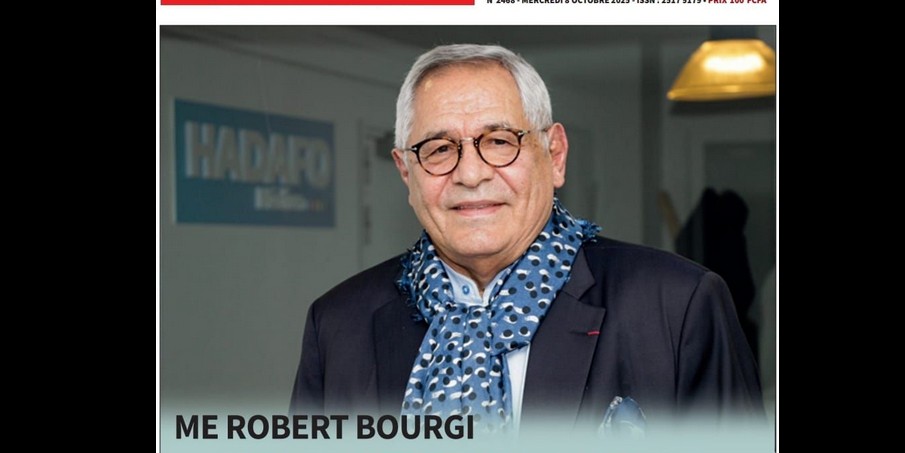
Robert Bourgi Turns on Paul Biya, Declares Him a Political Corpse
- News Team
- 10.Oct.2025
- Details
- Editorial
Heat in Maroua: What Biya’s Return Really Signals
- News Team
- 08.Oct.2025
- Details
- Editorial

Issa Tchiroma: Charles Mambo’s “Change Candidate” for Cameroon
- News Team
- 11.Sep.2025
- Details
- Editorial


