Headlines
- Details
- Headlines
Football in Cameroon has grown rapidly in popularity over the past 30 years. The peak was in 1990 when Cameroon reached the quarter finals with the Milas, Omam Biyiks, Tatoh Stephens etc. This was a major breakthrough for the African continent as Cameroon was the first African nation to reach that stage. When this team aged away, Cameroon football and hence popularity died a natural death until the rebirth in 2000 and 2002 when it consecutively won 2 Africa nations cup trophies, this time with the with the Mbami Modeste, Samuel Etoo, Song Bahanak, Idriss Carlos Kameni.
Despite all this football achievements, the Cameroon government seems to show extraordinary interest in the just ended Africa nation’s cup in Gabon where the young talented team sailed through to remove its sack cloth after 15 good years. The national AFCON Trophy tour organized by the government has raised many questions in the minds of the common man.
Are Cameroonians so excited about seeing the trophy or is there a hidden agenda behind the tour? Did the government see the trophy as a pain killer considering the time it came in? These questions remain unanswered but one thing keeps coming to mind: The government’s emergency AFCON Trophy Tour might just be a political strategy to calm down the Anglophone problem.
- Details
- Tawe Gije Nkfunje
- Hits: 1134
- Details
- Headlines
Press Freedom: Committee To Protect Journalists,CPJ, Wants Cameroon Govt to Account for 8 Detained Journalists
The international independent press freedom advocacy organization, the Committee to Protect Journalists, CPJ, is demanding explanations from the Cameroon government in relation to the detention of at least eight Cameroonian journalists.
In a statement issued on march 1 2017, the CPJ wants the Minister of Communication to explain reasons for the detention of Atia Azohnwi, Amos Fofung, Thomas Awah Junior, Mfor Ndong, Hans Achumba, Tim Finnian, Jean Claude Agbortem, and Medjo Lewis, imprisoned for their work as journalists.
The CPJ also raised concerns as to why Cameroon’s Communication Minister, Issa Tchiroma earlier claimed there was no Cameroonian journalist in detention.
The CPJ buttresses its observation with the National Commission for Human Rights and Freedom’s 2017 report which confirmed the detention of some media practitioners.
Below is the full letter addressed to Cameroon's Minister of Communications
Issa Tchiroma Bakary
Minister of Communication
Hotel de Ville
Yaoundé
Via fax: +237 222 23 30 22;
Your Excellency,
We at the Committee to Protect Journalists, an independent press freedom advocacy organization, are concerned about compounding reports of measures to restrict the media in Cameroon, and request clarification regarding the reported imprisonment of at least eight journalists in the country.
During our conversation on February 15, you told us that Cameroon's government was "completely transparent" and that "people can speak their mind." You further said no journalist was in prison in Cameroon and that journalists should not "pretend to be arrested for their work." You requested that we forward you a list of detained journalists. We did this privately the same day and repeatedly but unsuccessfully attempted to follow up with you directly.
On February 20, the National Committee on Human Rights and Freedoms (NCHRF), an official body, confirmed the detention of at least five journalists. Since then we have heard reports of at least three other journalists jailed in Cameroon. We therefore request your assistance in reconciling your contention that no journalists are jailed in Cameroon with the conclusions of NCHRF, and request clarification on the location of the following journalists, any criminal charges against them, what alleged activities gave rise to those charges, and the status of any criminal proceedings against them:
- Atia Azohnwi, a journalist with The Sun newspaper and the Buea head of the Cameroon Association of English Speaking Journalists, whom security forces arrested with Amos Fofung on February 9, 2017, in Molyko, according to the NCHRF. According to a statement published on The Sun's Facebook page, security forces took Azohnwi, The Sun's political desk editor, to the Molyko precinct and then to the Judicial Police in Buea, before transferring him to the Judicial Police station in Yaoundé.
- Amos Fofung, Buea bureau chief of The Guardian Post, whom security forces arrested with Atia Azohnwi on February 9, 2017, in Molyko, according to the NCHRF. According to The Sun's Facebook page, police first held him in Molyko before transferring him to the Judicial Police station in Buea, and then in Yaoundé.
- Thomas Awah Junior, a journalist for and publisher of the monthly Aghem Messenger magazine, whom police arrested in Bamenda on January 2, was transferred to Yaoundé that evening before being sent to Kondengui Central prison two weeks later, a Yaoundé based Cameroonian journalist told CPJ, speaking on condition of anonymity for fear of retribution. Awah Junior remains in Kondengui Central Prison in Yaoundé according to a Yaoundé Military Tribunal document published by Cameroonian blogger Albert Nchinda.
- Mfor Ndong, publisher of the Bamenda-based newspaper Voice of the Voiceless, whom security forces arrested in Buea on February 9, 2017, according to the NCHRF.
- Hans Achumba, a journalist for Jakiri Community Radio in the Bui Division of the Northwest Region of Cameroon, whom police arrested on allegations of spreading opposition lawmaker Joseph Wirba's calls to resist the government in Yaoundé, according to the NCHRF. Achumba remains in Kondengui Central Prison in Yaoundé, according to the Yaoundé Military Tribunal document and a Cameroonian journalist who spoke to CPJ on the condition of anonymity, for fear of retribution.
- Tim Finnian, publisher of Life Time newspaper, whom security forces arrested on January 27, 2017, three days after he published an article alleging two English-speaking youths had died in state custody, according to an English-language Cameroonian newspaper The Star. He too has been transferred to Kondengui Central Prison in Yaoundé, according to the same military court document and additional Cameroonian journalists who spoke to CPJ on the condition of anonymity, for fear of retribution.
- Jean Claude Agbortem, co-founder of the online magazine Camer Veritas, whom police arrested on January 28, 2017, according to Nchinda.
- Medjo Lewis, editor of La Détente Libre, whom police arrested on February 22, 2017, and whom the Bafoussam High Court sentenced to two years in prison and a fine of 10 million Central African francs (US $16,131) for defamation, according to two Cameroonian journalists who spoke to CPJ on the condition of anonymity, for fear of retribution.
In recent months, the government has taken increasingly drastic steps to suppress the rights to transmit and receive information in Cameroon, particularly in predominantly Anglophone regions. Media outlets have been suspended, and journalists have been banned from practicing their craft, according to CPJ research. The internet has been inaccessible to residents of the northwestern and southwestern regions of Cameroon since January 17, 2017--"an appalling violation of [the] right to freedom of expression," as U.N. Special Rapporteur on freedom of expression David Kaye noted on February 10, 2017.
Particularly in light of these measures to restrict the media, we are concerned that Atia Azohnwi, Amos Fofung, Thomas Awah Junior, Mfor Ndong, Hans Achumba, Tim Finnian, Jean Claude Agbortem, and Medjo Lewis are imprisoned for their work as journalists, and respectfully ask that you clarify the reasons for their detention, where they are held, and their current legal status.
Sincerely,
Angela Quintal
Africa Program Coordinator
CC:
Sètondji Adjovi, Working Group on Arbitrary Detention, United Nations Office of the High Commissioner on Human Rights
Dr. Divine Chemuta Banda, Chairman, National Commission of Human Rights and Freedoms in Cameroon
David Kaye, United Nations Special Rapporteur on the promotion and protection of the right to freedom of opinion and expression
Simon Lyonga, National President, Cameroon Association of English Speaking Journalist (CAMASEJ)
Moussa Faki Mahamat, African Union Commission Chairman
Michel Tommo Monthé, Permanent Representative of Cameroon to the United Nations
Georges Nakseu, Directeur, Démocratie et Droits de l'Homme, Organisation Internationale de la Francophonie
Denis Nkwebo, President, Cameroon Union of Journalists
Faith Pansy Tlakula, Special Rapporteur on Freedom of Expression, The African Commission on Human and Peoples' Rights
- Details
- Solomon Amabo/CPJ
- Hits: 1374
- Details
- Headlines
When protesters marched on Nigeria's presidential villa earlier this month to complain about a biting recession, they were not repelled by baton-wielding policemen, the usual fate for anyone arriving uninvited at the gate of the country's power center.
Instead, Vice President Yemi Osinbajo, who is standing in for the country's sick leader, sent a vehicle to ferry the protest leaders to his office, where they complained about widespread corruption.
In a frank admission, Osinbajo acknowledged the government had failed to make as much progress fighting graft as it had hoped.
"We hear you loud and clear," he told the protesters.
President Muhammadu Buhari has been in London for six weeks on medical leave, raising questions over his capacity to govern Africa's largest economy.
In his absence, diplomats and business leaders say the presidency has acted with an energy rarely seen in the two years since Buhari, 74, was elected.
Civil servants say they are handling heftier workloads, while investors are praising a new, long-needed foreign exchange policy. Meanwhile, diplomats say Osinbajo's inner circle is gaining influence inside the presidency.
To be sure, Osinbajo has made clear his loyalty lies with Buhari, a retired general who has struggled to define a clear strategy to deal with Nigeria's slide into recession and stands accused by opponents of inaction.
But the 59-year-old lawyer is getting work done. He has relaxed visa rules to lure foreign investors -- a plan drawn up by Buhari but which like others got stuck in his chief of staff's office, according to diplomats.
Officials in the Aso Rock presidential complex in Abuja have seen their working hours extended to 7 p.m. when Osinbajo leaves, or later. Buhari and his aides typically close shop at 4 p.m., officials said.
"This man is a workaholic," one presidency insider said. "I wonder whether he rests at all because he even shifts some of the meetings to his official residence."
"BACK ON TRACK"
Nigeria tumbled into a full-year recession in 2016 for the first time in a quarter of a century as a slump in crude oil revenues hammered the OPEC member's public finances.
The Treasury has faced an acute shortage of hard currency that has piled pressure on the Naira, which still trades at a more-than 30 percent premium on the black market even after policymakers effectively devalued the currency for private individuals last Monday.
After stiff resistance from Buhari for a full devaluation throughout last year. With the president absent, last week's move was seen as testing the waters for a broader weakening.
The central bank's move came after the National Economic Council, an advisory body headed by the vice president, called for an urgent review.
"We believe the reform agenda is back on track," said Bismarck Rewane, CEO of Lagos consultancy Financial Derivatives. "The reform agenda has always been there but is more visible now with the vice president," he said.
The president's office has posted pictures on social media of Buhari recuperating to allay rumors his health was worse than publicly acknowledged, though none have been published for more than a week.
For now, there is no clarity on when Buhari, from the predominantly Muslim north, will return.
BUHARI'S BACKING
Osinbajo's leadership appears to have been accepted in the north, which under an informal deal with the Christian south should have its turn at the helm of power.
And he has won praise from southerners who felt neglected by Buhari, visiting both the commercial capital, Lagos, and the oil producing Niger Delta on several occasions. Buhari has visited neither as president.
Local residents say militant attacks on pipelines in the Delta have fallen since Osinbajo promised to drag the region out of poverty in a flurry of speeches.
Moreover, Osinbajo has showed himself to be swift to act.
On one trip to Lagos' international airport, he challenged officials on why the air conditioning and a luggage carousel were not working, and even inspected the toilets. The next day he fired the bosses of Nigeria's civil aviation.
Aides to Osinbajo stress that he is acting with Buhari's consent.
"President Buhari ... ensures that everyone falls in line," said Osinbajo's spokesman, Laolu Akande.
It is a message that Buhari loyalists are quick to reinforce. The president's political adviser, Babafemi Ojodu, said the two men spoke every day.
"There is nothing that has been done since the vice president started acting that is not something that started far back in the past," said Ojodu.
Reuters
- Details
- Rita Akana
- Hits: 1437
- Details
- Headlines
In his drive to replace senior officials linked to his predecessor Yahya Jammeh, Gambian President Adama Barrow has sacked the head of the armed forces. DW talks to analyst Alex Vines about the new leader's strategy.
The Gambia's President Adama Barrow has dismissed the head of the armed forces, General Ousman Badjie, as he continues to clean house by removing senior officials linked to the dictatorial rule of his predecessor Yahya Jammeh.
Badjie, who swore allegiance to Barrow during the political standoff after the polls when Jammeh refused to step down, has been replaced by General Masanneh Kinteh. DW has been talking to Alex Vines, head of the Africa Program at Chatham House in London, UK.
DW: What do these changes at the senior military level say about President Barrow?
Alex Vines: It shows that President Adama Barrow is consolidating his power. He wants to put in the key strategic positions in the new Gambian government people that he fully trusts. These reshufflings and firing of people, including the head of the army, is an indication of that process. It should be seen as unsurprising and predictable that he would be doing this.
To what extent does he control the military?
Clearly the military was very fragmented in its support for him in the standoff. He is trying to assert greater authority over the military, given that that was the one part of the Gambian institutions that he was less sure about their loyalty. And I think that’s what this is all about.
The head of the prison service has also been removed. Was this move necessary, or was it just a ploy to appease Barrow's supporters?
Barrow also has got to appease supporters, as you say. I think there is some signaling of change, particularly because the prisons, and especially one particular prison, were a focus of torture, harassment and illicit detention. It was clear that Adama Barrow would need to reform the prison service.
Do these changes help unite the country, or do they widen the rift between Barrow supporters and opponents?
Well, we’ll see. It does need to be evident that President Barrow also retains people of technocratic ability who were involved with the previous administration of Yahya Jammeh. What would be wrong would be to get the atmosphere that this was the kind of purge and witch-hunt associated with the previous president. There aren’t enough skilled people in the Gambia to fill all these positions and there are individuals that worked in the Jammeh administration that could probably serve the Gambia very well in this important moment of rebuilding the economy and attracting international investment.
DW
- Details
- Rita Akana
- Hits: 1289
- Details
- Headlines
The US President has addressed a joint session of Congress for the first time, pushing a number of controversial policies like a border wall and ending Obamacare. His speech also called for unity in the legislature.
US President Donald Trump delivered his first address to Congress since taking office on Tuesday in a speech ranging from immigration to healthcare to protectionism.
In an effort to stem criticism that he is hostile towards minority communities, Trump opened with a line about Black History Month coming to a close, acknowledging that "work remains to be done" in the field of civil rights. The president also condemned recent acts of vandalism and threats to Jewish communities as well as a racially motivated shooting in Kansas City last week.
The US is a "country that stands united in condemning hate," Trump said.
Trump reiterates campaign promises
Trump returned to a number of key promises from his successful election campaign, such as a vow to "drain the swamp" of Washington corruption by implementing new laws against ex-lawmakers becoming lobbyists. He also promised to "soon begin the construction of a great great wall" at the US-Mexico border, without elaborating on how that would be managed and funded.
Another chorus of the 2016 campaign, to "repeal and replace Obamacare," was met with applause from Republicans what sounded like an equal number of boos from Democrats. The Affordable Care Act, which has provided healthcare for 20 million previously uninsured Americans, has been the source of much consternation for Republican lawmakers recently, who have been met by crowds of angry constituents afraid of losing their coverage.
The president then turned to his immigration policies, which critics claim unfairly target Muslims. In January, an attempt to ban travel from seven Muslim-majority countries prompted widespread protest and was eventually blocked by a federal court.
In protest, many Democratic lawmakers brought refugees and immigrants as their guests to the speech:
Immigration overhaul, tax cuts
Trump called for an overhaul to promote legal immigration, following the "merit based" model of countries like Australia and Canada.
He then promised to create a database documenting crimes committed by illegal immigrants, despite numerous studies suggesting that immigrants are actually less likely to commit violent crime than those born in the US.
He also took Congress to task for partisan gridlock. Gesturing to both sides of the aisle, he called on lawmakers to "join forces and finally get the job done."
Trump's talk then took an emotional turn as he honored victims of violent crimes and the survivor of a rare disease who were sitting in the audience. He then asked everyone to applaud a teary-eyed Carryn Owens, the widow of Navy SEAL Ryan Owens, who was killed in a botched raid in Yemen ordered by Trump last month. He praised Owens, who "laid down his life for his friends, for his country, and for our freedom - we will never forget him."
Infrastructure spending
The speech was not entirely straight-down-the-line conservative, however. Trump made reference to a recent meeting with Canadian Prime Minister Justin Trudeau, and expressed his commitment to worked with Canada's leader to promote female entrepreneurship. This, and mention of creating paid family leave were the rare remarks that drew applause from both Democrats and Republicans.
In another moment of damage control, Trump walked back comments critical of NATO that have had top allies worried for weeks. "We strongly support NATO," the president said, but reminded member nations that "ee expect our partners, whether in NATO, in the Middle East or the Pacific to take a direct and meaningful role in both strategic and military operations, and pay their fair share of the cost."
The overall theme of the speech, which ran a bit like a best-of list of Trump's favorite topics, was the protectionism the new president has become known for. He vowed to make it more difficult for companies to leave the US, to take money that had been spent supporting foreign countries and use it to fix the "crumbling infrastructure" across the country, and to create incentives for companies to "buy American and hire American."
"America must put its own citizens first, because only then can we truly make America great again," Trump said.
DW
- Details
- Rita Akana
- Hits: 1225
- Details
- Headlines
Police said that no ransom was paid and the two Germans were freed after being kidnapped in Kaduna state. They were seized near a road between Abuja and Kaduna.
The two Germans had been abducted on Wednesday during excavation work at Jajela village in Kaduna state.
No ransom was paid when they were freed late on Saturday, a police official said, without giving details.
The men were kidnapped along a road running from Abuja to Kaduna, which will soon serve as a temporary entry point for visitors to the capital, Abuja. The main airport in Abuja will be closed for repairs for six weeks beginning in early March.
During that time those travelling to the capital via air will have to land in Kaduna and then make the 100 mile (160 km) journey to Abuja by bus.
Kidnappings for ransom are not uncommon in Nigeria, and several have occurred along this stretch of road in recent years. One victim, last summer, was Sierra Leone's deputy high commissioner.
Most international airlines have said they will not fly into Kaduna, and some embassies in the capital are trying to limit staff travel while the airport is being repaired.
- Details
- Rita Akana
- Hits: 1038
Breaking News Article Count: 2
# Breaking News
Get the latest and most urgent news from Cameroon and the world with our breaking news section. We deliver you the news as it happens, with live updates, alerts, and analysis. You'll find out about the major events and incidents that affect Cameroon and its people, such as conflicts, disasters, elections, and protests. Our breaking news section also provides you with the reactions and responses from the authorities, experts, and the public. Stay tuned and stay informed with our breaking news section.
Out of Cameroon Article Count: 10
# Top Stories out of Cameroon
Don't miss the most important and trending news out of Cameroon and beyond Africa with our top stories section. We bring you the latest and breaking news from various domains, such as politics, economy, health, security, and diplomacy. You'll also find exclusive reports, investigations, and features that showcase the diversity and challenges of Cameroonians in the diaspora. Our top stories section is updated regularly to keep you informed and aware of the current affairs and developments in the world.
Local News
- Details
- Society

Kribi II: Man Caught Allegedly Abusing Child
- News Team
- 14.Sep.2025
- Details
- Society

Back to School 2025/2026 – Spotlight on Bamenda & Nkambe
- News Team
- 08.Sep.2025
- Details
- Society

Cameroon 2025: From Kamto to Biya: Longue Longue’s political flip shocks supporters
- News Team
- 08.Sep.2025
- Details
- Society

Meiganga bus crash spotlights Cameroon’s road safety crisis
- News Team
- 05.Sep.2025
EditorialView all
- Details
- Editorial
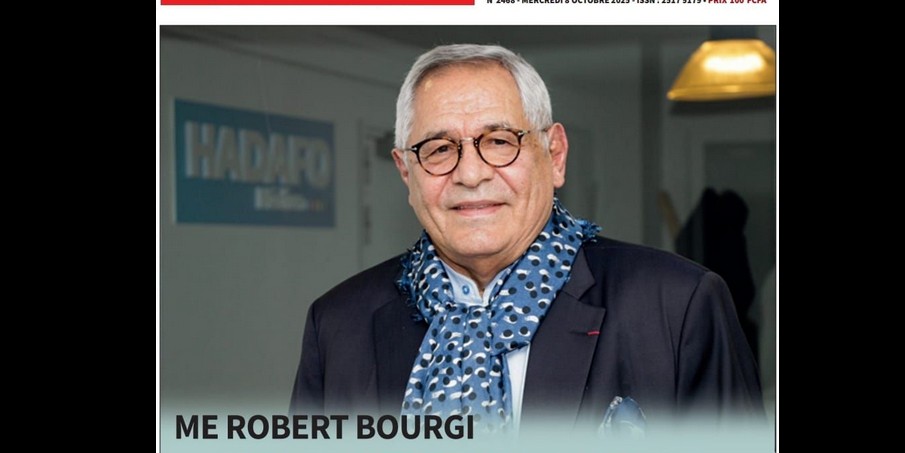
Robert Bourgi Turns on Paul Biya, Declares Him a Political Corpse
- News Team
- 10.Oct.2025
- Details
- Editorial
Heat in Maroua: What Biya’s Return Really Signals
- News Team
- 08.Oct.2025
- Details
- Editorial

Issa Tchiroma: Charles Mambo’s “Change Candidate” for Cameroon
- News Team
- 11.Sep.2025
- Details
- Editorial


