Society

- Details
- Society
The hike in prices of some basic foodstuff in the city of Douala is the cause of concern in many households. In most foodstuff markets in the economic capital, traders attribute the increases to change of season and foodstuff suppliers that fix prices. The Minister of Trade, Mbarga Atangana Luc Magloire reportedly took a marathon inspection of the various food markets in Douala to verify the prices of basic commodities. At the time of filing this report, the National daily, Cameroon Tribune made public the following observation:
Onion
Buying onion for a moderate family of six that formerly cost FCFA 1,000 now goes for over FCFA 2,000. In Douala’s Onion Market, a trader said a sack they used to buy for between FCFA 35,000 and FCFA 40,000 now sells at FCFA 75,000. According to her, onion cultivated in huge quantity in the northern regions of Cameroon is not yet in season. What is sold now is leftover stock from the peak harvest months of May, June, July and August, she explained. During peak seasons, onion for FCFA 300 can sufficiently feed a family of six. Though onion grown in the country is more palatable, consumers now find solace in imported onion sold at FCFA 15,000 for 25 kg because it is cheaper.
Irish Potato
Most households that have the habit of preparing Irish potato as snacks for their kids have since turned to pancake and spaghetti. At the Grand Hangar Market in Bonaberi, a 15-litre bucket of Irish potato that sold for FCFA 5,500 now barely feeds a household of more than eight people. Irish potato, which now sells for FCFA 35,000 per sack, has just two months of abundance - June and July, when the price per sack falls down to FCFA 25,000. Irish potato is mostly cultivated in the North West and West Regions.
Tomato, Garri
The price of tomato fluctuates from time to time. According to traders, there is no fixed season for the vegetable fruit. The prices fluctuate according to input, harvest and transportation, sources explained. When the harvest is good, the price is cheaper, and vice versa. At Douala’s Sandaga Market last week, a basket of tomatoes sold for FCFA 10,000. A week after, it dropped to FCFA 5,000 in the same market. On the other hand, Garri, which is mostly produced in the South West and North West Regions, has also witnessed an increase in price. A 15-litre-bucket formerly selling for FCFA 4,500 now goes for FCFA 5,500 in most Douala markets.
Beans
Beans is of three main varieties - white, red and black. White beans is more expensive than the red type. The white type, which is particular not only for its unique colour, but also for its taste, goes for FCFA 9,000 for a 15-litre-bucket; while the red type is sold at FCFA 8,000 for the same quantity. The black type is the cheapest among the three. During harvest season, the price reduces by FCFA 3,000. All the three beans varieties are cultivated in the West and North West Regions.
- Details
- Ngwa Bertrand
- Hits: 1217
- Details
- Society

The water crises in Kumbo, Bui Division in the North West Region which has been the center of controversy for months opposing the Fon of Nso, His Royal Highness Sehn Mbinglo 1, the Mayor of Kumbo, Njong Donatus and the Nso Development Association each claiming ownership of the distribution and collection of water bills in the municipality is now in court. As the confusion reigns, there are two functional structures. One at the Fon's palace for Nso Community Water [NCW] and another controlled by the Kumbo Council under the auspices of the Kumbo Water Authority {KWA}.
Cameroon Concord understands the Fon in a law suit *Royal Proclamation on the KWA* of 10/2/2008 and another on 26/10/2015 denounced an earlier memorandum addressed to the Prime Minister and the Governor of the Region by the Mayor of Kumbo claiming the population drinks dirty water, suffers from high water bills and the lack of public taps in the municipality. The Fon says the water in Kumbo was a gift from the Canadian government through their son the late Bernard Fonlon and requires that the palace controls the distribution of the precious liquid adding that the Mayor is alleged to have swindled some money aimed at ameliorating the water situation in Kumbo.
Reacting to these allegations by the Palace and the Nso Development Authority, Mayor Njong Donatus during a council session of 5/11/2015 denied all claims saying the Kumbo council stands a better chance in supplying portable water to the population and regretted that because of the Fons intransigence, the population has gone for close to three months without drinking water as the Palace on July 5th this year chased away workers of the KWA from their office by putting fetish concoction on the door. The Mayor further informed councilors that a motion has been filed in the Bui High Court praying that the institution should stop the illegal activities going on at the Fon Palace and denied earlier claims that he had taken the Fon to court.
It is vital to include in this report that when the water project in this locality was commissioned by the Canadians, an attempt by the country’s defunct water corporation, SNEC to take over attracted a violent reaction from the population whereby the office of the company was shattered. Since then, the management of drinking water in Kumbo has been controversial. Attempts by the Bui administration including that of the Governor of the Region, Lele L`Afrique to resolve the stalemate have all met with a stone wall. The confusion over who controls the distribution of the water supply in Kumbo is far from being over.
- Details
- Ngwa Bertrand
- Hits: 1259
- Details
- Society

The hike in prices of some basic foodstuff in the city of Douala is the cause of concern in many households. In most foodstuff markets in the economic capital, traders attribute the increases to change of season and foodstuff suppliers that fix prices. The Minister of Trade, Mbarga Atangana Luc Magloire reportedly took a marathon inspection of the various food markets in Douala to verify the prices of basic commodities. At the time of filing this report, the National daily, Cameroon Tribune made public the following observation:
Onion
Buying onion for a moderate family of six that formerly cost FCFA 1,000 now goes for over FCFA 2,000. In Douala’s Onion Market, a trader said a sack they used to buy for between FCFA 35,000 and FCFA 40,000 now sells at FCFA 75,000. According to her, onion cultivated in huge quantity in the northern regions of Cameroon is not yet in season. What is sold now is leftover stock from the peak harvest months of May, June, July and August, she explained. During peak seasons, onion for FCFA 300 can sufficiently feed a family of six. Though onion grown in the country is more palatable, consumers now find solace in imported onion sold at FCFA 15,000 for 25 kg because it is cheaper.
Irish Potato
Most households that have the habit of preparing Irish potato as snacks for their kids have since turned to pancake and spaghetti. At the Grand Hangar Market in Bonaberi, a 15-litre bucket of Irish potato that sold for FCFA 5,500 now barely feeds a household of more than eight people. Irish potato, which now sells for FCFA 35,000 per sack, has just two months of abundance - June and July, when the price per sack falls down to FCFA 25,000. Irish potato is mostly cultivated in the North West and West Regions.
Tomato, Garri
The price of tomato fluctuates from time to time. According to traders, there is no fixed season for the vegetable fruit. The prices fluctuate according to input, harvest and transportation, sources explained. When the harvest is good, the price is cheaper, and vice versa. At Douala’s Sandaga Market last week, a basket of tomatoes sold for FCFA 10,000. A week after, it dropped to FCFA 5,000 in the same market. On the other hand, Garri, which is mostly produced in the South West and North West Regions, has also witnessed an increase in price. A 15-litre-bucket formerly selling for FCFA 4,500 now goes for FCFA 5,500 in most Douala markets.
Beans
Beans is of three main varieties - white, red and black. White beans is more expensive than the red type. The white type, which is particular not only for its unique colour, but also for its taste, goes for FCFA 9,000 for a 15-litre-bucket; while the red type is sold at FCFA 8,000 for the same quantity. The black type is the cheapest among the three. During harvest season, the price reduces by FCFA 3,000. All the three beans varieties are cultivated in the West and North West Regions.
- Details
- Ngwa Bertrand
- Hits: 927
- Details
- Society

A typical Cameroonian journalist wants to see the profession clean says former CRTV Buea station manager. Asonglefac Nkemleke tells Cameroon Concord that what he reads or hear sometimes about journalism in Cameroon turns him off because of the lack of professionalism in editing and presentation. The veteran Cameroon Radio and Television's Mister News also speaks of former Prime Minister Chief Inoni, Governor Oben Peter Ashu, Minister Peter Agbor Tabi and Prof. Elvis Ngolle Ngolle in this soul-searching interview with Cameroon Concord's Soter Tarh Agbaw-Ebai
Cameroon Concord: Some Cameroonians refer to you as a legend, some call you a legal frame work for journalistic references, and others remember you as a man who represented everything positive in Cameroonian journalism. Mr. Asonglefac Nkemleke, who do you say you are?
Asonglefac Nkemleke: A legend? A legal framework for journalistic reference? To tell you the truth, I feel so flattered by those descriptions and inferences. Anyway, when you serve the public, you expect such language from those that loved or hated you for what you did or did not do.
But, to answer your question, I will simply say that I see you are out to dig deep into this son of Lewoh in Lebialem Division in the South West Region. In fact, I am just an ordinary human being who was well-raised, I believe, and who embraces the challenges and realities of his times and sees and lives accordingly. I put myself on retirement from practicing journalism in Cameroon because of an atmosphere that became intolerant and suspicious of every journalistic act by those Cameroonians who appeared not to toe the “official” line.
I am that individual that seeks perfection in an imperfect world, a convinced Catholic Christian who believes that doing right, serving humanity, and lifting others up is the best way to go. I am a committed family man who believes in the sanctity of marriage and who believes very strongly that children must be fully supported to develop their potentials and become whatever it is that positively places them in the limelight. Some say that I am too open, too exposed; but I am just an ordinary citizen who seeks to fill up that half-empty glass – otherwise said, I am an optimist who fervently believes that there is nothing so wrong with Cameroon that cannot be fixed with what is right about what Etub’Anyang called “This Good Old Country.”
Cameroon Concord:You certainly have seen it all as a long serving Cameroonian journalist, what in your humble opinion is the bill of health of the state of the media in Cameroon today? Positive or negative?
Asonglefac Nkemleke: Having been away from Cameroon for a long while now, it would be unfair of me to praise or condemn what I read or hear from the mainstream or social media in this country. But what I read or hear sometimes turns me off because of the lack of professionalism in the editing and/or presentation of news or other programmes. Mediocrity seems to be so available it is served around as easily as getting a drink from the corner off licence. I think the desire to become a star blinds many practitioners: journalistic practice requires patience and time to mature and become readily consumable; and the quality of a journalist’s work is what brings that journalist fame. But remember, fame is like a vapor and those who applaud you today will be the first to condemn you when you step on their toes in the work you do; or when the quality of the work you present is sloppy and/or lacks the facts and the grammatical quality. Just as 20 or 200 or whatever number of political parties do not make a democracy, a myriad of newspapers, radio and television stations, magazines, blogs, etc. do not make a good media environment. Quality, backed by facts, faultless grammatical presentation and fluency are what sustain and keep any form of medium of communication. It goes without saying therefore, that professionalism is what we seek. I feel there is still a lot of amateur practice out here. But, there is room for improvement. Just as we hear in the words of that great Poem, “Desiderata”, which I introduced in Cameroon Report (in 1979) – today’s Cameroon Calling, it is necessary to “go placidly amid the noise and the haste…” so as to better serve your audience.
Cameroon Concord: Kindly talk us through your time with the Cameroon Radio and also when it was merged with the television.
Asonglefac Nkemleke: That’s certainly another tall request. But it is a request that takes me back to October 1977 following my graduation from the International Higher School of Journalism (better known then by its French acronym, ESIJY). I was recruited by the Ministry of Information and Culture and posted to the Radio, the National Station in Yaounde. I was warmly welcomed by elders in the house like Paul Kode, Gideon Taka, Sammy Anguh, Perps Abea Ntche, Frida Kima, Anne Tamko, Olive Shang, etc. Paul Kode let me on Luncheon Date almost immediately. So did Gideon Taka who used to coordinate Cameroon Report. Then I became an early morning newscaster and, eventually news reporter, where I covered both the Presidency and most major assignments. That, I can say, is where things got better for me. Then, while on leave in the then Victoria, my late father-in-law came in one afternoon looking concerned. He asked me if I had not overstayed my leave. I said I had not. Then he told me that they had called my name on the radio in the French language news and I should certainly go back to Yaounde to find out why. I returned to Yaounde to learn that I had been appointed Assistant Editor-in-chief of the News Department. By virtue of that appointment I became the coordinator of the English language news and consequently the presenter of the Sunday Morning network programme, Cameroon Report as today’s Cameroon Calling was known then. That appointment lasted through December 1980. On January 3rd or so, I was one of the Cameroon Report Team members that were, like the sower in the Bible, scattered across the country. I can say that I fell on fertile ground as I was appointed Chief of Station, Radio Buea where I served until August 1985. In March 1988, while serving in my second year as Chief of Station Radio Maroua in the Far North Province, and following the merger of Radio and Television earlier, I was confirmed Station Manager. But I soon left for the United States as a Fulbright Fellow to pursue a Master’s degree in Communication: Journalism and Public Affairs at the American University in Washinton, D.C. I returned home just as the wind of change was blowing in from Eastern Europe and found myself participating in the Sunday May 6 edition of Cameroon Report that led 13 of us to Kondengui and paved the way for my request from management to deploy to Buea.
Cameroon Concord: We have recorded some under-the-table talk ever since you left the Cameroon Radio and Television. Our readers would love to know why you left.
Asonglefac Nkemleke:Thank you for that question. I have always been inspired by what I read in the Holy Bible. So to start off I will refer to Ecclesiastes and say that for everything, there is a reason. Things happen for a reason. I would like your readers (and my one time fans) to know that I left CRTV for a number of reasons:
- Firstly, when your regional administrator is against you and the work that you do (no matter how professionally you do that job);
- When the leader of your Christian faith makes late night phone call to your organization’s administration seeking your head because, like John the Baptist, you are critical of their ways;
- And when your boss succumbs to such calls and when the ever-present in-house intrigues in your place of employment continue unabated;
It becomes imperative for you to throw in the towel: better keep your head and lose the job. All those three things were stacked against my person. But, comforted by a musician’s words that “When the deck is stacked against (your person), simply play a different game;” I realized that the door might close but somewhere, somehow a window would open. The deck was heavily stacked against me and being someone who prefers professional performance to godfather-ship or unholy, unethical political alliances, I realized that the best way out was that I leave the boat before it ran aground. You may want to know that I left CRTV without collecting allowances that they owed me, I never applied for retirement, and I never quit the public service. I simply walked away, trusting my Creator to open better doors for me. The CRTV-window thus closed on me and I walked from the professional sunset and into a life-saving, promising sunrise. It has been better (it is always better) to leave in one piece than stay and regret in the future. I have always felt that I have been a victim of circumstances most of my life; but the next fork in the road has always brought me to better, safer grounds.
Cameroon Concord: It is extremely difficult to give an appraisal of your participation on prime time programs at CRTV. Tell us your most favorite programme and why?
Asonglefac Nkemleke: Long before I joined Radio Cameroon in 1977, one of my favorite, prime time programmes was Luncheon Date. Then there was Cameroon Report. When I returned to Radio Buea in 1991, my ambition was to revive the Radio Buea Magazine which mirrored Cameroon Report, but at regional level. That I succeeded in doing, when Mr. Gideon Taka, the Station Manager and John Ndahne, the Chief of Programmes asked me to take it on. I introduced a slot in that programme: “Dear Grandpa.” It was an echo of the feelings of Cameroonians … things I heard from here and there, questions listeners asked me either during my reportorial assignments in the field or through mail; or concerns I gathered from drinking spots around the Province. You know, a journalist must always go around armed with all his/her faculties: what are the people talking about? What are they most worried about? How can things get better? What is the political class doing to improve the lot of what Frantz Fanon refers to as “the wretched of the earth?” And so “Dear Grandpa” emerged as a slot to present those concerns in letter form in the Radio Buea Magazine. But, as it turned out, some administrators and ruling party apparatchiks thought that “Dear Grandpa” was a pro-Ahidjo thing meant to criticize in a ”nostalgic way” the goings on in the “Good Old Country”. It was not.
Cameroon Concord: As a media guru, you are aware of the happenings in Yaounde, Cameroon. I mean the arrest of some prominent government figures including the former General Manager of CRTV, Prof. Gervais Mendo Ze. What is your take on that?
Asonglefac Nkemleke: My first word would be: I am no media guru. I am just a retired journalist concerned about the goings-on in the world in which I live. I understand there has been a national fight against corruption in Cameroon for quite a while now. Whoever gets caught in the national anti-corruption net is none of my business. And to echo Pope Francis, who am I to judge who gets caught in that net? Each of us has a conscience and a responsibility to serve our country selflessly. Corruption is a cankerworm eating the very fabric of our society. Here I am, a son of Lebialem Division in the South West Region, who cannot drive to my village in Lewoh because credits allocated for the maintenance of the lone highway to my area have been pocketed by vote holders and their accomplices. Should I applaud or condemn such a vote holder when the Sparrow Hawk catches up with him/her? Our responsibility, as civil servants (not civil masters) is to be of service to our people and to our country. It is unfortunate that vote holders see their call to duty not as a call to service, but rather as a golden opportunity to pilfer funds for their private pockets. So let whoever has pilfered pay up when he/she is caught. Let them consider their ways, judge themselves, and do the right thing.
Cameroon Concord: You rose to the rank of CRTV Buea station manager and had to deal with a sadist like former Governor Oben Peter Ashu. How did you manage that difficult period at a time when every Lebialem person was seen as an SDF militant by Governor Oben Ashu?
Asonglefac Nkemleke:That, I must say is a strong word; “Sadist” I mean. Be that as it may, what you may not know is that becoming the Station Manager of CRTV Buea in 1997 or so was not news to me. I was returning to a role I had served back when it was Radio Buea in the 1980s. It was therefore not a new responsibility. In fact, when I returned to Cameroon from the United States with a Master’s degree in my pocket, I had no specific role in CRTV other than travel the country running commentaries at religious ceremonies. I found that personally enriching but professionally unrewarding. I therefore redeployed to CRTV Buea to be closer to my children and help CRTV Buea be what it once was: a showcase of professional regional radio productions. When eventually, without soliciting for it, I was appointed to the duty of Station Manager in 1997 I saw a chance to improve on the programmes schedule and motivate the staff to work professionally and make CRTV Buea a champion in the expanding radio (FM stations were being created within the structure) and television landscape. Then, in comes Mr. Oben Peter Ashu, a zealous administrator who considered any and everything from Lebialem Division part and parcel of what had become a ruling party mantra: “the opposition.” Mr. Oben Peter Ashu and I therefore did not pull along very well. I knew my duties and understood my role as journalist and Station Manager; and worked according to my professional norms, and in response to what my conscience told me. In my line of work, I always knew where to draw the line: act professionally and leave political squabbles to those that wanted them. I therefore had no professional ax to grind with Mr. Oben Peter Ashu. He was doing his job and I was doing mine.
Cameroon Concord: Some people have said to me in many occasions that Asonglefac left Cameroon for family reasons and not political. Is this true?
Asonglefac Nkemleke: I think, for once, Cameroonians had it right. I did not leave the country for political reasons, even with the antics of Governor Oben Peter Ashu. I left the country, which I love very dearly, to give my children an opportunity to get a good education. Even though three of my five children were in boarding schools, I did not see a promising future for them: what with teaching staff that preferred to abandon students in their classrooms and pursue what to them were more lucrative ventures? Yes, there were political and religious pressures but I considered those minimal compared with the big window of opportunity I saw abroad for my children. My departure was not received kindly by the incoming Governor of the South West, Mr. Acham Peter Cho, a seasoned administrator who had known me earlier through my services. As Divisional Officer and Senior Divisional Office Mr. Acham Peter Cho seemed to appreciate my work very much and really wanted us to work together. Unfortunately, my destiny was beckoning me to greener pastures.
Cameroon Concord: As CRTV Buea Station Manager you were highly respected at the time by the South West big men in Yaounde called the ministers. We want you to describe in just one sentence the following South West CPDM personalities:
- Former Governor Oben Peter Ashu
- Former Prime Minister Chief Inoni
- Former Minister Ebong Ngole
- Minister Peter Agbor Tabi
- Prof. Elvis Ngolle Ngolle
Asonglefac Nkemleke: Again, who am I to judge? But since you want an answer:
- Former Governor Oben Peter Ashu: An overzealous administrator out to satisfy the master at the expense of the people he was sent out to guide in their search for peace, harmony, peaceful coexistence, and the pursuit of meaningful development.
- Former Prime Minister Chief Inoni: Until the Sparrow Hawk swooped down and took him to Kondengui (for reasons other than professional); this was, in my humble opinion, the greatest civil servant from English speaking Cameroon to serve in the public service, especially in the Ministry of Finance. He was a great director of salaries who knew his job and served the people, I guess, selflessly.
- Former Minister Ebong Ngole: One of the finest civil servants who became overwhelmed by his own demons who very quickly got the upper hand and sent him on early retirement in ministerial duties.
- Minister Peter Agbor Tabi: I never got to know him well enough; but he seemed to have a secret agenda and a readiness to please those upstairs no matter what.
5- Prof. Elvis Ngolle Ngolle: Another individual I did not get to know very well. But to hear him refer to his boss as god-sent, made me flinch.
Cameroon Concord: If you were given another opportunity to serve the Cameroonian people again as a journalist with the state-owned CRTV. Will there be some change in attitude and style?
Asonglefac Nkemleke: I never like to predict the future. But, if I were to be given another opportunity as a journalist with CRTV I believe, I would still be the same professional communicator, serving professionally and selflessly. I would continue to tell it as it is, using facts as my shield and breastplate; and truth as a weapon to debunk lies and all other forms of falsehood. You and your readers might want to know that in my work as a journalist, I take inspiration from Saint Paul’s Second letter to the Corinthians (2 Cor. 6: 3
Cameroon Concord: Are you satisfied with the development of Cameroon and with the CPDM regime?
Asonglefac Nkemleke: Development? Has there been any development in this country? When we talk development, I see motor-able roads, pliable in and out of season; access to clean water in all communities in Cameroon, available every time you turn on a faucet; a good and functioning electrical grid, providing power 24/7; an industrial sector that creates jobs for the graduates our schools and colleges are churning out annually; a political system that works in favour of the people; an enlightened public that is allowed to freely assemble and to freely discuss ideas and to petition their government when necessary without water cannons and tear gas being unleashed on them; that, and more, is development. Development ought to be a bottoms-up thing not a top-down objective targeted at a given year way away in a distant future. In Ahidjo’s days (call me an Ahidjoist) we had five year development plans that looked so beautiful on paper but were never carried through. Each region however knew what their priorities were and articulated them in those plans. And did you really want me to say something about the CPDM? Well, it is more of an elitist club of political appointees seeking to keep their duty posts than a politico-social and economic organization that galvanizes social, cultural, and economic development across the board.
Cameroon Concord: Any last word?
Asonglefac Nkemleke: Of course! And my last word would be to anyone wanting to take up journalism as a profession. Uppermost on their minds should not be making money. The primary goal should be selfless service. They should not go in to seek fame. The quality of their work should bring them fame. They must remember that fame is just like smoke, it dissipates very quickly; and when it does, those who cheered them while they were seeking the fame, become the first to criticize and condemn them.
Any one and every one going into journalism should remember that their primary role is to serve as foot soldiers in the trenches with a unique opportunity to selflessly seek out and report the good, the bad, and the ugly things that make society vibrant, forward-looking, and progressive. Praise-singing, acceptance of mediocrity, seeing nothing good in each and every Cameroonian because of the colonial language they speak, and failing to buttress their reports with facts will never sufficiently educate the masses to bring about a country that is united but diverse, bilingual and bi-cultural, secular and tolerant. Any and every one going into journalism should be ready to encourage the masses to have courageous conversations with one another, courageous conversations that build up not tear down.
- Details
- Ngwa Bertrand
- Hits: 1425
- Details
- Society

A typical Cameroonian journalist wants to see the profession clean says former CRTV Buea station manager. Asonglefac Nkemleke tells Cameroon Concord that what he reads or hear sometimes about journalism in Cameroon turns him off because of the lack of professionalism in editing and presentation. The veteran Cameroon Radio and Television's Mister News also speaks of former Prime Minister Chief Inoni, Governor Oben Peter Ashu, Minister Peter Agbor Tabi and Prof. Elvis Ngolle Ngolle in this soul-searching interview with Cameroon Concord's Soter Tarh Agbaw-Ebai
Cameroon Concord: Some Cameroonians refer to you as a legend, some call you a legal frame work for journalistic references, and others remember you as a man who represented everything positive in Cameroonian journalism. Mr. Asonglefac Nkemleke, who do you say you are?
Asonglefac Nkemleke: A legend? A legal framework for journalistic reference? To tell you the truth, I feel so flattered by those descriptions and inferences. Anyway, when you serve the public, you expect such language from those that loved or hated you for what you did or did not do.
But, to answer your question, I will simply say that I see you are out to dig deep into this son of Lewoh in Lebialem Division in the South West Region. In fact, I am just an ordinary human being who was well-raised, I believe, and who embraces the challenges and realities of his times and sees and lives accordingly. I put myself on retirement from practicing journalism in Cameroon because of an atmosphere that became intolerant and suspicious of every journalistic act by those Cameroonians who appeared not to toe the “official” line.
I am that individual that seeks perfection in an imperfect world, a convinced Catholic Christian who believes that doing right, serving humanity, and lifting others up is the best way to go. I am a committed family man who believes in the sanctity of marriage and who believes very strongly that children must be fully supported to develop their potentials and become whatever it is that positively places them in the limelight. Some say that I am too open, too exposed; but I am just an ordinary citizen who seeks to fill up that half-empty glass – otherwise said, I am an optimist who fervently believes that there is nothing so wrong with Cameroon that cannot be fixed with what is right about what Etub’Anyang called “This Good Old Country.”
Cameroon Concord:You certainly have seen it all as a long serving Cameroonian journalist, what in your humble opinion is the bill of health of the state of the media in Cameroon today? Positive or negative?
Asonglefac Nkemleke: Having been away from Cameroon for a long while now, it would be unfair of me to praise or condemn what I read or hear from the mainstream or social media in this country. But what I read or hear sometimes turns me off because of the lack of professionalism in the editing and/or presentation of news or other programmes. Mediocrity seems to be so available it is served around as easily as getting a drink from the corner off licence. I think the desire to become a star blinds many practitioners: journalistic practice requires patience and time to mature and become readily consumable; and the quality of a journalist’s work is what brings that journalist fame. But remember, fame is like a vapor and those who applaud you today will be the first to condemn you when you step on their toes in the work you do; or when the quality of the work you present is sloppy and/or lacks the facts and the grammatical quality. Just as 20 or 200 or whatever number of political parties do not make a democracy, a myriad of newspapers, radio and television stations, magazines, blogs, etc. do not make a good media environment. Quality, backed by facts, faultless grammatical presentation and fluency are what sustain and keep any form of medium of communication. It goes without saying therefore, that professionalism is what we seek. I feel there is still a lot of amateur practice out here. But, there is room for improvement. Just as we hear in the words of that great Poem, “Desiderata”, which I introduced in Cameroon Report (in 1979) – today’s Cameroon Calling, it is necessary to “go placidly amid the noise and the haste…” so as to better serve your audience.
Cameroon Concord: Kindly talk us through your time with the Cameroon Radio and also when it was merged with the television.
Asonglefac Nkemleke: That’s certainly another tall request. But it is a request that takes me back to October 1977 following my graduation from the International Higher School of Journalism (better known then by its French acronym, ESIJY). I was recruited by the Ministry of Information and Culture and posted to the Radio, the National Station in Yaounde. I was warmly welcomed by elders in the house like Paul Kode, Gideon Taka, Sammy Anguh, Perps Abea Ntche, Frida Kima, Anne Tamko, Olive Shang, etc. Paul Kode let me on Luncheon Date almost immediately. So did Gideon Taka who used to coordinate Cameroon Report. Then I became an early morning newscaster and, eventually news reporter, where I covered both the Presidency and most major assignments. That, I can say, is where things got better for me. Then, while on leave in the then Victoria, my late father-in-law came in one afternoon looking concerned. He asked me if I had not overstayed my leave. I said I had not. Then he told me that they had called my name on the radio in the French language news and I should certainly go back to Yaounde to find out why. I returned to Yaounde to learn that I had been appointed Assistant Editor-in-chief of the News Department. By virtue of that appointment I became the coordinator of the English language news and consequently the presenter of the Sunday Morning network programme, Cameroon Report as today’s Cameroon Calling was known then. That appointment lasted through December 1980. On January 3rd or so, I was one of the Cameroon Report Team members that were, like the sower in the Bible, scattered across the country. I can say that I fell on fertile ground as I was appointed Chief of Station, Radio Buea where I served until August 1985. In March 1988, while serving in my second year as Chief of Station Radio Maroua in the Far North Province, and following the merger of Radio and Television earlier, I was confirmed Station Manager. But I soon left for the United States as a Fulbright Fellow to pursue a Master’s degree in Communication: Journalism and Public Affairs at the American University in Washinton, D.C. I returned home just as the wind of change was blowing in from Eastern Europe and found myself participating in the Sunday May 6 edition of Cameroon Report that led 13 of us to Kondengui and paved the way for my request from management to deploy to Buea.
Cameroon Concord: We have recorded some under-the-table talk ever since you left the Cameroon Radio and Television. Our readers would love to know why you left.
Asonglefac Nkemleke:Thank you for that question. I have always been inspired by what I read in the Holy Bible. So to start off I will refer to Ecclesiastes and say that for everything, there is a reason. Things happen for a reason. I would like your readers (and my one time fans) to know that I left CRTV for a number of reasons:
- Firstly, when your regional administrator is against you and the work that you do (no matter how professionally you do that job);
- When the leader of your Christian faith makes late night phone call to your organization’s administration seeking your head because, like John the Baptist, you are critical of their ways;
- And when your boss succumbs to such calls and when the ever-present in-house intrigues in your place of employment continue unabated;
It becomes imperative for you to throw in the towel: better keep your head and lose the job. All those three things were stacked against my person. But, comforted by a musician’s words that “When the deck is stacked against (your person), simply play a different game;” I realized that the door might close but somewhere, somehow a window would open. The deck was heavily stacked against me and being someone who prefers professional performance to godfather-ship or unholy, unethical political alliances, I realized that the best way out was that I leave the boat before it ran aground. You may want to know that I left CRTV without collecting allowances that they owed me, I never applied for retirement, and I never quit the public service. I simply walked away, trusting my Creator to open better doors for me. The CRTV-window thus closed on me and I walked from the professional sunset and into a life-saving, promising sunrise. It has been better (it is always better) to leave in one piece than stay and regret in the future. I have always felt that I have been a victim of circumstances most of my life; but the next fork in the road has always brought me to better, safer grounds.
Cameroon Concord: It is extremely difficult to give an appraisal of your participation on prime time programs at CRTV. Tell us your most favorite programme and why?
Asonglefac Nkemleke: Long before I joined Radio Cameroon in 1977, one of my favorite, prime time programmes was Luncheon Date. Then there was Cameroon Report. When I returned to Radio Buea in 1991, my ambition was to revive the Radio Buea Magazine which mirrored Cameroon Report, but at regional level. That I succeeded in doing, when Mr. Gideon Taka, the Station Manager and John Ndahne, the Chief of Programmes asked me to take it on. I introduced a slot in that programme: “Dear Grandpa.” It was an echo of the feelings of Cameroonians … things I heard from here and there, questions listeners asked me either during my reportorial assignments in the field or through mail; or concerns I gathered from drinking spots around the Province. You know, a journalist must always go around armed with all his/her faculties: what are the people talking about? What are they most worried about? How can things get better? What is the political class doing to improve the lot of what Frantz Fanon refers to as “the wretched of the earth?” And so “Dear Grandpa” emerged as a slot to present those concerns in letter form in the Radio Buea Magazine. But, as it turned out, some administrators and ruling party apparatchiks thought that “Dear Grandpa” was a pro-Ahidjo thing meant to criticize in a ”nostalgic way” the goings on in the “Good Old Country”. It was not.
Cameroon Concord: As a media guru, you are aware of the happenings in Yaounde, Cameroon. I mean the arrest of some prominent government figures including the former General Manager of CRTV, Prof. Gervais Mendo Ze. What is your take on that?
Asonglefac Nkemleke: My first word would be: I am no media guru. I am just a retired journalist concerned about the goings-on in the world in which I live. I understand there has been a national fight against corruption in Cameroon for quite a while now. Whoever gets caught in the national anti-corruption net is none of my business. And to echo Pope Francis, who am I to judge who gets caught in that net? Each of us has a conscience and a responsibility to serve our country selflessly. Corruption is a cankerworm eating the very fabric of our society. Here I am, a son of Lebialem Division in the South West Region, who cannot drive to my village in Lewoh because credits allocated for the maintenance of the lone highway to my area have been pocketed by vote holders and their accomplices. Should I applaud or condemn such a vote holder when the Sparrow Hawk catches up with him/her? Our responsibility, as civil servants (not civil masters) is to be of service to our people and to our country. It is unfortunate that vote holders see their call to duty not as a call to service, but rather as a golden opportunity to pilfer funds for their private pockets. So let whoever has pilfered pay up when he/she is caught. Let them consider their ways, judge themselves, and do the right thing.
Cameroon Concord: You rose to the rank of CRTV Buea station manager and had to deal with a sadist like former Governor Oben Peter Ashu. How did you manage that difficult period at a time when every Lebialem person was seen as an SDF militant by Governor Oben Ashu?
Asonglefac Nkemleke:That, I must say is a strong word; “Sadist” I mean. Be that as it may, what you may not know is that becoming the Station Manager of CRTV Buea in 1997 or so was not news to me. I was returning to a role I had served back when it was Radio Buea in the 1980s. It was therefore not a new responsibility. In fact, when I returned to Cameroon from the United States with a Master’s degree in my pocket, I had no specific role in CRTV other than travel the country running commentaries at religious ceremonies. I found that personally enriching but professionally unrewarding. I therefore redeployed to CRTV Buea to be closer to my children and help CRTV Buea be what it once was: a showcase of professional regional radio productions. When eventually, without soliciting for it, I was appointed to the duty of Station Manager in 1997 I saw a chance to improve on the programmes schedule and motivate the staff to work professionally and make CRTV Buea a champion in the expanding radio (FM stations were being created within the structure) and television landscape. Then, in comes Mr. Oben Peter Ashu, a zealous administrator who considered any and everything from Lebialem Division part and parcel of what had become a ruling party mantra: “the opposition.” Mr. Oben Peter Ashu and I therefore did not pull along very well. I knew my duties and understood my role as journalist and Station Manager; and worked according to my professional norms, and in response to what my conscience told me. In my line of work, I always knew where to draw the line: act professionally and leave political squabbles to those that wanted them. I therefore had no professional ax to grind with Mr. Oben Peter Ashu. He was doing his job and I was doing mine.
Cameroon Concord: Some people have said to me in many occasions that Asonglefac left Cameroon for family reasons and not political. Is this true?
Asonglefac Nkemleke: I think, for once, Cameroonians had it right. I did not leave the country for political reasons, even with the antics of Governor Oben Peter Ashu. I left the country, which I love very dearly, to give my children an opportunity to get a good education. Even though three of my five children were in boarding schools, I did not see a promising future for them: what with teaching staff that preferred to abandon students in their classrooms and pursue what to them were more lucrative ventures? Yes, there were political and religious pressures but I considered those minimal compared with the big window of opportunity I saw abroad for my children. My departure was not received kindly by the incoming Governor of the South West, Mr. Acham Peter Cho, a seasoned administrator who had known me earlier through my services. As Divisional Officer and Senior Divisional Office Mr. Acham Peter Cho seemed to appreciate my work very much and really wanted us to work together. Unfortunately, my destiny was beckoning me to greener pastures.
Cameroon Concord: As CRTV Buea Station Manager you were highly respected at the time by the South West big men in Yaounde called the ministers. We want you to describe in just one sentence the following South West CPDM personalities:
- Former Governor Oben Peter Ashu
- Former Prime Minister Chief Inoni
- Former Minister Ebong Ngole
- Minister Peter Agbor Tabi
- Prof. Elvis Ngolle Ngolle
Asonglefac Nkemleke: Again, who am I to judge? But since you want an answer:
- Former Governor Oben Peter Ashu: An overzealous administrator out to satisfy the master at the expense of the people he was sent out to guide in their search for peace, harmony, peaceful coexistence, and the pursuit of meaningful development.
- Former Prime Minister Chief Inoni: Until the Sparrow Hawk swooped down and took him to Kondengui (for reasons other than professional); this was, in my humble opinion, the greatest civil servant from English speaking Cameroon to serve in the public service, especially in the Ministry of Finance. He was a great director of salaries who knew his job and served the people, I guess, selflessly.
- Former Minister Ebong Ngole: One of the finest civil servants who became overwhelmed by his own demons who very quickly got the upper hand and sent him on early retirement in ministerial duties.
- Minister Peter Agbor Tabi: I never got to know him well enough; but he seemed to have a secret agenda and a readiness to please those upstairs no matter what.
5- Prof. Elvis Ngolle Ngolle: Another individual I did not get to know very well. But to hear him refer to his boss as god-sent, made me flinch.
Cameroon Concord: If you were given another opportunity to serve the Cameroonian people again as a journalist with the state-owned CRTV. Will there be some change in attitude and style?
Asonglefac Nkemleke: I never like to predict the future. But, if I were to be given another opportunity as a journalist with CRTV I believe, I would still be the same professional communicator, serving professionally and selflessly. I would continue to tell it as it is, using facts as my shield and breastplate; and truth as a weapon to debunk lies and all other forms of falsehood. You and your readers might want to know that in my work as a journalist, I take inspiration from Saint Paul’s Second letter to the Corinthians (2 Cor. 6: 3
Cameroon Concord: Are you satisfied with the development of Cameroon and with the CPDM regime?
Asonglefac Nkemleke: Development? Has there been any development in this country? When we talk development, I see motor-able roads, pliable in and out of season; access to clean water in all communities in Cameroon, available every time you turn on a faucet; a good and functioning electrical grid, providing power 24/7; an industrial sector that creates jobs for the graduates our schools and colleges are churning out annually; a political system that works in favour of the people; an enlightened public that is allowed to freely assemble and to freely discuss ideas and to petition their government when necessary without water cannons and tear gas being unleashed on them; that, and more, is development. Development ought to be a bottoms-up thing not a top-down objective targeted at a given year way away in a distant future. In Ahidjo’s days (call me an Ahidjoist) we had five year development plans that looked so beautiful on paper but were never carried through. Each region however knew what their priorities were and articulated them in those plans. And did you really want me to say something about the CPDM? Well, it is more of an elitist club of political appointees seeking to keep their duty posts than a politico-social and economic organization that galvanizes social, cultural, and economic development across the board.
Cameroon Concord: Any last word?
Asonglefac Nkemleke: Of course! And my last word would be to anyone wanting to take up journalism as a profession. Uppermost on their minds should not be making money. The primary goal should be selfless service. They should not go in to seek fame. The quality of their work should bring them fame. They must remember that fame is just like smoke, it dissipates very quickly; and when it does, those who cheered them while they were seeking the fame, become the first to criticize and condemn them.
Any one and every one going into journalism should remember that their primary role is to serve as foot soldiers in the trenches with a unique opportunity to selflessly seek out and report the good, the bad, and the ugly things that make society vibrant, forward-looking, and progressive. Praise-singing, acceptance of mediocrity, seeing nothing good in each and every Cameroonian because of the colonial language they speak, and failing to buttress their reports with facts will never sufficiently educate the masses to bring about a country that is united but diverse, bilingual and bi-cultural, secular and tolerant. Any and every one going into journalism should be ready to encourage the masses to have courageous conversations with one another, courageous conversations that build up not tear down.
- Details
- Ngwa Bertrand
- Hits: 1189
- Details
- Society

The second trial of Polycarpe Abah Abah, former Minister of Economy and Finance has been postponed until December the 3rd, Cameroon Concord has learned. The hearing that was slated for Monday, the 9th of November never held due to the absence of a prosecution witness.
Polycarpe Abah Abah, former Minister of Economy and Finance of Cameroon from 2004-2008, was arrested as part of an anti corruption campaign carried out by the ruling CPDM government. Abah Abah was alleged to have embezzled 1.8 billion FCFA.
Mr. Polycarpe Abah Abah is already serving a sentence of 25 years in prison since January 13, 2015 in the context of another case. He was listed in March 2015, as a "political prisoner" by the Prisoners Liberation Committee.
- Details
- Ngwa Bertrand
- Hits: 1544
- Details
- Society

The second trial of Polycarpe Abah Abah, former Minister of Economy and Finance has been postponed until December the 3rd, Cameroon Concord has learned. The hearing that was slated for Monday, the 9th of November never held due to the absence of a prosecution witness.
Polycarpe Abah Abah, former Minister of Economy and Finance of Cameroon from 2004-2008, was arrested as part of an anti corruption campaign carried out by the ruling CPDM government. Abah Abah was alleged to have embezzled 1.8 billion FCFA.
Mr. Polycarpe Abah Abah is already serving a sentence of 25 years in prison since January 13, 2015 in the context of another case. He was listed in March 2015, as a "political prisoner" by the Prisoners Liberation Committee.
- Details
- Ngwa Bertrand
- Hits: 1155
Inside Cameroon 910
Inside Cameroon: Get the Latest and Most Reliable News and Analysis on Cameroon
Do you want to know more about the current affairs and developments in Cameroon? Do you want to learn about the political, economic, social, and cultural aspects of Cameroon? If so, you are in the right place. Welcome to the Inside Cameroon category of Cameroon Concord, the leading news website in Cameroon.
In this category, you will find articles, reports, podcasts, videos, and more featuring the latest and most reliable news and analysis on Cameroon topics and issues. You will get the facts, opinions, and perspectives of journalists, experts, activists, and ordinary citizens from different regions and backgrounds in Cameroon. You will also get the context and background of the news and events that shape the country and its people.
Whether you are interested in the security, democracy, development, or diversity of Cameroon, you will find something informative and relevant in this category. Inside Cameroon is a comprehensive and credible source of information and insight on Cameroon. Join us in this journey of Inside Cameroon and become part of a community that gets the latest and most reliable news and analysis on Cameroon.
Local News
- Details
- Society

Kribi II: Man Caught Allegedly Abusing Child
- News Team
- 14.Sep.2025
- Details
- Society

Back to School 2025/2026 – Spotlight on Bamenda & Nkambe
- News Team
- 08.Sep.2025
- Details
- Society

Cameroon 2025: From Kamto to Biya: Longue Longue’s political flip shocks supporters
- News Team
- 08.Sep.2025
- Details
- Society

Meiganga bus crash spotlights Cameroon’s road safety crisis
- News Team
- 05.Sep.2025
EditorialView all
- Details
- Editorial
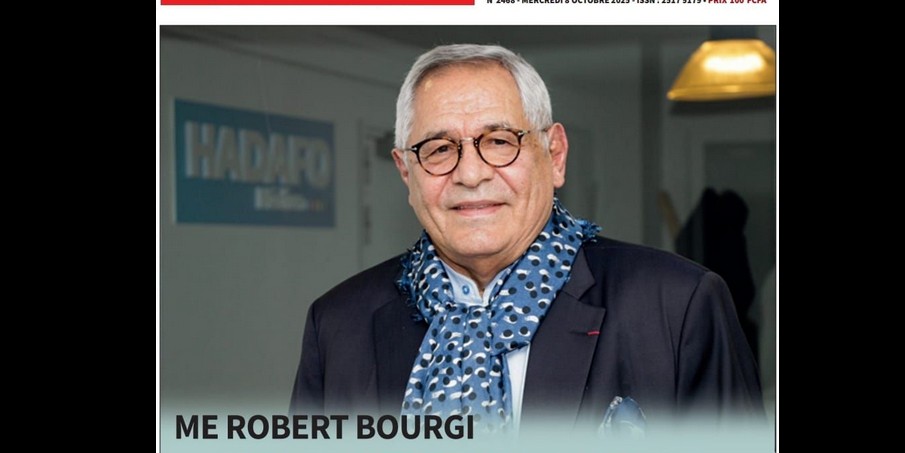
Robert Bourgi Turns on Paul Biya, Declares Him a Political Corpse
- News Team
- 10.Oct.2025
- Details
- Editorial
Heat in Maroua: What Biya’s Return Really Signals
- News Team
- 08.Oct.2025
- Details
- Editorial

Issa Tchiroma: Charles Mambo’s “Change Candidate” for Cameroon
- News Team
- 11.Sep.2025
- Details
- Editorial


