Society

- Details
- Society
Arrey Echi Agbor-Ndakaw
It is Saturday under the Cameroonian University skies just another day of the week and many paysans going about their daily business. However, to a throng of youth and their families, it is a memorable day, filled with smiles and a sense of accomplishment and rightly so. This day marks a turning point, a culmination of hard years of study and toil, the results of which is visible for all to see. The future suddenly looks bright and as the youth march up the podium to take their diplomas and certificates, parents look up beaming with pride and joy and hope.
This is a recurring scenario in all the higher institutes of learning in Cameroon, from the Universities to professional colleges. Clad in spectacular academic robes and in cognizance of the solemnity of the situation, many of these youth feel fully the weight of the popular CPDM saying that the future of Cameroon is its youth. During such moments, graduates appear invincible capable of doing anything with probably even soaring above the skies instead of it being their limit. Then comes the nightmare for those fortunate to get jobs or directly recruited from these professional schools. The battle for survival takes a different sometimes ugly twist. One year of work, no salary. Two years! Three years nothing!
The little money left from student days or from whatever support the family can provide is used in chasing dossiers in the nation’s capital, Yaoundé. Endless trips with thousands of FCFA spent in certifying documents and purchasing fake fiscal stamps- still no money in sight. This is when the real meaning of Cameroon and its survival of the fittest policy comes into play. It is heart wrenching to watch these struggling youth spend all the pennies they have to chase documents for years simply because those responsible for putting their signatures unto it are more concerned in idle chit chats or sharing beers and on most occasions travelled out of Yaoundé to participate in political rallies------------ the absence of accountability and mediocrity being the norm.
The spirit of peace, work and fatherland is now a thing of the past. What we forget to remember is that we as citizens have a civic responsibility towards the smooth functioning of the state irrespective of whether big brother is watching or not. It will therefore behoove everyone to put in their one hundred percent if they want the system to work smoothly. This is unfortunately not the case as the majority don’t care about civic responsibilities and those who do are few and far apart. These youth are usually sent to distant rural areas sometimes with hardly any incentive in place to motivate them to do their jobs well or stay where they were posted.
The private sector graduates are no better!! Usually, after the first pay, the unscrupulous bosses hold on to the salaries of their workers for months and daring to ask culminates in a clash of wills with the boss or a dismissal with no compensation of work done whatsoever. No wonder that the Cameroon youth continue to leave en masse to even unknown destinations of the planet rather than stay back and face a seemingly bleak future which they are powerless to change. As such, rather than face the anguish and frustrations of toiling without pay, many prefer to toil elsewhere where they are at least guaranteed of their labor’s wage.
- Details
- Ngwa Bertrand
- Hits: 2103
- Details
- Society

A truck laden with 187 elephant tusks was seized Monday morning at Yaoundé Airport’s forest and wildlife station, reports say.The cargo apparently set for export was hidden in the back of a truck whose occupants have been on the run since the discovery.
According to official estimates from the forest and wildlife station at Nsimalen Airport, the seizure is worth one hundred million CFA francs on the local market.
An investigation was launched to track down the network that facilitated the mass slaughter of elephants, a fully protected species in Cameroon.
- Details
- Ngwa Bertrand
- Hits: 1902
- Details
- Society

Cameroon’s economic capital alone has over 10,000 legally non-existent children. These are children aged thirteen years and above who have no birth certificates or any other identification documents. According to a study commissioned by Rotary International “these are children who exist, but legally have no real existence”. This phenomenon does not only exist in the economic capital but throughout the country. A recent investigation carried out in the Far North Region of Cameroon by a non-governmental organisation known as Association of Competences for a Better Life (ACBF) found that more than 50% of children born in that part of Cameroon have no legal existence.
A spokesperson of the association told Cameroon Concord that the NGO had to undertake humanitarian action in favour of low-income families in the Far North Region and discovered that most families in the Region don’t bother to obtain birth certificates for their children after birth.“The phenomenon of children without a legal existence is nationwide. Parents are only forced into giving a legal existence to their children when they go to register them in school and are asked for a birth certificate. The problem in the three northern regions is accentuated because of the low percentage of school attendance in these regions”, an ACBF source revealed.
Poverty and the complicated procedure involved in acquiring a birth certificate turn off parents who would otherwise want a legal existence for their children. “To be able to get a birth certificate one has to first declare the age of the child in court and even after acquiring the age declaration, bribery and corruption in the civil status registries makes the price of a birth certificate beyond the reach of so many ordinary Cameroonian families. The whole process of acquiring a birth certificate costs above 10,000 FCFA (US$20). What incentive has a family living on less than a dollar a day to cough out US$20 just to acquire a birth certificate for a child it cannot feed?”, asks legal practitioner Oben Joseph.
The situation in urban centres like Douala is caused by other reasons different from ignorance and poverty. Most of the children without birth certificates in Douala are orphans born of parents who died of HIV-AIDS. The Regional Delegation of Social Affairs for Littoral says besides the orphans, there are also children born of adultery and whose mothers are adolescents who did not want the pregnancies in the first place. Sociologist Um Mbock attributes the high rate of criminality in urban centres to some of these children without a legal existence who have been abandoned to themselves and who live in the streets because they have no homes.
“Unable to go to school or being employed because they have no legal identity, most of these children resort to crime and drugs. The path to a better future for any child is through a legal existence”, the sociologist says.
He estimates that over two million children in Cameroon today have no legal existence and that means that they are not going to school and constitute a non-negligible pool from which criminal gangs harvest their accomplices and future gang leaders.“To curb a future exponential proliferation in criminality, it would be advisable for government to immediately undertake a drive to identify most of the street children in our urban areas and give them a legal existence. This drive should also be extended to the rural areas where most parents are always not in a hurry to make birth certificates for their children because of the costs involved”, Um Mbock advises.
That over two million children in Cameroon have no legal existence means that the population figures of the country cannot be a genuine approximation of the national population.“How can a country plan development and the provision of social amenities when it does not know the number of people for which the amenities are intended?”, the Sociologist asks.
- Details
- Ngwa Bertrand
- Hits: 2286
- Details
- Society

Some years back, a French national was murdered in broad daylight in Cameroon’s economic capital of Douala. Responsibility for the heinous crime was quickly placed at the door of the thousands of “street children” that roam the streets of that commercial city and the media hurriedly went to town with accusations associating the children without any known residences with almost all the crimes in the city.
For the first time, these young Cameroonians, popularly known as “nang’eboko” (outdoor sleepers) came out strongly to protest against the injustice that has over the years been done them as they are always “falsely accused” of all the evils that visit most cities and big towns in the country.
This bang has helped bring into focus, the travails of these other Cameroonians, who constitute an integral part of the national community and not a community apart.
One of the boys, who identified himself to Cameroon Concord as Hervé Djoukeng and ‘President’ of one of the twenty-three sectors of the Douala metropolis into which the French Catholic charity “Chaîne des foyers Saint Nicodème” has divided the city for easy interaction with the “abandoned children” said he and his colleagues have had enough of the “false accusations and name-calling”.
Accompanied by one of his friends, Ebene Boban Conrad Brice, the boys presented their national identity cards to show that they were legitimately part and parcel of the national community and as such had a right to be protected by the laws of the country.
“People fear us once we are identified as ‘street children’. We are not responsible for all the crimes committed in this city, especially in Akwa which is reputed to be the most crime-prone quarters in the city. Whenever a serious crime is committed in the city, the police swoop on us even when nobody has accused any of us. We are just easy targets for the police because we are seen as the most impoverished who can easily be tempted into committing crimes. I am not saying that some of our colleagues are not criminals. But so also do criminals abound within all strata of our society”, Djoukeng declared angrily.
He revealed that some of his colleagues commit crimes because they are tempted and solicited by very responsible members of the society. He revealed: “People come to us to render them all sorts of services. Some come to pay us to harm others. Highly-placed women in society who are starved of sex come to us to satisfy their sexual desires. Even homosexuals come and pay us to sleep with them. The temptations are too much”.
Ebene Boban Conrad Brice was furious that people only talk of the bad side of the “nang’eboko”. He charged the police for being ungrateful to the boys.
“We have easily the best information networks in the cities as far as crime is concerned. And police exploit us and our networks in the various cities to track down criminals. They don’t even pay us for the great services we render to them. Most of the big crimes that have been solved in the big cities were solved thanks to our information networks and the assistance we give to the police. Unfortunately however, nobody mentions these our positive contributions towards the reduction of crimes within our society”, Conrad Brice declared.
Officials at “Chaîne des foyers Saint Nicodème”, say these children would do better with assistance than with accusations.
Declared one: “When I started working with street children, I discovered that they are very well organised. They are organised in small groups which have their leaders. They struggle to survive because they have no employment. Some used to steal but they did not like stealing for the sake of it. They are forced into stealing in order to survive. They were very eager to work with me. I told them to stop stealing and I got them involved in three very tempting projects and I was very surprised because none of them pick-pocketed, nor attacked anybody in the street during the exercise. Shortly afterwards, there was the incidence of the February 2008 ‘hunger riots’ with which they were not concerned. However, it was due to their assistance that the looting that accompanied the riots was stopped. After this, I wrote to the authorities pointing out the benefits to be reaped from assisting these children. Since then, government has started thinking about them. Many of these children are being assisted to come out of the woods and they are claiming their right places within the society. So, when the media accuses these children for being responsible for all the crimes in this city, I am very angry because this is not true”.
What drives these children into becoming “street children”?
“They are children who were abandoned by their families. Generally, their parents are divorced. One or both of the parents remarry and when the children go to their new homes, they are not wanted. Nobody wants them, not even their parents and so their last resort is to the streets. Most times, they are subjected to violence wherever they go. When their fathers marry new wives, their step-mothers don’t want to see them or treat them very badly. There are some cases where the children are subjected to witchcraft in cases where the both parents are dead. Thus the children have nowhere to turn to but the streets. Dislocated African families most times don’t have a comfortable place for children of the first marriage. And in cases where some family members take in the children of their deceased brethren, it is to subject them to all sorts of domestic work and torture. These children go to the streets not because they want it, but because they are not wanted in any homes. They must struggle in any way possible to survive. It should not be forgotten that all human beings have a right to a future and a place under the sun”, one sociologist reveals.
In the metropolis of Douala alone, Cameroon Concord understands that there are about 3,000 street children and the Ministry of Social Affairs puts the national figure at about 20,000.
If the re-insertion results of “Chaîne des foyers Saint Nicodème” are anything to go by, then government could succeed to a larger extent in salvaging most of Cameroon’s street children from the pangs of evil men and women who live in plush neighbourhoods.
For the fifteen years charity organisations especially church groups have succeeded in returning at least 5,000 to their original families. Between 500 and 600 in Douala alone have been trained in various trades and accommodation has been found for about 170 of them who have since quit the streets. 50 others now sleep in hangars at their own expense and the little subventions given them.
Among those who have something to do, there are some who run cafeterias, some are night watchmen, and some are mobile hawkers.
The achievement figures given by “Chaîne des foyers Saint Nicodème” are very impressive given the fact that the Catholic charity operates on an annual budget of less than twenty million (about US$40,000) compared with those registered by the Ministry of Social Affairs which has an annual budget of about nine billion FCFA (about US$18 million).
According to the Ministry of Social Affairs, its programme for the socio-professional integration of street children in the cities of Douala and Yaounde registered 435 street children, of which 119 were returned to their families and 62 reintegrated in school.
Despite the fact that the Ministry of Social Affairs does not concentrate its budget on street children alone, the annual budgetary appropriation for street children in that ministry, according to one of the ministry’s senior officials who elected to remain anonymous, “is more than one hundred times more than that of the Douala Catholic charity “Chaîne des foyers Saint Nicodème”. Don’t ask me where our ministry keeps all the billions of FCFA allocated to it annually.
- Details
- Ngwa Bertrand
- Hits: 2706
- Details
- Society

By Rita Akana in Douala
An allegation of an existing prostitution racket has been made against the General Manager of S’tyle Agency Company, Madam Marie Christine Molu who is now being investigated by the Douala police force. S’tyle Agency, a company that recruits air hostesses for Camair-Co is now fighting for its survival following media reports that many of the young Cameroonian girls popularly referred to as “Mannequin” are being use for sex trade both in Cameroon and abroad.
Police sources in Douala told Cameroon Concord that preliminary investigation has found out that Marie Christine Molu Njapndounke lives a lifestyle reserved only for CEOs of major Cameroonian State owned companies. She is reported to be paying her mannequin girls most of them university graduates the sum of 40,000 FRS CFA monthly but sponsors her daughter at the London Business School.
When police raided the parking lodge of her company in Douala recently, they found a convoy of cars among them a luxurious Nissan Juke and a Lexus RX 300. Madam Marie Christine lives in an apartment worth seven hundred thousand CFA a month and her actual salary noted a police spokesman is three hundred thousand CFA.
She has also been accused of arranging contract marriages for the young Cameroonian girls and European clients for which she collects a handsome fee.
- Details
- Ngwa Bertrand
- Hits: 3114
- Details
- Society

Cameroon ranks 150 out of 186 countries on the 2013 UNDP’s Human Development Index, which measures countries based on income, life expectancy and education.With rising food prices and so many mouths to feed, Cameroon is grappling with a serious crisis. The International Monetary Fund (IMF) reports that prices of main food items have skyrocketed this year, some by up to 20% from last year’s prices. The price of sorghum, for example, rose by 4%, maize by 5% and rice by a whopping 22%, according to the Food and Agriculture Organization.
For Cameroonians, the recent spike has come as a surprise because prices were relatively stable last year. Economists blame inflationary trends that began in 2007. Since then, the country’s rate of inflation has fluctuated between 1% and 5%. Though not alarming, fluctuations in inflation over the years appear to be having a cumulative impact on food prices this time.
Out of Cameroon’s 21 million people, 8 million people live below the poverty line, according to the World Food Programme. The country ranks 150 out of 186 countries on the 2013 UNDP’s Human Development Index, which measures countries based on income, life expectancy and education. There are fears that the sharp increase in food prices will worsen Cameroon’s poverty situation.
“Soaring food prices have negative short-run effects on developing countries that depend on imports for their food security and where the vast majority of households, including in rural areas, are net food buyers,” says the International Fund for Agricultural Development. Cameroon’s food imports, notes the World Bank, comprise about 25% of total imports. Some Cameroonians are venting their anger through street riots and there are fears these may fuel political instability.
Increasing refugee population may also be exacerbating food prices, many believe. Waves of refugees from the politically-turbulent countries of Chad, the Central Africa Republic and Nigeria are seeking asylum in the more politically stable Cameroon. The United Nations High Commissioner for Refugees estimates that more than 100,000 refugees have crossed over to Cameroon as of 2013.
In addition, water shortages continue to affect food production. According to the World Health Organization, rainfall lately has been low and irregular, affecting crop yields. In 2012, for example, severe drought followed by flooding throughout the Sahel region worsened Cameroon’s water problem.
The country learned some useful lessons from past food crises. In 2008, rising food and fuel prices sparked riots and looting in Yaoundé, Cameroon’s capital city and Douala, its major seaport city. The government responded by creating an organisation to regulate basic food supplies. The agency has had limited success as food prices continue to soar. Government is also providing subsidies for school and work programmes, to alleviate sufferings.
The Cameroon Consumer Association believes that subsidies have been timely. How far these will go to lower food prices and assuage anger remains to be seen.
- Details
- Ngwa Bertrand
- Hits: 2574
- Details
- Society

Education and Religion are the same in context and symbolism though with different missions playing an enlighten role in the society. But Educational institutions own by the state of Cameroon is a complicated multifaceted mitigating disaster and confusion for students, present and future kids of the nation writes Cameroon Concord US Bureau Chief Bertrand Etukeni Agbaw-Ebai
Academic and Learning Schools, Colleges and Universities come with great powers. And again knowledge is power. The embattled current national academic institutions and their curriculum and pedagogy in all state learning institutions at the pre-nursery and nursery, primary, secondary and high schools including universities level in Cameroon is in complete variance with the challenges and growth of modern economy and state. Even the highly and most fervent professors that have occupied Educational Ministries and Higher Academic Institutions in the country with names like Prof. Joseph Owona, Prof. Peter Agbor Tabi, Prof. Narcisse Mouelle Kombi, Prof. Pierre MoukoKo Mbonjo, Dr. Dion Ngute and currently, Prof. Jacque Fame Ndongo Minister of Higher Education, Louis Bapes Bapes Minister of Secondary Education,Youssouf epse Adjidja Alim Minister of Basic Education, Madeline Tchuinte Minister of Scientific Research and Innovation, Zacharie Perevet Minister of Employment and Vocational Training cannot help to re-write the wrongs and damage that Cameroon certificates is besieging our academic systems and threaten mayhem in the future of Cameroonian kids. The horrendous menace and pains by the state-own learning institutions have ignited serious predicament to students equal to an “academic genocide”. And to be accurate it is wreaking havoc with no clear process of salvation even for the next 50years to come. While thousands of students keep on graduating every year, the reality on the ground is that the level is still an abysmal and shocking situation students are forced to go through in search of jobs to live a comfortable life after completion of studies. Sadly, many Cameroonian students live in a condition that is unacceptable by every standard despite the fact that Cameroon is among the top African countries that has a high rate of literacy.
Education on the Economic Front!
When President Amadou Ahidjo came to power, the French by then knew that he was from a remote area where the indigenes are frightening and terribly under-scholarize. Meaning whatever they would tell him to execute, Ahidjo would sheepishly do for even his own academic background as president was pathetic. Just like the iconic Pan-Africanist Nkrumah of Ghana`s vision for Africa, Ahidjo had same for Cameroon. As president, Ahidjo had seen far ahead of time that economic growth is the ultimate power of a nation and dictates which way to make political friendships. He embarked on a systemic and gradual 10years development plan for the nation. He created a scholarship board for students in both high schools and universities for outstanding performance to be granted scholarship abroad be it Franchophones or Anglophones. Ahidjo made sure that the scholarships went to the right students and his areas of concern were engineering, law, medicines, Doctors and Professors in prominent disciplines. That is how Cameroonian students came to study in countries like France, UK, US, Germany, Nigeria and even Ghana in Africa. President Ahidjo did not tolerate any atmosphere whereby students from the lone federal university were not happy either with the administration or restaurant [feeding conditions] through strikes. He at one point told the entire student population the importance of their place in the future of Cameroon`s growth. With a lot of emphasis President Ahidjo was ever ready for negotiation with students to avoid any campus riot. He understood the values of education and students as genuine opposition in every nation. He did his best to make sure students were comfortable the reason why there were no fees but allowances for university students which were later abolished by his predecessor with impunity by introducing compulsory fees. President Ahidjo knew that Cameroon was still a young and independent country struggling with many challenges. So, he envisaged that after 10years of studies abroad the students will be well equipped with knowledge to build the nation when they return home.
Enter the Biya Virus
When Biya came to power after the resignation of Ahidjo, the Cameroon scholarship scheme witness a spiral of successive corrupt practices and embezzlement of funds allocated for studies abroad. (See CAMEROON CONCORD report on Minister Martin Belinga Eboutou). Even students sent by the Ahidjo regime could no longer get their allowances from the state and their fees paid. Life became very difficult for Cameroonian students on scholarship. They could no longer count on the state and many could not return home. Yet the government had already put in much investment to educate these exceptional brains for future use. Some abandoned studies and became asylum seekers all in a way to survive. These were the human resources Ahidjo had envisaged to build a viable and prosperous Cameroon. That was the 10years development plan Ahidjo had prepared and laid down for the next president. Hopes were dashed and the best and the brightest the nation had sent for further studies were now serving western economies. Under the Biya regime, it is no secret on how scholarships are awarded to students. It is based on who you know at what level and not on academic merits.
Certificates are Proof of Cameroon Educational Institutions
Judging from the eight state universities, thousands of primary and secondary colleges including professional institutions such as ENAM, IRIC, Ecole Normale, POLYTEC, Ecole des Poste, Ecole des Police, ASMAC, National Gerdamerie school etc, all have only certificates and diplome to show. It is pointless to train people to acquire skills for which there is or will be no demand. The problem with President Biya and his pro CPDM comedians is that they still after 31 years in power cannot grasp the issue of obtaining an optimal match between that which education supplies and that which production and employment require.
Cameroon’s educational system is at the mercy of Biya and his appointees. Our education curriculum has failed woefully to equip pupils with the ability to cope with rapidly changing future circumstances. Biya’s educational policy lacks the potential to assist pupils and students to achieve flexibility and a continuing capacity to learn as new ideas, products and processes arise. We of Cameroon Concord believe that appropriate and relevant education for today's world and age should be such that it must be appropriate and relevant not merely for the present day but also for the future.
Technological changes have called forth a whole range of new skills and thereby provided a whole range of new employment possibilities. The responsibility for causing and for curing unemployment is ascribed to President Biya and his Francophone Beti-Ewondo government which are resisting the introduction of new technologies which have the capacity to provide new employment opportunities. The greater the difference between salaried and self-employment, the stronger the public preference for salaried employment. The more rigidly the eligibility for salaried employment depends on scholastic attainment, the stronger the public demand for schools and universities. Biya’s Sorbonne professors such as Kontchou, Fame Ndongo, Joseph Owona, Minkwa Shey, Elomo Lysiette, have failed to identify points where the diploma disease or paper qualification syndrome might be resisted. A Post Office Stamp seller in the person of Ahmadou Ahidjo knew that the being and workings of the educational system are determined more by the economic system than by educational CPDM philosophy that has created Government High Schools in every village in Manyu Division with some having just two teachers and five students.
- Details
- Ngwa Bertrand
- Hits: 2590
Inside Cameroon 910
Inside Cameroon: Get the Latest and Most Reliable News and Analysis on Cameroon
Do you want to know more about the current affairs and developments in Cameroon? Do you want to learn about the political, economic, social, and cultural aspects of Cameroon? If so, you are in the right place. Welcome to the Inside Cameroon category of Cameroon Concord, the leading news website in Cameroon.
In this category, you will find articles, reports, podcasts, videos, and more featuring the latest and most reliable news and analysis on Cameroon topics and issues. You will get the facts, opinions, and perspectives of journalists, experts, activists, and ordinary citizens from different regions and backgrounds in Cameroon. You will also get the context and background of the news and events that shape the country and its people.
Whether you are interested in the security, democracy, development, or diversity of Cameroon, you will find something informative and relevant in this category. Inside Cameroon is a comprehensive and credible source of information and insight on Cameroon. Join us in this journey of Inside Cameroon and become part of a community that gets the latest and most reliable news and analysis on Cameroon.
Local News
- Details
- Society

Kribi II: Man Caught Allegedly Abusing Child
- News Team
- 14.Sep.2025
- Details
- Society

Back to School 2025/2026 – Spotlight on Bamenda & Nkambe
- News Team
- 08.Sep.2025
- Details
- Society

Cameroon 2025: From Kamto to Biya: Longue Longue’s political flip shocks supporters
- News Team
- 08.Sep.2025
- Details
- Society

Meiganga bus crash spotlights Cameroon’s road safety crisis
- News Team
- 05.Sep.2025
EditorialView all
- Details
- Editorial
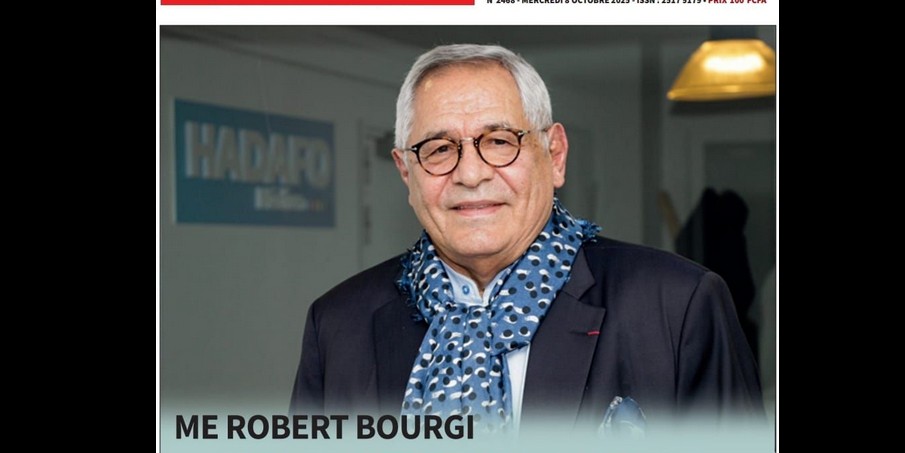
Robert Bourgi Turns on Paul Biya, Declares Him a Political Corpse
- News Team
- 10.Oct.2025
- Details
- Editorial

Heat in Maroua: What Biya’s Return Really Signals
- News Team
- 08.Oct.2025
- Details
- Editorial

Issa Tchiroma: Charles Mambo’s “Change Candidate” for Cameroon
- News Team
- 11.Sep.2025
- Details
- Editorial


