Society

- Details
- Society
Cameroon’s Health Ministry has announced the death of more than 200 people in the north of the country due to a cholera outbreak over the past two months.
The health delegate for the northern region of the West Central African country, Rebecca Djao, said on Tuesday that over 1,500 people have so far been infected with the water-borne bacteria.
Only one in 20 citizens in Cameroon has access to toilets and less than one-third to safe drinking water in the country of 22 million people, according to Cameroon’s Minister of Public Works Andre Mama Fouda.
Cholera is an acute intestinal illness that causes severe stomach aches, diarrhea and vomiting. The disease is commonly contracted by drinking water or consuming foods that are contaminated with the cholera bacteria.
The mortality rate for those infected with the bacteria can range between one and 60 percent, depending on access to treatment.
A similar Cholera outbreak in 2010 left more than 4,000 people dead.
The World Health Organization (WHO) reported 586 cholera cases in South Sudan in late May, 22 of which led to deaths. The agency says it has deployed experts, including epidemiologists, logisticians and public health officers, as well as other resources to support the response to Cholera outbreaks across Africa.
Meanwhile, a number of African nations are currently struggling to contain the outbreak of the Ebola Virus Disease, which as of July 2014 has killed more than 670 of those infected with the deadly virus.
- Details
- Ngwa Bertrand
- Hits: 2829
- Details
- Society

By Roland Mbonteh
The President of the South West Administrative Court with lieu in Buea has passed the first-ever ruling of the court, two months after the structure was set up in the region.
Justice Ngu Ngwa Augustine ruled over the law suit that pitted Betanga Bernard and Prince Ndoki Mukete, both Chairman and Vice Chairman of South West Farmers' Cooperative Union, SOWEFCU, versus the South West Regional Delegate of Agriculture and Rural Development. The bone of contention was a petition for stay of execution filed by counsels for applicants on June 14, 2013.
According to the ruling, the court halts the reorganization of SOWEFCU and reinstates the deposed executive elected in 2011. Delivering the ruling in chambers, the President ordered that the execution of the Regional Order no. 164/AS/2013/RDARD/SW of May 2013 in so far as it concerns the South West Farmers' Co-operative Union, is stayed until the substantive suit initiated by the petition for reconsideration dated 7 June, 2013, is determined.
The Court also orders that the administrative status quo ante to the disputed extra-ordinary general meeting of SOWEFCU Ltd of the 11 of January 2013 shall be maintained till the determination by the substantive suit. The order, according to the pronouncement of the President, shall lapse upon the inability to file the substantive suit in court within sixty days from the rejection of the petition for reconsideration.
Justice Ngu Ngwa Augustine used the opportunity to appeal to the public that the Administrative Court is fully operational with its doors flanked open for all litigations that fall within its competence. It should be noted that the administrative court sanctions administrative offences, disputes on regional, council and other elections, disputes on landed property, disputes on public contract and concessions, amongst others.
- Details
- Ngwa Bertrand
- Hits: 2461
- Details
- Society

Thousands of children from the Central African Republic continue arriving in eastern Cameroon as refugees – more than 18 months since a coup d’état sparked a cycle of killings in their country. They have sought safety in camps next door in Cameroon, but they are not getting the education they need. With little donor money coming in, relief workers can only do the barest minimum such as teacher children songs and handwork.
This year alone, more than 106,000 Central Africans crossed the border. Relief workers expect the number to reach 180,000 by the end of the year. The vast majority of them, about 60 percent, are children who have now been put out of school.
Challenges on Cameroon’s eastern border
Refugee camps have mushroomed along Cameroon’s eastern border and challenge officials who must try to educate young residents as other life-threatening emergencies rage on: malnutrition, sanitation and personal security from violence.
Every morning hundreds of children squat on mats under large white tents in the Gado Badzere camp to sing and recite rhymes. It’s their only chance to forget the mayhem back home and the atrocities they have encountered during their flight.
The learning and recreation areas are called “child-friendly zones” and they were carved out by UNICEF and run by a local organization. Many of those who care for the children are unpaid volunteers recruited from the ranks of the refugees themselves.
When a tailor becomes a teacher
Zaibabou Kaleb was a tailor before the killings began and she fled. She is one of a dozen refugees who have been drafted to supervise children and teach basic skills at the refugee camp, which is home to over 13,000 refugees.
Kaleb says most of the children would like to be in school but don’t have the opportunity. She says at the “child friendly-zone” boys learn how to make wooden toys and girls how to sew. They also listen to educational talks on a variety of subjects.
UNICEF, which has been looking out for the welfare of young refugees, says education is an important priority: only 3 percent of all children of school-going age in refugee camps have ever been to school.
Felicite Tchibindat is UNICEF’s resident representative in the capital, Yaounde. She says it would be hard to put them in local schools in Cameroon.
Three percent have been in a school before
“That is why we took this option of a temporary space to start preparing them and we do have accelerated curricula to help them go to school,” says Tchibinbat. “And then, those who have been to school, we have to evaluate their level and see in which class they should be. Before that we need space for children to start rebuilding, getting their life back to normal.
The program seems to be paying off. Children are beginning to master different skills. Some have developed self-confidence and are willing to walk forward and perform recitations.
The number of children attending educational and recreational activities has been growing, because parents themselves see the importance of education. But Tchibindat says critical obstacles remain.
“The biggest phase will be how to increase the capacity of the different schools in the community so that they are able to accommodate refugees. We know already that this region is a priority-education region, meaning that there are fewer classrooms, fewer teachers, and all that.”
Lack of resources could hamper the plans of organizations like UNICEF. With so many crises in the world, the plight of Central African refugees appears to be getting very little attention from donors. UNICEF, for example, says it needs around $25-million for all its interventions this year. But half-way through the year, only 15 percent has come in.
- Details
- Ngwa Bertrand
- Hits: 2529
- Details
- Society

By John Agbor Obi, Turin Italy
The decentralization bill of 2003 is still pending implementation; the spirit of that bill is presumed to improve management, accountability and regional development while preserving national unity. A CV of the regime is a catalogue of unfulfilled promises and this cannot be different. Again, an expert eye on that bill is a suspicious agenda by the regime to politically and financially grip opposition strong holds . - Some questions arouse this suspicion.
1) Why has that bill not been implemented since 2003
2) What consultation was made as a popular acceptable option
3) Why is the SW Region having two Government Delegates?
4) Who is afraid of elected Governors and Autonomous Regions?
National unity does not mean bad governance. Correspondingly, effective management, accountability, competitiveness and performance is when the regions are autonomous, this will eventually control corruption and embezzlement since the elected Governors will be answerable to the people. The South West Region is known to produce more than 40% of the national GDP; the plough back is total absence of development and refusal of natural indemnities. The time has come for the Sons and Daughters, Elites and Chiefs of the South West Region to press for autonomous regions with elected governors to protect its interest as any region in the world blessed with natural resources will do. 50 years of hospitality and generosity has been mistaken for cowardice. Let national unity go hand in hand with regional development and accountability. Too much centralization has fostered embezzlement, corruption and overt stealing. Cameroon is badly in need of a regional performance mechanism with the central government as an overseer. The elastic limit of the SW region is near. The new generation of the South West region are beginning to ask questions that require satisfactory answers from their elites and leaders.
- Details
- Ngwa Bertrand
- Hits: 2460
- Details
- Society

'Can you please wrap it up for me? These were normal everyday words the vast majority of a generation in Cameroon grew up hearing. These words were usually muttered in shops, markets, anywhere you see people buying. To be sure, the Cameroonian consumer needed what was popularly referred to as 'wrappens'. The words changed however, and circumstances too. In today's Cameroon, we now have angry and frustrated shoppers trying to figure out how to carry their purchases 'wrappenless'.
Cat calls had greeted the President Biya decree to control the production of plastic bags aka wrappens some few months ago. A handful of Cameroonians were excited because constant litters of these plastic bags on the streets of our major towns and cities created many a sore eye to anyone interested in environmental protection and thus when this decree was made public, these group of people were begeistert because they envisaged a recycling process in the making which will both help protect the environment from biohazards and litter.
For a time, it was back to the practices our parents and grandparents were used to…parceling goods on what was considered environmental safe products like papers, plantain and ngongo leafs; while Cameroonians are still waiting for those selected by President Paul Biya's decree to start producing the recommended biodegradable plastic bags or shopping paper bags.
Not many readily embraced this change because they saw it as a means to exploit and cause hardships to the masses. Many people working in such factories not yet authorized to produce biodegradable bags have been laid off. Many held the view that though it remains a laudable venture towards the quest for environmental protection, the government would have at least provided alternatives before the biodegradable options become available.
Undoubtedly, unscrupulous individuals and disrespectful workers in super markets and other businesses without an ounce of customer service know- how are treating their customers as servants rather than kings. It has become a norm rather than the exception in most of these business places that anything bought and parceled comes with an additional 50 or 100 frs charge for the plastic bags. They are now considered luxuries of sorts. You either pay for it in addition to all the thousands spent or you carry on your hands and head. Some few shops especially those with a reputable clientele continue to provide such plastic bags or boxes without charge but a vast majority don't. This Biya decree on plastic bags has left many Cameroonian buyers disgruntled. As the quest for an environmental safe plastic bag continues, many people continue to fume as they wait to see what final solution will be achieved.
- Details
- Ngwa Bertrand
- Hits: 2802
- Details
- Society

It is a Friday in Cameroon and everywhere, you see our citizens in bright multicolored dresses. You wonder what kind of great wedding celebration is about to begin. Then you shift gear, take a peek and see our new funeral badge with a picture at the left side of the chest then it dawns that far from a happy moment, these brightly dressed individuals are heading to the mortuary to take their death home for final burial rituals.
In the yesteryears in Cameroon, two colours heralded the atmosphere of any funeral celebrations- black and white with people truly demonstrating grieve for their departed loved ones with often simple programs to give the occasion the solemnity it deserves. That has changed.
The Nigerianization of the African Continent through Nollywood movies has seen a sharp change in the way people mourn their dead in Cameroon. In as much as such moments encourage reflections on the purpose of life and what may happen to our loved ones while we struggle to come to terms with our grieve and the thought that we might never again hear their voices, laughter or even face their anger and frustrations, the way some organize funerals these days leaves much to be desired.
Cameroonians are now being known to hold back from spending money on their sick relatives all in a bid to be able to give them that ‘befitting burial’. It boggles the mind that someone can die from the inability to buy simple life saving drugs because the family complained of having no money and yet millions surface to organize a funeral.
Nowadays, funerals are a competition among families, elites and even tribes. Just like Nigerians spoke of a “one in town house or car, Cameroonians want to have that much talked about “one in town funeral”. Everyone wants that people should be able to say…for the funeral of so and so, I ate, drank and had my fill and the people were well dressed. Some even go to such funerals even without knowing the bereaved families just to eat and drink and end up joining a cult. How can someone who never had the time to see the parents in the village for years. Never had the cash to build them a decent house during their lifetime or never even provided them with a good meal suddenly have the time to build or renovate a crumbling structure and to provide loads and tons of food and drinks to mourners who come to sympathize all in the name of giving their departed love ones a ‘befitting burial?’ In some extreme cases, some funeral homes have become like night clubs where people go there to dance and party till the wee hours of dawn. Looking at the ruckus that surrounds funerals today, we of this publication can rightly argue that there has been a Nigerianization of Cameroon. It betrays some ignorance to get into debt because of the need to follow some fabricated status quo about how funerals are to be done. It is ironic to say the least that in a bid to provide ‘a befitting burial’ people end up defeating the whole purpose of a funeral as they use that occasion to show off and of course, it becomes like feeding the death to starve the living.
- Details
- Ngwa Bertrand
- Hits: 3412
- Details
- Society

- Details
- Ngwa Bertrand
- Hits: 2527
Inside Cameroon 910
Inside Cameroon: Get the Latest and Most Reliable News and Analysis on Cameroon
Do you want to know more about the current affairs and developments in Cameroon? Do you want to learn about the political, economic, social, and cultural aspects of Cameroon? If so, you are in the right place. Welcome to the Inside Cameroon category of Cameroon Concord, the leading news website in Cameroon.
In this category, you will find articles, reports, podcasts, videos, and more featuring the latest and most reliable news and analysis on Cameroon topics and issues. You will get the facts, opinions, and perspectives of journalists, experts, activists, and ordinary citizens from different regions and backgrounds in Cameroon. You will also get the context and background of the news and events that shape the country and its people.
Whether you are interested in the security, democracy, development, or diversity of Cameroon, you will find something informative and relevant in this category. Inside Cameroon is a comprehensive and credible source of information and insight on Cameroon. Join us in this journey of Inside Cameroon and become part of a community that gets the latest and most reliable news and analysis on Cameroon.
Local News
- Details
- Society

Kribi II: Man Caught Allegedly Abusing Child
- News Team
- 14.Sep.2025
- Details
- Society

Back to School 2025/2026 – Spotlight on Bamenda & Nkambe
- News Team
- 08.Sep.2025
- Details
- Society

Cameroon 2025: From Kamto to Biya: Longue Longue’s political flip shocks supporters
- News Team
- 08.Sep.2025
- Details
- Society

Meiganga bus crash spotlights Cameroon’s road safety crisis
- News Team
- 05.Sep.2025
EditorialView all
- Details
- Editorial
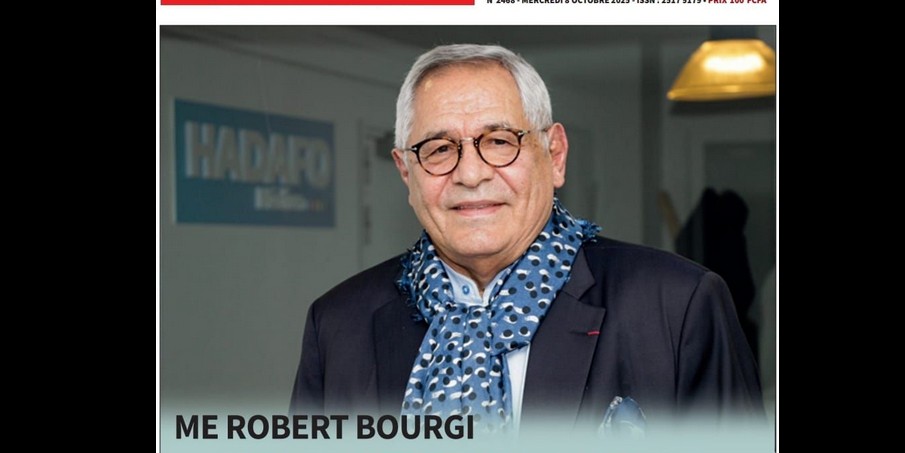
Robert Bourgi Turns on Paul Biya, Declares Him a Political Corpse
- News Team
- 10.Oct.2025
- Details
- Editorial

Heat in Maroua: What Biya’s Return Really Signals
- News Team
- 08.Oct.2025
- Details
- Editorial

Issa Tchiroma: Charles Mambo’s “Change Candidate” for Cameroon
- News Team
- 11.Sep.2025
- Details
- Editorial


