Society
- Details
- Inside Cameroon
The 300 sitting capacity hall christened Canal Olympia was instated on 14th June 2016 by the Prime Minister and Head of Government Philemon Yang.
The hall is a gift from the French business magnet Vincent Bolloré whose aim is to improve the academic status of young Cameroonian students and to improve the field of Cinematography in the country.
Apart from the 300 inner seats, the hall has an open stage that can accommodate thousands of people; with screening halls, concerts and show rooms.
While inaugurating the well-equipped hall, the Prime Minister and Head of Government Philemon Yang lauded the great initiative, saying that it was a wonderful University with not only good Professors and teachers but a good cinema hall.
The Minister of Higher Education Jaque Fame Ndongo on his part said the facility will enable theatre Arts students turn knowledge into skills.
The students also showed a sign of excitements as the new cinema hall has come a long way to ease their pursuit on cinematography and theatre arts as a whole.
It was also revealed during the event that two more cinema halls will be created in Douala and Yaounde.
CRTV
- Details
- Rita Akana
- Hits: 3291
- Details
- Inside Cameroon
An Ohio(US federal State) man says he lunged at his daughter's killer in court because the defendant smiled disrespectfully at him. Courtroom deputies in Cleveland grabbed Van Terry after he leaped across a courtroom table Thursday minutes after a judge sentenced Michael Madison to death in the killings of his daughter and two other women.
Terry told WJW-TV that he was thinking about his daughter when he went after Madison. Madison didn't appear to be injured.Prosecutors say Madison mutilated Terry's 18-year-old daughter Shirellda Terry. Terry family members told CBS Cleveland affiliate WOIO-TV that Madison was smiling at them during their final testimonies.
"He was upset because when he's telling you that he lost his baby, his baby girl, that's his baby, OK? That's his heaven," Van Terry's sister Sonya Richardson told the station. "That's his slice of heaven. He's sitting over there smiling like, 'Yeah.'" Richardson said it looked like Madison was just brushing off their heartfelt comments about Shirellda Terry, WOIO-TV reports. The victims' bodies were found near Madison's East Cleveland apartment in 2013. Terry says it's fine if he's charged with going after Madison because he did the right thing. A spokesman for the Cuyahoga County prosecutor's office says the attack is being reviewed.
- Details
- Rita Akana
- Hits: 3157
- Details
- Inside Cameroon
Gunmen suspected of belonging to Somalia's Islamist al Shabaab group shot and killed a female journalist working for state-run radio on Sunday, police said.
Major Nur Ali, a police officer, said Sagal Salad worked for Radio Mogadishu.
"Three men armed with pistols killed (her)... We heard gunfire and we rushed to the scene, the gunmen had already escaped," Ali told Reuters.
"She was rushed to hospital but she died on the way. They killed her near a college campus where she studied. We believe al Shabaab is behind her killing."
Al Shabaab was not immediately reachable for comment.
Late last year, a female reporter who also worked for Radio
Mogadishu was killed in a car blast. Two men convicted of the killing were executed in April.
Also in April, a government firing squad executed a former media officer working for al Shabaab for ordering the death of six journalists.
The al Qaeda-linked al Shabaab was forced out of Mogadishu by African Union peacekeeping troops in 2011 but has remained potent, launching frequent attacks in its bid to overthrow Somalia's government.
Somalia was plunged into anarchy in the early 1990s following the toppling of military dictator Mohamed Siad Barre, and has been struggling to reconstruct.
Somalia ranked 172nd out of 180 countries in the 2015 Reporters Without Borders press freedom index.
- Details
- Rita Akana
- Hits: 3321
- Details
- Inside Cameroon
Turkish President Tayyip Erdogan is on a two-nation tour of Africa as part of efforts to strengthen his country's influence on the continent. He is not just pursuing economic interests.
Turkish President Tayyip Erdogan is being accompanied by a huge commercial delegation on his two-nation tour of Africa. Hundreds of business representatives have joined him on his trip to Uganda and Kenya to explore ways and means of intensifying economic ties with these two countries.
The meeting with his Ugandan opposition number Yoweri Museveni was even branded "historic" as it was the first official visit ever to Uganda by a Turkish president. The Turkish side appears to be bristling with self-confidence. "The political working visit to Africa by the president is gaining momentum," trumpeted the website of president's press office.
The Sunni connection
Turkish involvement in Africa is not new, Christian Johannes Henrich, head of the Southeastern Europe and Caucasus Research Institute in Siegen, Germany, told DW. Moves towards closer ties with the continent began under Prime Minister Mesut Yilmaz in 1998, four years before Erdogan and his AKP party came to power in a landslide election victory.
"Even in those days, Turkey had its own African agenda, which was never fully implemented because of internal problems in Turkey, but the perception that sub-Saharan Africa was a region of economic growth was already there," Henrich said.
Erdogan pursued the idea when he came to office, but with one distinct difference.
"Erdogan is not guided solely by economic concerns. He is focusing specifically on African countries with a strong Sunni presence. Both Uganda and Kenya have growing Sunni Muslim communities," Henrich said.
Kristian Brakel, who heads Germany's Heinrich Böll Foundation in Istanbul, is also convinced that Erdogan's African policy is religiously motivated.
One example is Somalia. Erdogan never tires of emphasizing that Turkey is a role model in its relations with the failed state on the Horn of Africa. "While in Somalia, Erdogan told the Somalis 'the West has abandoned you, but now Turkey will step in. We are Muslims and we understand your country much better'," Brakel said.
The Turkish military recently established a base in Somalia for the training of government troops.
Turkey is using foreign policy in Africa to try and bolster its influence globally. Its presence on the contintent brings it into direct competition with other external players such Brazil, India and China. Currently, however, Turkey is more interested in amassing support at the United Nations than in importing African natural resources, Henrich believes.
Critics have described the more active role that Erdogan and his AKP party are seeking in global affaris as neo-Ottoman. "I fear that Turkey wishes to become a moral protective power on the territory of the old Ottoman Empire and also extend its influence to Africa. I believes Turkey is striving for dominance in every region," Henrich said.
Brakel said Erdogan is fond of invoking a fictitious Ottoman past. "The truth is that in sub-Saharan Africa, the Ottoman presence was marginal, short-lived and not very successful. I think this is being used as a sort of veneer to cover up Turkey's real motives." Brakel believes they largely revolve around Turkey's economic interests.
Democracy and human rights not an issue
As long as Erdogan continues to pursue his critics and satirists, both at home and abroad, with punitive legal action, there can be little hope that he would think of raising issues such as human rights and press freedom in talks with Uganda's longtime president Yoweri Museveni.
"Turkey is not interested in spreading its ideas about standards of governance in Africa, neither in the positive nor the negative sense," Brakel said. Museveni or Kenyatta need not fear that Erdogan could criticize them for not keeping a tighter rein on their media. He also wouldn't inquire about the well-being of civil rights activists.
In a caricature sketched for DW, Kenyan cartoonist Gado shows the arrival in Africa of Erdogan, the neo-Ottoman leader, complete with turban. The gifts he brings with him are victims of persecution.
Turkey will continue to try and strengthen its influence in Africa almost unnoticed by the rest of the world, which remains focused on the war in Syria and the refugee crisis.
Turkey has already succeeded in more than doubling the number of its embassies in Africa to 20 since 2002. 15 are in sub-Saharan Africa. Trade between Turkey and African states has increased six-fold over the last 14 years.
DW
- Details
- Rita Akana
- Hits: 3397
- Details
- Inside Cameroon
Visiting one of Africa’s strongest economies, Nigeria is an experience to behold. So many places to see, cities to visit and cultures to explore! More so for someone visiting from a foreign land; an obvious culture change and/or shock.
A number of tourists who have visited or lived in Nigeria have testified to being shocked and overwhelmed by the lifestyle, customs and practices of its people. Here are the top seven things tourists often find strange about Nigerians.
1. The Loudness
The loudness Nigerians find it hard to believe, but they are exceptionally loud, especially those from the western region. Some have stated that the loudness is a consequence of their local dialect and their cultural practices, while other believes that the average Nigerian is loud because it’s their heritage to be boisterous. A typical Nigerian will not hesitate to belt out a song in crowded street in the bid to sell potions or win souls, and most locals will not even try to reduce the pitch of their voice, as long as they feel the need to air an opinion. While locals see these as normal, most visitors find it utterly alarming.
2. Church buildings every couple of miles
Nigerians are very religious people and a larger part of the country actually practice Christianity and they are very zealous in their faith. It is hard to find a street in most parts of the country (excluding the northern regions which are saturated with Muslims) without at least one church or meeting place. Visitors find it remarkable and some have wondered how these churches maintain their members.
3. Nigerians tend to carry large amounts of cash
For most people who live outside the country, ATMs and credit cards are the way to go when it comes to buying or purchasing. Most wander about with wallets utterly devoid of cash, they do not see the need to carry cash around as it even creates opportunities of getting robbed or maimed. They find it amazing that Nigerians on the other hand seem to love the scent of raw cash and carry money around with them at all times, despite the fact that there ATM machines around and most stores and spots have POS for credit cards. Nigeria is slowly becoming a cashless society; however they are finding it hard to give up the feel of paper money in their hands.
4. Bold requests for tips
Nigerians are not shy, not when it comes to money. Most visitors not only find it weird that they may have to paying extra for someone to do their job, they are baffled that waiters/waitresses do not hesitate to hint at or out rightly ask for a tip when it is time to collect the bill. The locals however do not see anything wrong with the whole situation as basically, it is the norm. When in Rome, act like the Romans.
5. Liquor for everyone
Most countries around the world have a legal drinking age of 18 and so does Nigeria, so, many tourists find it astonishing when they see teenagers who are obviously below the age limit buying alcoholic drinks or spirits. The most commonly purchased are the NGN50 satchet liquor sold by women who carry them around in trays and basins. Nigeria has a much more liberal stance on public drinking, and while most visitors find this delightful, there are those who consider it unacceptable.
6. Locals eating full meals in public buses
The public buses, from BRT to Moluwe and Danfo are a major means of transportation for most locals in Nigeria, and while it would generally be considered unhygienic or just improper to eat while in motion or in public spaces that are not meant for eating, a lot of Nigerians flaunt the etiquette anyway and you cannot blame them really as desperate times call for desperate measures. It is no secret that certain large cities in the country are plagued with the incessant traffic jams, and the locals basically cannot stifle the need to stay on the hustle, so, they save time by eating on the bus. Do not be surprised to see someone eating not just gala and coke, but full blown meal like jollof rice, fried yam and sauce or even Amala and Ewedu.
7. Their strong belief in superstition
Nigerians are generally superstitious. It is an aspect in almost all the cultures in the country and so it is generally accepted. There are so many signs and events that they believe are consequent to how things would turn out and they tend to read meaning to certain things visitors may consider as normal. For instance, Nigerians tend to think that the right eye twitching is a sign that the person would see something good, while the average tourist sees it as a sign of stress. Nigerians take their superstition so seriously that they could change their plan for the future or just for the day for something as simple as a black crow perching on one’s roof.
- Details
- Rita Akana
- Hits: 2874
- Details
- Inside Cameroon
A new political movement called “Plural Dynamics” was launched Saturday in Libreville to support the incumbent president Ali Bongo who is seeking a second mandate in the election to be held between August and October.
The movement, composed of the ruling party as well as some opposition parties, associations and unions, gathered more than 2000 officials who are convinced “that Ali Bongo is currently the best asset for Gabon” a press released by the Plural Dynamics said.
Billed as “a space for expression,” Plural Dynamics says it wants “a dialogue between citizens from all political backgrounds and from all walks who have good faith with the president.”
The movement calls on Gabonese to “make the same choice and resolutely turn away from any group likely to create unnecessary confusion and division within the nation.”
The Gabonese Democratic Party (PDG) has been shaken in recent months by major disagreements and resignations by several party officials including the former President of the National Assembly, Guy Nzouba Ndama at the end of March, and who was followed by a dozen other MPs.
- Details
- Rita Akana
- Hits: 3316
- Details
- Inside Cameroon
A man who stripped naked and entered a lion enclosure in a Chilean zoo has survived the incident, but the lions were killed. Authorities in Santiago confirmed that the two African lions were put down as they severely mauled the 20-year-old man who had broken into their cage early on Saturday. The man, who has been named by local media as Franco Luis Ferrada Roman, was taken to a nearby hospital for treatment and was said to be in grave condition.
The young man broke into the enclosure, took off his clothes and jumped into the middle, horrifying other visitors who witnessed the attack. Once inside, the lions reportedly immediately pounced on him and began to 'play' with him. At this point, zookeepers intervened in the attack and shot the two lions in order to save his life.
The director of the zoo, Alejandra Montalva, said: 'We believe that this person entered as a visitor and paid for his ticket. She told local media the park was crowded with visitors at the time of the incident. 'Later he trespassed into an area where the public are not normally allowed and we understand that he forced the roof of the lion's enclosure. 'It was from there that he jumped, took off his clothes and started to attract the lions.' The zoo director said she was 'deeply affected' by the deaths of the two lions, a male and a female.
'The zoo has an established protocol because people's lives are very important to us,' said Montalba. She added that there were no fast-acting tranquilizers available to stop the lions from mauling the man.
- Details
- Rita Akana
- Hits: 5995
Inside Cameroon 910
Inside Cameroon: Get the Latest and Most Reliable News and Analysis on Cameroon
Do you want to know more about the current affairs and developments in Cameroon? Do you want to learn about the political, economic, social, and cultural aspects of Cameroon? If so, you are in the right place. Welcome to the Inside Cameroon category of Cameroon Concord, the leading news website in Cameroon.
In this category, you will find articles, reports, podcasts, videos, and more featuring the latest and most reliable news and analysis on Cameroon topics and issues. You will get the facts, opinions, and perspectives of journalists, experts, activists, and ordinary citizens from different regions and backgrounds in Cameroon. You will also get the context and background of the news and events that shape the country and its people.
Whether you are interested in the security, democracy, development, or diversity of Cameroon, you will find something informative and relevant in this category. Inside Cameroon is a comprehensive and credible source of information and insight on Cameroon. Join us in this journey of Inside Cameroon and become part of a community that gets the latest and most reliable news and analysis on Cameroon.
Local News
- Details
- Society

Kribi II: Man Caught Allegedly Abusing Child
- News Team
- 14.Sep.2025
- Details
- Society

Back to School 2025/2026 – Spotlight on Bamenda & Nkambe
- News Team
- 08.Sep.2025
- Details
- Society

Cameroon 2025: From Kamto to Biya: Longue Longue’s political flip shocks supporters
- News Team
- 08.Sep.2025
- Details
- Society

Meiganga bus crash spotlights Cameroon’s road safety crisis
- News Team
- 05.Sep.2025
EditorialView all
- Details
- Editorial
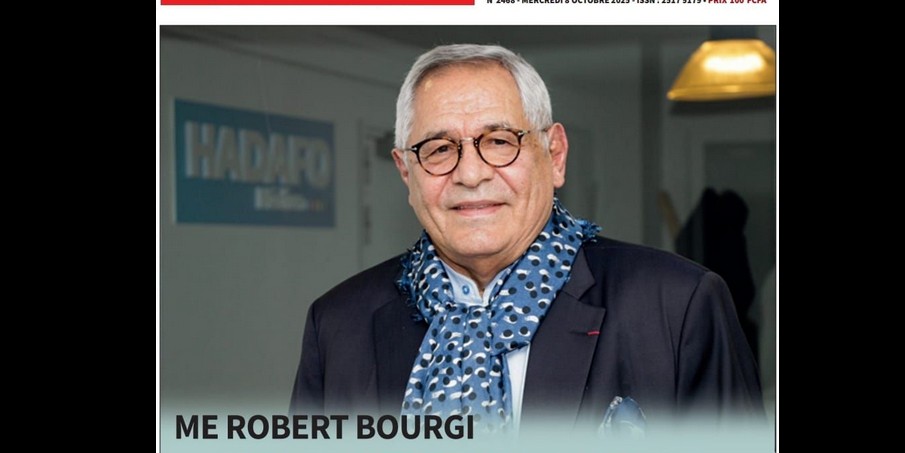
Robert Bourgi Turns on Paul Biya, Declares Him a Political Corpse
- News Team
- 10.Oct.2025
- Details
- Editorial
Heat in Maroua: What Biya’s Return Really Signals
- News Team
- 08.Oct.2025
- Details
- Editorial

Issa Tchiroma: Charles Mambo’s “Change Candidate” for Cameroon
- News Team
- 11.Sep.2025
- Details
- Editorial


