Health
As the deadly Ebola infection rages on unabated in Sierra Leone, two doctors have died of the disease after contracting it in the country. The government announced the deaths on Saturday with Health Ministry spokesman, Jonathan Abass Kamara, saying, "We lost two doctors in one day." It was not immediately clear how they had contracted the disease, or if they were involved directly in the treatment of Ebola patients.
In May, the outbreak spread from Guinea to Sierra Leone, which has recorded around 1,600 Ebola deaths this year. The epidemic has left more than 6,000 dead worldwide since December last year, nearly all in Sierra Leone, Guinea and Liberia. The outbreak, however, appears to be stabilizing in the latter two countries.Ebola spreads through contact with bodily fluids such as blood, saliva, and sweat. It has killed around two-thirds of those it has infected over the last four decades. No effective treatment has been found for Ebola.
- Details
- Ngwa Bertrand
- Hits: 2468
The U.N. peacekeeping force in Liberia says one of its members has been infected with Ebola.
This is the mission's third case linked to the disease. The previous two died.
The country's top U.N. envoy, Karin Landgren, said in a statement late Thursday that a peacekeeper tested positive the day before. The patient is being treated in Monrovia.
Landgren said 16 people who came into contact with the soldier have been quarantined. Areas the peacekeeper visited while symptomatic have been decontaminated.
The Ebola outbreak has sickened nearly 17,300 people, killing about 6,100. The disease has hit Liberia hardest, in neighboring Guinea and Sierra Leone.
The U.N. force, with about 7,700 troops and police, has been in Liberia since 2003 to bring stability after civil war.
- Details
- Ngwa Bertrand
- Hits: 2368
By Eric Chinje
My colleagues at the African Media Initiative (AMI) and I have been debating the effectiveness of reports on the Ebola crisis. Has media played the role it should in helping society combat the disease? We reached an easy consensus: Coverage of the crisis has brought to the fore some of the fundamental challenges facing media in Africa and, possibly, around the world. News editors everywhere never fail to remind their young reporters: Good journalism is about seeking answers to all the right questions, looking at all sides of the story. Ebola is one of the big stories of our times, and it is certainly appropriate to question how effectively African and global media have told this important story. Have reporters and editors asked the right questions? The question of the unseen millions! Reports on Ebola are replete with images of death and the violence of the disease, giving media consumers a real life equivalent of a Hollywood horror movie of alien invaders. What about the living millions who stand at the front lines of that battle? How are they surviving this viral onslaught? Are children going to school, and do they head for the playground when the bell rings? Are farmers on the farm, and is produce available in market stalls? Are taxicabs still a regular presence on street corners in Freetown, and do people take them in the same way they always did? What is really going on behind the veiled headlines of the global coverage of Ebola?
Social etiquette in the Ebola-effected countries, as in most parts of Africa and beyond, recognize hugging, handshakes, high fives, physical contact of sorts, as the simplest forms of expression of affection and friendship. Should coping mechanisms be part of the story? Do mothers in Liberia still kiss their babies good night at bedtime? Has the ritual of co-workers greeting one another in the morning been reduced to a head nod? How do the police effect arrests and prison wardens contain their prisoners, especially the recently arrived ones? Do we, the audience of the unfolding crisis, have a right to see beyond the frightening body count? “Ebola is emblematic of much larger problems of governance, leadership and trust,” according to Johannesburg-based social commentator, Sisonke Msimang. The crisis, she posits, has emerged from the nexus of these overlapping problems. We are reminded of the street rumors in Monrovia at the start of the crisis that Ebola was an invention by the government to obtain more assistance for a donor-dependent nation. Was there a need to delve into the trust factor and see this crisis through the prism of trust between government and the governed? How much of the rapid spread of the disease was a factor of the quality of that social contract? Should this too have informed media-shaped global perceptions of the crisis?
The failure of governance has been occasionally mentioned, if only to make sense of the total systems breakdown in the effected countries. Local responsibility for this has been well documented. But should anyone have asked what all the aid agencies – omnipresent in Liberia – have been up to all these years? Where have all the hundreds of millions in assistance and health-related investment gone? Would the evidence of a seed planted not be there even if the seed withered and died? Is the Ebola story another sad reminder of all that is wrong with foreign aid as we know it? Should this too not inform the storyline? It is notable that the crisis persists in three countries that were essentially destroyed by war and internal strife. The same cross-border movements that took Ebola from Guinea to Sierra Leone and Liberia are prevalent along borders with Ghana, Mali and Senegal. If war is the single factor of vulnerability, is there something to be said about the proliferation of arms and the role of the global military industrial complex in these outcomes? Should the global discourse on Ebola not take into account the havoc on fragile societies brought about by the unregulated international market for guns and bombs?
Questions, and more questions! The pharmaceutical industry has generally been spectacular in its efforts to contain the disease and continues to offer the world that occasional ray of hope that even this dreaded monster can eventually be tamed. But Africans everywhere took note of the timing of the announcement of progress in the search for anti-Ebola therapies. That came when the first American citizen was infected and flown home for treatment. The result was a rash of conspiracy theories about experiments in biological weaponry gone bad. The theories quickly fizzled due to lack of interest in the dominant media and, possibly, the underlying improbability of the assertions that were made. But the important angle about the industry and how it operates deserved, at the very least, deeper analysis. Did the global media go to sleep on this one, or was it considered not important to the overall story? Questions too should be asked about the innumerable institutes of tropical medicine that litter the African research landscape. Muted voices on the Continent have suggested that solutions to the disease are available in the surroundings from whence it came. Are African researchers so glued to the norms they learned in school that they are totally unable to think outside the box and look within their immediate vicinity for some answers? What is going on behind those institutional walls? Is the silence media induced or simply a reflection of inactivity in their labs?
Media has not been complicit in some macabre plot to return Africa to the disease narrative. Certainly not media in Africa. If anything, media professionals on the Continent have, in their cut-and-paste approach to coverage, demonstrated a debilitating ignorance of the issues and of their role in helping society deal with the impact of the disease. They have not asked the right questions. Yet, as every editor knows, until the real questions are asked, the real story will never be told. My AMI colleagues are working with other media-industry actors to address the many challenges that continue to affect media and make it an insignificant player in Africa’s development agenda.
Eric Chinje is the CEO of the African Media Initiative. His earlier positions include: senior advisor at the KRL International LLC, a Washington-based consultancy specializing in the emerging markets, and leader of the Global Media Program at the World Bank Institute (WBI), where he launched the IMAGE (Independent Media for Accountability, Governance and Empowerment) capacity-building program. He was also editor-in-chief of Cameroon Television; a contributing correspondent for CNN World Report; and a stringer for the BBC World Service, Voice of America, and Deutsche Welle Radio.
- Details
- Ngwa Bertrand
- Hits: 2429
Liberian officials have wrongly ascribed about 1,000 deaths in the West African country to the deadly Ebola virus, the World Health Organization (WHO) says. A surge in Ebola death toll, which was published by the UN organization at the weekend, arose from wrong attribution to the epidemic by Liberian authorities, the WHO assistant director general, Bruce Aylward, said on Monday. "Liberia's figures came in but they've since said these were actually non-Ebola deaths that were reported as part of our Ebola deaths and we will be taking them off. So the whole world went up and the whole world will come down again," Aylward said.
The weekend’s statistics put the death toll in Liberia at 4,181, up from 3,016 two days earlier. However, the WHO's revised figures indicated the number of deaths recorded in the Ebola outbreak in the African country stands at 3,145. The new data also classified Sierra Leone and Guinea with 1,530 and 1,312 deaths respectively as the worst-hit countries after Liberia. The three states have suffered a total of 5,987 Ebola-related deaths, the figures showed. Over 16,000 people have reportedly been infected with the deadly Ebola virus.
- Details
- Ngwa Bertrand
- Hits: 2679
- Details
- Ngwa Bertrand
- Hits: 2326
The World Health Organization (WHO) says over 16,000 people have been infected with the deadly Ebola virus and around 7,000 have lost their lives as a result of it. The UN health agency announced the new death toll on Friday. The figure demonstrates an increase of over 1,000 deaths since a report from two days before. Most of the new deaths were recorded in Liberia, which along with Sierra Leone and Guinea, is the epicenter of an Ebola outbreak in West Africa. Based on the new data, there have been 16,169 cases in just the three countries — an increase of 268 cases since the report two days earlier.
Around three dozen cases have also been reported elsewhere while, most recently, Mali began recording infections after people with the Ebola disease crossed over from neighboring Guinea. Since the process of collecting data about the Ebola outbreak is difficult and slow, death and infection tolls often see large rises when the backlog of information is cleared. The WHO, meanwhile, has warned that its figures may significantly underreport the actual number of the people diagnosed and killed by the virus.
- Details
- Ngwa Bertrand
- Hits: 2172
Subcategories
Flourish Doctor Article Count: 3
Meet Your Coach Dr. Joyce Akwe ... With a master's in public health and a medical doctor specialized in internal medicine with a focus on hospital medicine.
Dr. Joyce Akwe is the Chief of Hospital Medicine at the Atlanta VA Health Care System (Atlanta VAHCS), an Associate Professor of Medicine at Emory University School of Medicine and an Adjunct Faculty with Morehouse School of Medicine in Atlanta GA.
After Medical school Dr. Akwe worked for the World Health Organization and then decided to go back to clinical medicine. She completed her internal medicine residency and chief resident year at Morehouse School of Medicine. After that, she joined the Atlanta Veterans VAHCS Hospital Medicine team and has been caring for our nation’s Veterans since then.
Dr. Akwe has built her career in service and leadership at the Atlanta VA HealthCare System, but her influence has extended beyond your work at the Atlanta VA, Emory University, and Morehouse School of Medicine. She has mentored multiple young physicians and continuous to do so. She has previously been recognized by the Chapter for her community service (2010), teaching (as recipient of the 2014 J Willis Hurst Outstanding Bedside Teaching Award), and for your inspirational leadership to younger physicians (as recipient of the 2018 Mark Silverman Award). The Walter J. Moore Leadership Award is another laudable milestone in your car
Dr. Akwe teaches medical students, interns and residents. She particularly enjoys bedside teaching and Quality improvement in Health care which is aimed at improving patient care. Dr. Akwe received the distinguished physician award from Emory University School of medicine and the Nanette Wenger Award for leadership. She has published multiple papers on health care topics.
Local News
- Details
- Society

Kribi II: Man Caught Allegedly Abusing Child
- News Team
- 14.Sep.2025
- Details
- Society

Back to School 2025/2026 – Spotlight on Bamenda & Nkambe
- News Team
- 08.Sep.2025
- Details
- Society

Cameroon 2025: From Kamto to Biya: Longue Longue’s political flip shocks supporters
- News Team
- 08.Sep.2025
- Details
- Society

Meiganga bus crash spotlights Cameroon’s road safety crisis
- News Team
- 05.Sep.2025
EditorialView all
- Details
- Editorial

When Power Forgets Its Limits: Reading Atanga Nji Through Ekinneh Agbaw-Ebai’s Lens
- News Team
- 17.Dec.2025
- Details
- Editorial
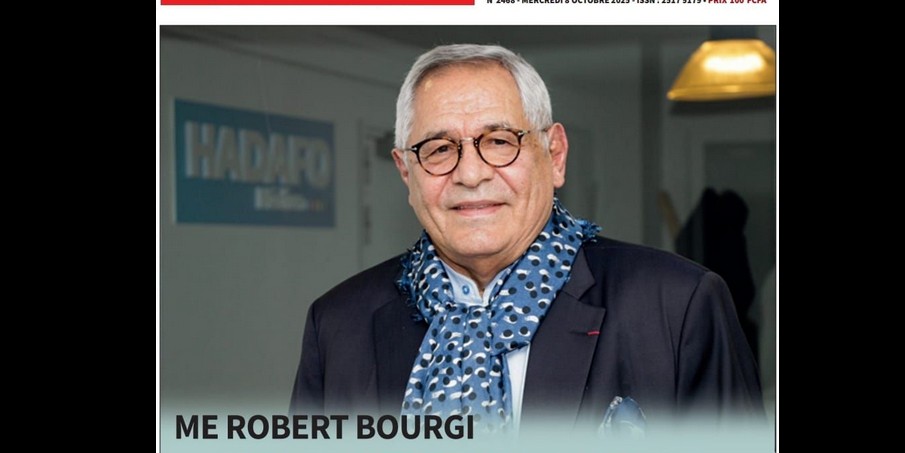
Robert Bourgi Turns on Paul Biya, Declares Him a Political Corpse
- News Team
- 10.Oct.2025
- Details
- Editorial
Heat in Maroua: What Biya’s Return Really Signals
- News Team
- 08.Oct.2025
- Details
- Editorial

Issa Tchiroma: Charles Mambo’s “Change Candidate” for Cameroon
- News Team
- 11.Sep.2025


