Health
- Details
- Health
West African countries still has a long way to go to beat back the deadliest Ebola outbreak in history, a senior UN official says. "I think the response (to Ebola) has been successful but we have a long way to go," Anthony Banbury, the outgoing head of the UN Mission for Ebola Emergency Response (UNMEER), said at a press conference in Ghana on Friday.
On the eve of his departure for New York to take up a new UN position, Banbury warned of an "epic battle" still ahead to control the spread of the disease. He expressed confidence that the number of Ebola cases would fall in the first months of 2015. "But two cases here and three there presents a grave threat to any community or country," Banbury noted, calling on all countries not to turn a blind eye on the outbreak until it is completely over.
Banbury, a US national, will be succeeded by Ismail Ould Cheikh Ahmed, a Mauritanian diplomat who has held different UN posts. The Ebola outbreak has killed 7,989 people around the world, almost all of them in Sierra Leone, Liberia and Guinea -- the three West Africa countries hardest hit by the disease, the World Health Organization (WHO) said on Friday.
Culled from Presstv
- Details
- Ngwa Bertrand
- Hits: 2512
- Details
- Health
The British nurse being treated for Ebola is now in a critical condition after her health "gradually deteriorated" in hospital. Pauline Cafferkey, a Scottish NHS nurse, caught the deadly virus while volunteering in a government-funded clinic in Sierra Leone, despite the use of protective equipment and strict infection controls. She became the first person to be diagnosed with Ebola in the UK on Monday after she returned to Glasgow, sparking an operation to trace other passengers on her flights.
The 39-year-old is being treated at the Royal Free Hospital in London. It houses the UK's specialist treatment centre for the disease, which has killed almost 8,000 people worldwide. A brief statement on the hospital's website today said: “The Royal Free London NHS Foundation Trust is sorry to announce that the condition of Pauline Cafferkey has gradually deteriorated over the past two days and is now critical.”
On Wednesday, a spokesperson had issued happier news that Mrs Cafferkey was "sitting up in bed, talking and reading". She chose to receive plasma treatment, which uses the blood of Ebola survivors, as well as an experimental anti-viral drug that was not officially named.

Dr Michael Jacobs, infectious diseases consultant at the Royal Free, said on Wednesday: “We are giving her the very best care possible. However, the next few days will be crucial. The disease has a variable course and we will know much more in a week’s time.” Mrs Cafferkey had worked as a nurse for 16 years before starting volunteering with Save the Children to help with the Ebola crisis.
She flew out to Freetown in November with four other Scottish volunteers and a contingent of 30 NHS staff from around the UK as part of a government-funded project. During her time in Sierra Leone's “red zone”, she wrote a diary about her experiences for the Scotsman newspaper, chronicling her journey from the Blantyre Health Centre in South Lanarkshire to Ebola's front line. She said she felt well-protected in the “alien-type suit” of protective clothing health workers wear in 30C heat, joking that they would “certainly be beneficial on a cold winter's night in Scotland”.
In her third week, Mrs Cafferkey described the harrowing experience of watching a woman die from Ebola as her young son watched through the window, made an orphan by the virus that claimed both parents and his sister. “The sad thing is that this is a regular occurrence and we see and hear of whole families being wiped out by this awful disease,” she wrote.
Despite the sorrow, she said seeing survivors be discharged back into the outside world with celebratory singing and dancing made the work worthwhile. "It helps us remember the good work we are doing and the reason we are all here," she wrote. Save the Children said almost 200 people had been treated for Ebola at the Kerry Town Treatment Centre, which opened in November and has 80 beds. One of Mrs Cafferkey's colleagues, who sat next to her on the flight home, said he and other medical workers had felt protected from infection. Dr Martin Deahl told Sky News the group had 10 days of army training in York, which left them “feeling totally confident and safe”.
There was “a bit of a reunion” between NHS volunteers when they met at Freetown airport for the flight home from Sierra Leone, he said, and “everybody sat next to everybody else” as they shared their experiences. “I would bet anything that she caught this in the community and not in the treatment centre. We had absolute confidence in the equipment and in our training,” he added. “I cannot see, if you followed the procedures and the protocols properly, I cannot see any way that someone could be contaminated.”
Dr Deahl raised doubts about Britain's "disorganised" screening measures for Ebola after it emerged Mrs Cafferkey was cleared to fly home to Glasgow despite telling medics she feared she had symptoms. While waiting for a connecting flight to Glasgow she raised fears about her condition and was tested a further six times in the space of 30 minutes. Public Health England (PHE) said its procedures would be reviewed.
Culled from The Independent
- Details
- Ngwa Bertrand
- Hits: 2594
- Details
- Health
Scientists have found that the occurrence of most cancer cases can be explained as simple random affliction rather than put down to genes, diet or lifestyle. Scientists from Johns Hopkins University found that random mutations that occur in DNA when cells divide are responsible for two-thirds of adult cancers. The remaining third are linked to environmental factors or defective inherited genes, according to the research published in the medical journal Science.
However, the scientists warn that poor lifestyle can add to the “bad luck factor” involved in cancer. Professor Bert Vogelstein, from Johns Hopkins University School of Medicine in the US, said, “All cancers are caused by a combination of bad luck, the environment and heredity, and we’ve created a model that may help quantify how much of these three factors contribute to cancer development.
“This study shows that you can add to your risk of getting cancers by smoking or other poor lifestyle factors. However, many forms of cancer are due largely to the bad luck of acquiring a mutation in a cancer driver gene regardless of lifestyle and heredity factors. The best way to eradicate these cancers will be through early detection, when they are still curable by surgery.”
Culled from Presstv
- Details
- Ngwa Bertrand
- Hits: 2095
- Details
- Health
Liberia has lifted a curfew imposed to curb Ebola in an effort to let church-goers attend New Year's Eve services, a government official has said.
Worshippers should avoid over-crowding and touching to prevent contagion, the deputy information minister said.
Health agencies did not comment directly on the one-night suspension, but warned against complacency.
Liberia's government had hoped for an Ebola-free Christmas, but the disease has continued to claim lives.
The virus has killed nearly 8,000 people, mostly in Sierra Leone, Liberia and Guinea, where it was first identified in March.
'Great concern'
Liberia's President Ellen Johnson-Sirleaf had ordered the lifting of the curfew so that the traditional New Year's Eve services could be held, Isaac Jackson, the deputy information minister, told the BBC.
Liberia is a deeply religious society, where Christians make up the majority and attendance at church is a key part of life.
Confirming the lifting of the curfew, from midnight to 0600 GMT, Mr Jackson said it would come into force again the following night and anyone who broke it would be arrested.
Churches should take preventative measures including hand-washing and temperature-testing, Mr Jackson said.
The World Health Organization said people should keep up "social distancing" measures, Reuters reported.
Medical charity Medecins Sans Frontieres (MSF) said that while progress had been made in curbing the disease, it was of "great concern to everyone at MSF that the population is now much less vigilant about Ebola and health promotion messages are being pushed aside", Source:Reuters
- Details
- Ngwa Bertrand
- Hits: 2449
- Details
- Health
A female healthcare worker from Glasgow becomes the first person to be diagnosed with Ebola while in the UK. The woman, thought to be a nurse, returned to Scotland via Casablanca and London Heathrow, arriving into Glasgow Airport on a British Airways flight at around 11.30pm. The patient - understood to have been volunteering for Save The Children - was admitted to hospital early this morning after feeling unwell and was placed into isolation at 7.50am. She is in a stable condition.
She has been isolated and is receiving treatment in the specialist Brownlee Unit for Infectious Diseases on the Gartnavel Hospital campus, but will be taken to the Royal Free Hospital in London. Their infectious diseases unit is run by a dedicated team of doctors and laboratory staff and access is restricted to trained medical staff. A specially designed tent is set up around the patient's bed so the infection can be contained while they are treated.
Anyone who is at risk through contact with the patient in transit is to be contacted and closely monitored. Scotland's First Minister Nicola Sturgeon has chaired a meeting of the Scottish Government Resilience Committee and has also spoken to Prime Minister David Cameron. She said: "Our first thoughts at this time must be with the patient diagnosed with Ebola and their friends and family. I wish them a speedy recovery. "Scotland has been preparing for this possibility from the beginning of the outbreak in West Africa and I am confident that we are well prepared." She added in a news conference that the risk to other people is "extremely low to the point of negligible". The woman is the first person to be diagnosed with Ebola while in the UK.
- Details
- Ngwa Bertrand
- Hits: 2603
- Details
- Health
West Africa's fight to contain Ebola has hampered the campaign against malaria, a preventable and treatable disease that is claiming many thousands more lives than the dreaded virus.
In Gueckedou, near the village where Ebola first started killing people in Guinea's tropical southern forests a year ago, doctors say they have had to stop pricking fingers to do blood tests for malaria.
Guinea's drop in reported malaria cases this year by as much as 40 percent is not good news, said Dr. Bernard Nahlen, deputy director of the U.S. President's Malaria Initiative. He said the decrease is likely because people are too scared to go to health facilities and are not getting treated for malaria
"It would be a major failure on the part of everybody involved to have a lot of people die from malaria in the midst of the Ebola epidemic," he said in a telephone interview. "I would be surprised if there were not an increase in unnecessary malaria deaths in the midst of all this, and a lot of those will be young children."
Figures are always estimates in Guinea, where half the 12 million people have no access to health centers and die uncounted. Some 15,000 Guineans died from malaria last year, 14,000 of them children under five, according to Nets for Life Africa, a New York-based charity dedicated to providing insecticide-treated mosquito nets to put over beds. In comparison, about 1,600 people in Guinea have died from Ebola, according to statistics from the World Health Organization.
Malaria is the leading cause of death in children under five in Guinea and, after AIDS, the leading cause of adult deaths, according to Nets for Life.
Ebola and malaria have many of the same symptoms, including fever, dizziness, head and muscle aches. Malaria is caused by bites from infected mosquitoes while Ebola can be contracted only from the body fluids of an infected victim — hence doctors' fears of drawing blood to do malaria tests.
People suffering malaria fear being quarantined in Ebola treatment centers and health centers not equipped to treat Ebola are turning away patients with Ebola-like symptoms, doctors said.
WHO figures from Gueckedou show that of people coming in with fever in October, 24 percent who tested positive for Ebola also tested positive for malaria, and 33 percent of those who did not have Ebola tested positive for malaria — an indication of the great burden of malaria in Guinea.
Malaria killed one of 38 Cuban doctors sent to Guinea to help fight the Ebola outbreak. One private hospital had a kidney dialysis machine that could have saved his failing organ but the clinic was shut after several people died there of Ebola
The U.S. President's Malaria Initiative ground to a halt in Guinea months ago and the WHO in November advised health workers against testing for malaria unless they have protective gear.
The malaria initiative is doing a national survey of health facilities and elsewhere to try to find out "what's actually happening here ... where people with malaria are going," said Nahlen, of the U.S. campaign. There was some positive news in Guinea — it had just completed a national mosquito net campaign against malaria when Ebola struck, he said
Neighboring Liberia, on the other hand, suspended the planned distribution of 2 million nets, said Nahlen.
In Sierra Leone, the third country hard-hit by Ebola, Doctors Without Borders took unprecedented, pre-emptive action this month, distributing 1.5 million antimalarial drugs that can be used to both prevent and treat, aiming to protect people during the disease's peak season.
"Most people turn up at Ebola treatment centers thinking that they have Ebola, when actually they have malaria," said Patrick Robataille, Doctors Without Borders field coordinator in Freetown. "It's a huge load on the system, as well as being a huge stress on patients and their families."
He said a second distribution is planned in Freetown and western areas most affected by Ebola. Robataille said the huge delivery of antimalarial drugs was "in proportion to the scale of the Ebola epidemic — it's massive."
- Details
- Ngwa Bertrand
- Hits: 2446
Flourish Doctor Article Count: 3
Meet Your Coach Dr. Joyce Akwe ... With a master's in public health and a medical doctor specialized in internal medicine with a focus on hospital medicine.
Dr. Joyce Akwe is the Chief of Hospital Medicine at the Atlanta VA Health Care System (Atlanta VAHCS), an Associate Professor of Medicine at Emory University School of Medicine and an Adjunct Faculty with Morehouse School of Medicine in Atlanta GA.
After Medical school Dr. Akwe worked for the World Health Organization and then decided to go back to clinical medicine. She completed her internal medicine residency and chief resident year at Morehouse School of Medicine. After that, she joined the Atlanta Veterans VAHCS Hospital Medicine team and has been caring for our nation’s Veterans since then.
Dr. Akwe has built her career in service and leadership at the Atlanta VA HealthCare System, but her influence has extended beyond your work at the Atlanta VA, Emory University, and Morehouse School of Medicine. She has mentored multiple young physicians and continuous to do so. She has previously been recognized by the Chapter for her community service (2010), teaching (as recipient of the 2014 J Willis Hurst Outstanding Bedside Teaching Award), and for your inspirational leadership to younger physicians (as recipient of the 2018 Mark Silverman Award). The Walter J. Moore Leadership Award is another laudable milestone in your car
Dr. Akwe teaches medical students, interns and residents. She particularly enjoys bedside teaching and Quality improvement in Health care which is aimed at improving patient care. Dr. Akwe received the distinguished physician award from Emory University School of medicine and the Nanette Wenger Award for leadership. She has published multiple papers on health care topics.
Local News
- Details
- Society

Kribi II: Man Caught Allegedly Abusing Child
- News Team
- 14.Sep.2025
- Details
- Society

Back to School 2025/2026 – Spotlight on Bamenda & Nkambe
- News Team
- 08.Sep.2025
- Details
- Society

Cameroon 2025: From Kamto to Biya: Longue Longue’s political flip shocks supporters
- News Team
- 08.Sep.2025
- Details
- Society

Meiganga bus crash spotlights Cameroon’s road safety crisis
- News Team
- 05.Sep.2025
EditorialView all
- Details
- Editorial
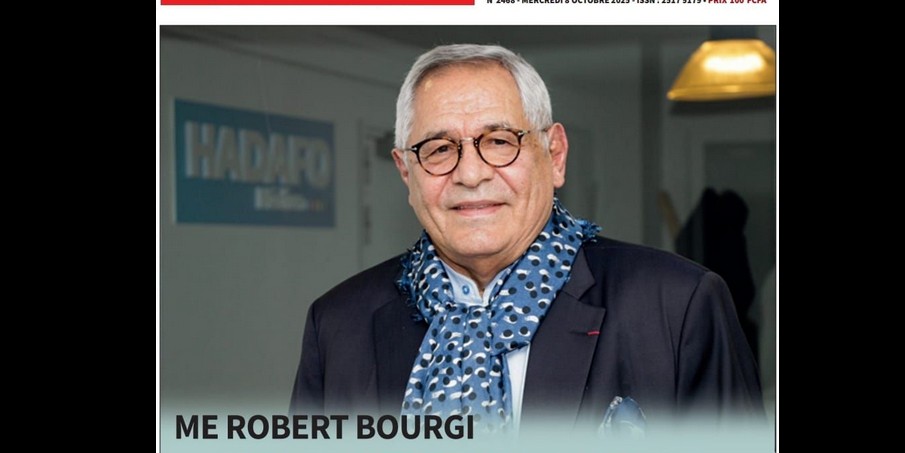
Robert Bourgi Turns on Paul Biya, Declares Him a Political Corpse
- News Team
- 10.Oct.2025
- Details
- Editorial
Heat in Maroua: What Biya’s Return Really Signals
- News Team
- 08.Oct.2025
- Details
- Editorial

Issa Tchiroma: Charles Mambo’s “Change Candidate” for Cameroon
- News Team
- 11.Sep.2025
- Details
- Editorial


