Health
- Details
- Health
(Reuters) - The number of new confirmed Ebola cases totalled 99 in the week to Jan. 25, the lowest tally since June 2014, the World Health Organization said on Thursday, signalling the tide might have turned against the epidemic.
"The response to the EVD (Ebola virus disease) epidemic has now moved to a second phase, as the focus shifts from slowing transmission to ending the epidemic," the WHO said.
"To achieve this goal as quickly as possible, efforts have moved from rapidly building infrastructure to ensuring that capacity for case finding, case management, safe burials, and community engagement is used as effectively as possible."
The outbreak has killed 8,810 people out of 22,092 cases, almost all of them in Sierra Leone, Liberia and Guinea.
Cases and deaths have fallen rapidly in Liberia and Sierra Leone in the past few weeks, with 20 deaths recorded in Liberia in the 21 days to Jan. 25 -- less than one a day.
But Guinea reported 30 confirmed cases in the latest week, up from 20 in the previous week. The epidemic is also still spreading geographically there, with a first confirmed case in Guinea's Mali prefecture bordering Senegal, which reopened its border with Guinea on Monday.
A resurgence of the virus in Guinea, where the outbreak began, would threaten President Alpha Conde's goal of eradicating Ebola from the country by early March.
Disease experts say that tracking down everyone who has had close contact with an Ebola patient is crucial to ending the outbreak. But in dozens of remote villages in Guinea, angry residents are blocking access for health workers.
The most intense transmission in Guinea is in Forecariah district, close to the border with western Sierra Leone, the worst Ebola hotspot.
"There have recently been reports of high levels of community resistance to EVD response measures in Forecariah, indicating a need to better engage the community in the response," the WHO said.
- Details
- Ngwa Bertrand
- Hits: 2539
- Details
- Health
The United Nations has warned that the spread of the deadly Ebola virus is not fully controlled yet despite a significant fall in the number of new cases across West Africa. David Nabarro, the senior UN coordinator for Ebola, told reporters in the Ethiopian capital, Addis Ababa, on Thursday that “the epidemic is not contained yet” across the three worst-affected West African nations, including Liberia, Guinea and Sierra Leone. “The number of cases is decreasing week by week and getting to zero in many places...but we still see occasional flare-ups and we still see some surprises with new cases out of our contact lists,” Nabarro added.
Meanwhile, the World Health Organization (WHO) issued a statement on Thursday and emphasized the need to create proper “infrastructure” in an effort to tackle the deadly disease. “The response...has now moved to a second phase, as the focus shifts from slowing transmission to ending the epidemic,” read the statement, adding, “To achieve this goal as quickly as possible, efforts have moved from rapidly building infrastructure to ensuring that capacity for case finding, case management, safe burials, and community engagement is used as effectively as possible.”
The developments come as the African Union (AU) leaders have gathered in Addis Ababa for a summit, where Ebola is a key issue for discussion. The AU also plans to launch an Ebola fund and disease control center to help stop the spread of the epidemic across the continent. The African Union has already sent hundreds of health workers as part of its mission to control the outbreak in West Africa. According to the World Health Organization, the death toll from the Ebola outbreak in the three hardest-hit West African countries of Guinea, Sierra Leone and Liberia has risen to nearly 9,000. Ebola is a form of hemorrhagic fever, whose symptoms are diarrhea, vomiting, and bleeding. The virus spreads through direct contact with infected blood, feces, or sweat. It can be also spread through sexual contact or the unprotected handling of contaminated corpses.
- Details
- Ngwa Bertrand
- Hits: 2374
- Details
- Health
The Scottish nurse who contracted Ebola on an aid mission to Sierra Leone has been discharged from hospital after being declared free of the virus. Pauline Cafferkey said she was "happy to be alive" and praised staff at London’s Royal Free Hospital, who she said saved her life. Only three weeks ago her condition was described as critical. Ms Cafferkey, 39, from Cambuslang in South Lanarkshire, was diagnosed with Ebola after returning to Glasgow from Sierra Leone in December. She was one of the first wave of NHS volunteers, flown out to West Africa in November, to join the fight against the Ebola outbreak, and worked at a Save the Children treatment centre in Kerry Town.
After being admitted to Glasgow’s Gartnavel Hospital on 29 December, she was transferred to the Royal Free’s high level isolation unit (HLIU), where she has been treated for more than three weeks. Speaking after leaving hospital today she said: "I am just happy to be alive. "I still don't feel 100 per cent. I feel quite weak, but I'm looking forward to going home. I want to say a big thank you to the staff who treated me - they were amazing. They were always very reassuring and I knew I was in the best hands. They saved my life."
Less than a week after being admitted to the Royal Free, the hospital reported that her condition had deteriorated to a critical state. However, two weeks ago doctors said her condition had improved. She has now been declared free of the virus. Dr Michael Jacobs, the infectious disease expert who led the team caring for Ms Cafferkey, said: "We are delighted that Pauline has recovered and is now well enough to go home. I am very proud of the staff who have been caring for her. It is because of the skill and hard work of the entire team that she is now able to go home."
Although she was treated in an isolation tent, she was able to speak to family members through a window via an intercom system. She was also provided with iPad by the Royal Free Charity. "As I was beginning to recover, I listened to lots of music when I was in the HLIU and that was a massive help," she said. "I also had lots of Irn-Bru to help me through!" The Health Secretary Jeremy Hunt said he was "delighted" that Ms Cafferkey could now return home. "Her selflessness and courage are remarkable and she represents the very best of NHS values," he said. "I would like to thank all the staff at the Royal Free who have worked tirelessly to provide her with world class care and treatment."
West Africa’s Ebola outbreak, which has killed 8,675 people in little more than a year, remains a major threat, but there have been hopeful signs that the epidemic may be abating.The World Health Organisation said last week that a "turning point" had been reached with the number of new cases falling in all three affected countries, with just eight cases detected in Liberia in the week ending 18 January – down from a peak of 509 in September. Cases in Sierra Leone remain high, at 117 per week, but this is also a major improvement on the peak of 748.
The Independent
- Details
- Ngwa Bertrand
- Hits: 2275
- Details
- Health
Tens of thousands of chickens have been culled in five states across Nigeria after the discovery of bird flu in some poultry farms, officials say. Agriculture Minister Akinwumi Adesina told reporters in the capital, Abuja, on Wednesday that the five states badly affected by the H5N1 strain of bird flu were Lagos and Ogun in the southwest, Delta and Rivers in the south, and Kano in the north.
At least 15 commercial farms and nine live bird markets were affected across the states in recent weeks, he added. As of January 21, a total of 139,505 birds have been associated with bird flu exposures, with 22,173 (15 percent) mortality recorded,” media outlets quoted the Nigerian minister as saying. Adesina also pointed out that Kano has been the worst affected, with 103,445 birds reported as exposed to infection.
According to the official, the cases of the H5N1 strain were first confirmed on a commercial farm in Kano and at a live bird market in Lagos on January 8. The minister noted that the government was taking all the necessary steps in order to ensure public safety across the country. Sources say the Nigerian health officials are taking enhanced hygiene procedures against the spread of the virus. The bio-security measures introduced include comprehensive surveillance of poultry farms, quarantine and decontamination of outbreak sites. Since first appearing in 2003, the H5N1 has claimed more than 400 lives, mainly in Southeast Asia. H7N9, another strain of bird flu, has killed more than 170 people since emerging in 2013.
Culled from Presstv
- Details
- Ngwa Bertrand
- Hits: 2382
- Details
- Health
Drug users have lost access to therapy in Crimea and eastern Ukraine, fueling one of the world's fast-growing HIV epidemics, a UN health expert warns. Injecting drug users in the Crimean Peninsula have lost access to therapy to wean them off heroin, the UN's AIDS envoy, Michel Kazatchkine, said on Wednesday. From the 805 people who received opioid substitution therapy (OST) from the Kiev government, between 80 and 100 have died, the official said.
He added that a “humanitarian crisis” has hit the pro-Russian territory in eastern Ukraine. “This is the region where, firstly, the AIDS epidemic continues to grow and secondly, where the AIDS epidemic is largely dependent on people who use drugs,” he added. More than 200 people were infected with HIV out of the 805 who enrolled in Crimea's OST program, according to the International HIV/AIDS Alliance in Ukraine. Moreover, more than 300 OST patients in Donetsk and Lugansk have lost access to treatment since the conflict began, the NGO said.
Another 550 patients are in danger of running out of methadone unless emergency supplies can be delivered, it added. Ukraine’s mainly Russian-speaking regions of Donetsk and Lugansk in the east have witnessed deadly clashes between pro-Russia forces and the Ukrainian army since Kiev launched military operations to silence the pro-Moscow protests in mid-April 2014.Violence intensified later in May after the two flashpoint regions held local referendums in which their residents voted overwhelmingly in favor of independence from Ukraine and joining the Russian Federation.
- Details
- Ngwa Bertrand
- Hits: 2048
- Details
- Health
A new international study has identified six new genes that increase a woman’s likelihood of developing ovarian cancer, taking the number of known ovarian cancer gene regions from 12 to 18. An international research led by Australia's QIMR Berghofer Medical Research Institute and the University of Cambridge studied around 70,000 women from 30 countries and drew on data from Ovarian Cancer Association Consortium and the Consortium of Investigators of BRCA1/2.
“Individually, each of these ‘typos’ increases the risk of cancer by a very small amount,” QIMR Berghofer Cancer Program Head Professor Georgia Chenevix-Trench said, adding, “However, if a woman carries a large number of these typos her risk of developing ovarian cancer may be as high as that conferred by mutations in BRCA1 or 2.” A woman’s lifetime risk of developing breast or ovarian cancer is greatly increased if she inherits a harmful mutation in the BRCA1 or BRCA2 genes. The cancer has been referred to as a silent killer because it is often not detected until it is at an advanced stage. Professor Trench further elaborated that this new finding would help to better diagnose and prevent ovarian cancer.
Culled from Presstv
- Details
- Ngwa Bertrand
- Hits: 2311
Flourish Doctor Article Count: 3
Meet Your Coach Dr. Joyce Akwe ... With a master's in public health and a medical doctor specialized in internal medicine with a focus on hospital medicine.
Dr. Joyce Akwe is the Chief of Hospital Medicine at the Atlanta VA Health Care System (Atlanta VAHCS), an Associate Professor of Medicine at Emory University School of Medicine and an Adjunct Faculty with Morehouse School of Medicine in Atlanta GA.
After Medical school Dr. Akwe worked for the World Health Organization and then decided to go back to clinical medicine. She completed her internal medicine residency and chief resident year at Morehouse School of Medicine. After that, she joined the Atlanta Veterans VAHCS Hospital Medicine team and has been caring for our nation’s Veterans since then.
Dr. Akwe has built her career in service and leadership at the Atlanta VA HealthCare System, but her influence has extended beyond your work at the Atlanta VA, Emory University, and Morehouse School of Medicine. She has mentored multiple young physicians and continuous to do so. She has previously been recognized by the Chapter for her community service (2010), teaching (as recipient of the 2014 J Willis Hurst Outstanding Bedside Teaching Award), and for your inspirational leadership to younger physicians (as recipient of the 2018 Mark Silverman Award). The Walter J. Moore Leadership Award is another laudable milestone in your car
Dr. Akwe teaches medical students, interns and residents. She particularly enjoys bedside teaching and Quality improvement in Health care which is aimed at improving patient care. Dr. Akwe received the distinguished physician award from Emory University School of medicine and the Nanette Wenger Award for leadership. She has published multiple papers on health care topics.
Local News
- Details
- Society

Kribi II: Man Caught Allegedly Abusing Child
- News Team
- 14.Sep.2025
- Details
- Society

Back to School 2025/2026 – Spotlight on Bamenda & Nkambe
- News Team
- 08.Sep.2025
- Details
- Society

Cameroon 2025: From Kamto to Biya: Longue Longue’s political flip shocks supporters
- News Team
- 08.Sep.2025
- Details
- Society

Meiganga bus crash spotlights Cameroon’s road safety crisis
- News Team
- 05.Sep.2025
EditorialView all
- Details
- Editorial
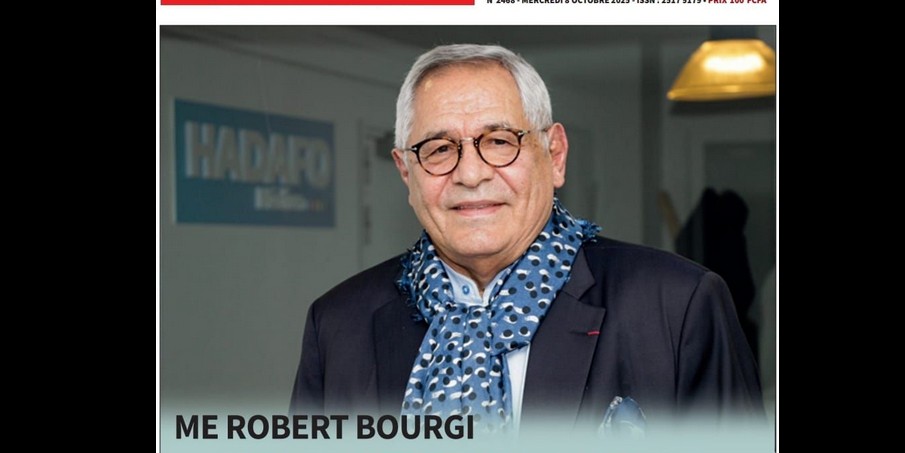
Robert Bourgi Turns on Paul Biya, Declares Him a Political Corpse
- News Team
- 10.Oct.2025
- Details
- Editorial

Heat in Maroua: What Biya’s Return Really Signals
- News Team
- 08.Oct.2025
- Details
- Editorial

Issa Tchiroma: Charles Mambo’s “Change Candidate” for Cameroon
- News Team
- 11.Sep.2025
- Details
- Editorial


