Health
- Details
- Health
Sierra Leone, one of the three worst Ebola-stricken West African countries, has managed to curb the Ebola outbreak, World Health Organization (WHO) and United Nation’s officials say. "Sierra Leone is in much better shape today to control Ebola than it was a few weeks ago," said the United Nations Special Representative and Head of the United Nations Mission for Ebola Emergency Response (UNMEER), Ismail Ould Cheikh Ahmed, in the country’s capital, Freetown, on Friday. Ahmed also said, "From everything I've seen so far, I am optimistic that Sierra Leone can get by," adding further progress requires "considerable effort by all".
Pujehun District in the Southern Province of Sierra Leone has become the first in the country with a record of 42 days with no registered cases of Ebola. The number of days is twice the incubation period of the virus. The considerable progress was mainly due to increased number of beds available and burial teams, said the WHO's Assistant Director-General Bruce Aylward, adding the new resources need to be used effectively.
"There are signs that case incidence may have leveled off in Sierra Leone, although with 248 new confirmed cases reported in the week to 4 January 2015, it remains by far the worst-affected country at present," the WHO said. The Ebola epidemic has taken 8,235 lives out of 20,747 known cases worldwide over the past year, the WHO said in its update released on Wednesday, January 7, 2015. Sierra Leone, Liberia and Guinea, are three worst hit countries to which the majority of the cases have been ascribed.
- Details
- Ngwa Bertrand
- Hits: 2558
- Details
- Health
A former nurse in Germany has admitted to killing about 30 patients, and nearly taking the lives of an additional 60 people with drug overdoses. A court-appointed psychologist testified in the northwestern city of Oldenburg on Thursday that the male nurse used overdoses of a cardiac drug on “about 30” seriously ill people at Delmenhorst Hospital from 2003 to 2005. Another 60 people survived the injections, the court heard.
The 38-year-old’s motive was to recklessly create intensive-care emergencies where he could impress and win gratitude for saving people from the brink of death, prosecutors said. He stands trial in only three killings to make the case easier to prove, prosecutors added. The unidentified defendant insisted that he had not killed anyone at other hospitals during his career, or while he had worked as an ambulance crewman.
He is charged with three murders and two attempted murders at a trial that began last year. The former nurse is already serving seven and a half years in prison on a 2008 conviction for attempted murder. In 2005, a colleague saw him injecting a patient in intensive care with an overdose.
Culled from Presstv
- Details
- Ngwa Bertrand
- Hits: 2419
- Details
- Health
A massive HIV outbreak in a Cambodian village has been linked to contaminated medical equipment, the UN health arm and country’s health ministry says. So far, 212 people out of 1,940 tested are found to be carrying HIV, with contaminated medical equipment the likely cause, the World Health Organization (WHO) and the health ministry said in a joint study released on Saturday.
At least 174 of those who tested positive – including 39 people aged 14 or younger and 46 people aged 60 years old or older – come from the remote Roka village in western Battambang Province. The likely cause has been attributed to contaminated equipment used by an unlicensed Cambodian doctor, who has admitted reusing needles and syringes at his clinic. “The study showed that the percentage of people that reported receiving an injection or intravenous infusion as part of their health treatment was significantly higher among the people who tested positive for HIV than the people who were HIV negative,” a joint statement said.
Authorities have charged the self-styled doctor, Yem Chroeum, with murder, deliberately infecting people with HIV and operating an unlicensed clinic. News of the infections first broke late November, with hundreds of village residents flocking to testing centers since. Meanwhile, Cambodia has been praised for its efforts in tackling HIV/AIDS, with some 73,000 people out of a population of over 15 million living with the illness.
Culled from Presstv
- Details
- Ngwa Bertrand
- Hits: 2558
- Details
- Health
Scientists have taken crucial steps in their quest for finding a remedy for HIV by finding clues about how the virus manages to evade detection after being suppressed by drugs. Researchers at Johns Hopkins University School of Medicine in Baltimore, Maryland, made the announcement on Wednesday after they analyzed blood samples from 25 patients with the human immunodeficiency virus, AFP reported. After being treated by antiretroviral drugs, the sleeping virus harbors mutations that help it skirt detection by the immune system.
Now, scientists have voiced hope that the immune system can be trained to spot the peril and destroy it. After the infection is rolled back, HIV hides in a component of the immune system, called memory CD4 T cells, lurking there to rebound once the therapy is stopped. The research, originally published in the Nature journal, touches upon on the "kick-and-kill" strategy. "Our results suggest that luring HIV out of hiding is winning only half the battle," said Robert Siliciano, a professor of molecular biology at the university, adding, “We found that these pools of dormant virus carry mutations that render HIV invisible to the very immune cells capable of disarming it, so even when the virus comes out of hiding, it continues to evade immune detection."
Out of the 25 HIV+ patients the researchers studied at the university, 10 had undergone early therapy and 15 had started the drugs only after the virus entered a chronic stage. Almost no mutations were detected in the virus inside the bodies of early initiators of the therapy, while the others had HIV stuffed with "escape mutations.” Still, the virus had retained a tiny bit of its original viral protein, left non-mutated, in the bodies of the late initiators of the therapy.
Scientists exposed uninfected immune cells to the virus of both kinds and managed to kill 23 percent of the cells with escape mutations and 61 percent of the ones in the early initiators. "It's as if the immune system had lost its ability to spot and destroy the virus, but priming killer T cells that recognize a different, non-mutated portion of HIV's protein reawakened that natural killer instinct," Siliciano said.
Culled from Presstv
- Details
- Ngwa Bertrand
- Hits: 2672
- Details
- Health
The death toll from the Ebola outbreak in the three hardest-hit West African countries has exceeded 8,000, the World Health Organization (WHO) says. The Geneva-based organization said on Monday that at least 8,153 people have died of the disease in Guinea, Liberia and Sierra Leone. The UN health agency also reported that the total number of confirmed, probable and suspected Ebola deaths reached 20,656 in the three most affected African countries.
It said that 2,915 deaths have been reported in Sierra Leone, 3,471 in Liberia and 1,767 in Guinea. The Ebola epidemic, which began about one year ago, has also claimed 15 lives elsewhere, mainly in Mali, the United States and Nigeria. Ebola was first detected in the southeastern forest region of Guinea early in 2014 before spreading to neighboring countries Liberia and Sierra Leone.
- Details
- Ngwa Bertrand
- Hits: 2307
- Details
- Health
On the morning of March 25, three elderly Irish nuns listened to the news on a crackly radio as they began their daily mission work in Lofa County in northern Liberia. The broadcast spoke of a mysterious disease that was spreading quickly and killing people within days of them falling ill. The disease was Ebola. Nine months on, the three Holy Rosary missionary sisters - Mary Mullin from Tuam, Co Galway, Bridget Lacey from Newport, Co Tipperary and Anne Kelly from Galway city - are still dealing with the epidemic that has officially killed 7,500. Sr Anne and Sr Mary are both in their early 70s while Sr Bridget is in her early 60s.
They have, between them, 120 years of missionary experience. They have survived bloody civil wars in Liberia and Sierra Leone and fled for their lives under heavy gunfire during the Biafran conflict in Nigeria in the late 1960s. But nothing could have prepared them for Ebola. Sr Mary, briefly at home at the Order's convent in Artane in Dublin, recalls: "Most people didn't take much notice of it. It was an unknown and people didn't know how to cope, didn't realise how quickly it spread."
In a telephone interview from Liberia Sr Bridget says: "We just gave up what we were doing and took on Ebola." But the clash of cultures made providing help difficult. "They were afraid the white man was bringing the disease, that they were part of the problem. In Guinea, we heard that one of the first Medecins Sans Frontieres (MSF) trucks was stoned." Sr Mary says medical workers' treatment of bodies clashed with Liberian ritual burials. "Liberians really say goodbye to the person, wash them and hug them. They feel that if they don't, the spirit of the person is not at rest and will come back.
"The locals saw white men in hazmat (hazardous materials) suits taking away sick people, many of whom never came back. And then the bodies were withheld from families as their burial ritual would put them in contact with dangerous body fluids. They grew increasingly agitated. While medical workers saw this as preventing the spread of more disease, many West African people believed it to be the cause," Sr Mary says. The virus struck their part of Liberia in March and appeared to be in decline by June. Then the virus inexplicably raged again in August and became a full-blown epidemic in the autumn.
It has left Lofa County like a post-war zone. There are many orphans, families without a breadwinner and crops left unplanted. The nuns are dealing with traumatised people, trapped by the inertia of grief and shock. The Holy Rosary sisters began an awareness campaign to educate locals on prevention, and to eliminate myths. "In the beginning people were reluctant to go to the treatment centre in the town of Foya. They saw it as a death sentence, that they wouldn't come back, which, of course, was the case for many. "We told people to go and get tested if they had a fever. Early testing was the key to people recovering and preventing the spread. Once people began to survive, and so then had immunity, that renewed hope. Now we have about 50 of the people spreading Ebola awareness information in 200 to 300 villages."
Rehabilitating survivors and finding extended families for orphans is now the major priority for the three nuns. Sr Bridget remains cautious. "Until there's no trace of Ebola for 42 days, Liberia is not free of Ebola. And Liberia will not be totally free until there is no trace in neighbouring Guinea or Sierra Leone. It is all connected,'' she says. The nuns have also lost close friends to Ebola. An under-equipped hospital in Monrovia where they often stayed overnight before flying home, was overwhelmed by Ebola.
Sixteen members of staff died, everyone from the security guard to the social worker, including four St John of God priests who Sr Mary knew well. She is raising money for the disease survivors and families of those who died from Ebola. Sr Mary fights back tears: "They're the real Ebola heroes you know."
Culled from Independent.ie
- Details
- Ngwa Bertrand
- Hits: 2611
Flourish Doctor Article Count: 3
Meet Your Coach Dr. Joyce Akwe ... With a master's in public health and a medical doctor specialized in internal medicine with a focus on hospital medicine.
Dr. Joyce Akwe is the Chief of Hospital Medicine at the Atlanta VA Health Care System (Atlanta VAHCS), an Associate Professor of Medicine at Emory University School of Medicine and an Adjunct Faculty with Morehouse School of Medicine in Atlanta GA.
After Medical school Dr. Akwe worked for the World Health Organization and then decided to go back to clinical medicine. She completed her internal medicine residency and chief resident year at Morehouse School of Medicine. After that, she joined the Atlanta Veterans VAHCS Hospital Medicine team and has been caring for our nation’s Veterans since then.
Dr. Akwe has built her career in service and leadership at the Atlanta VA HealthCare System, but her influence has extended beyond your work at the Atlanta VA, Emory University, and Morehouse School of Medicine. She has mentored multiple young physicians and continuous to do so. She has previously been recognized by the Chapter for her community service (2010), teaching (as recipient of the 2014 J Willis Hurst Outstanding Bedside Teaching Award), and for your inspirational leadership to younger physicians (as recipient of the 2018 Mark Silverman Award). The Walter J. Moore Leadership Award is another laudable milestone in your car
Dr. Akwe teaches medical students, interns and residents. She particularly enjoys bedside teaching and Quality improvement in Health care which is aimed at improving patient care. Dr. Akwe received the distinguished physician award from Emory University School of medicine and the Nanette Wenger Award for leadership. She has published multiple papers on health care topics.
Local News
- Details
- Society

Kribi II: Man Caught Allegedly Abusing Child
- News Team
- 14.Sep.2025
- Details
- Society

Back to School 2025/2026 – Spotlight on Bamenda & Nkambe
- News Team
- 08.Sep.2025
- Details
- Society

Cameroon 2025: From Kamto to Biya: Longue Longue’s political flip shocks supporters
- News Team
- 08.Sep.2025
- Details
- Society

Meiganga bus crash spotlights Cameroon’s road safety crisis
- News Team
- 05.Sep.2025
EditorialView all
- Details
- Editorial
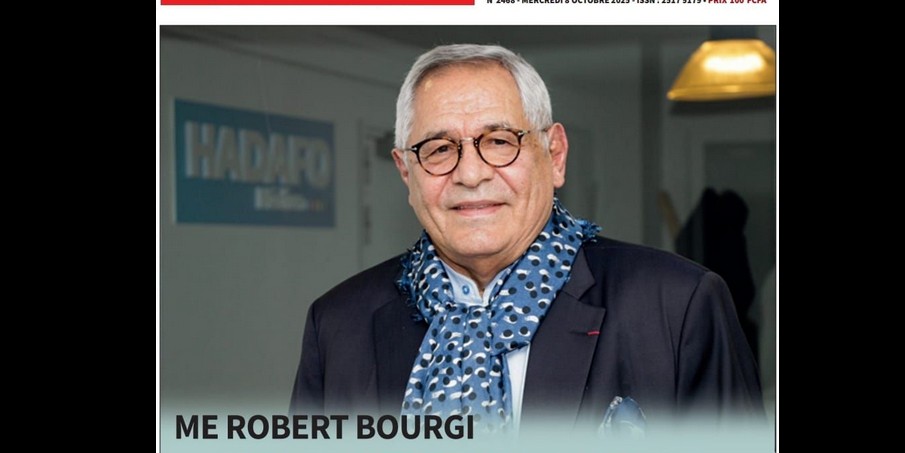
Robert Bourgi Turns on Paul Biya, Declares Him a Political Corpse
- News Team
- 10.Oct.2025
- Details
- Editorial

Heat in Maroua: What Biya’s Return Really Signals
- News Team
- 08.Oct.2025
- Details
- Editorial

Issa Tchiroma: Charles Mambo’s “Change Candidate” for Cameroon
- News Team
- 11.Sep.2025
- Details
- Editorial


