Health
- Details
- Health
The World Health Organization (WHO) says the cases of new Ebola infections in West Africa increased during the last week of January. In the first weekly increase in new Ebola cases in 2015, the United Nations health agency said on Wednesday that 124 new cases had been registered in the three West African countries affected the most by the virus. The organization said that Sierra Leone had registered 80 new cases, Guinea 39, and Liberia five.
The WHO added that the recent rise in Ebola cases was partly due to unsafe local burial practices. “An unsafe burial that took place in early January in the (Guinean) eastern prefecture of Lola, on the border with Côte d’Ivoire, has so far resulted in an outbreak of 11 confirmed cases,” the WHO said. This comes as West Africa had witnessed a decline in the number of Ebola cases for weeks.
The UN organization has announced the need to step up efforts ahead of the April-May rainy season, which can make it difficult for health teams to travel. Ebola is a form of hemorrhagic fever, whose symptoms are diarrhea, vomiting, and bleeding. The virus spreads through direct contact with infected blood, feces, or sweat. It can be also spread through sexual contact or the unprotected handling of contaminated corpses. It has claimed the lives of some 9,000 people since December 2013.
- Details
- Ngwa Bertrand
- Hits: 2375
- Details
- Health
A report says despite allocation in international pledges of at least USD 2.89 billion (EUR 2.52 billion) to efforts aimed at curbing the deadly Ebola virus, only about one-third of the sum has been paid out. The British Medical Journal published the report on Tuesday, blaming delays in requests for funding and translating of pledges into paid contributions. “Like the international response, contributions to fight the epidemic were slow to take off,” said the report by Karen Grepin, assistant professor of global health policy at New York University.
It added that the World Bank had pledged USD 230 million, but paid out only USD 117 million. “We need a mechanism to enable more rapid disbursement of funds to fight public health threats such as Ebola,” the report said, adding that “existing contracting mechanisms are too slow.”Ebola is a form of hemorrhagic fever, whose symptoms are diarrhea, vomiting, and bleeding. The virus spreads through direct contact with infected blood, feces, or sweat. It can be also spread through sexual contact or the unprotected handling of contaminated corpses.
According to the World Health Organization, the death toll from the Ebola outbreak in the three hardest-hit West African countries of Guinea, Sierra Leone, and Liberia has risen to nearly 9,000. David Nabarro, the senior UN coordinator for Ebola, told reporters in the Ethiopian capital, Addis Ababa, on January 29 that “the epidemic is not contained yet” across the three nations.
- Details
- Ngwa Bertrand
- Hits: 2207
- Details
- Health
The World Health Organization (WHO) has appointed its assistant director general to coordinate the overall response to the deadly outbreak of Ebola virus plaguing West African countries. The UN health agency’s spokeswoman, Fadela Chaib, told a press briefing in Geneva on Tuesday that WHO Director General Margaret Chan has “appointed Dr. Bruce Aylward as the Special Representative for the Ebola Response with immediate effect.”
Aylward, a Canadian national, has been tasked with coordinating all the different aspects of the agency´s response to the devastating epidemic, said the official. Chaib added that the new WHO representative will closely work with international organizations and the three worst-hit West African states, namely Liberia, Guinea and Sierra Leone, to help control the spread of the Ebola outbreak. Meanwhile, sources say the WHO plans to set up an independent commission to assess the agency’s response to the epidemic. The assessment commission is expected to present an interim report in May and conduct a full review of the agency’s handling of the endemic.
The developments come as the UN agency has faced blistering criticism that its response has been slow and shoddy. The United Nations has recently warned that the spread of the deadly Ebola virus is not fully controlled yet despite a significant fall in the number of new cases across West Africa. Ebola is a form of hemorrhagic fever, whose symptoms are diarrhea, vomiting, and bleeding. The virus spreads through direct contact with infected blood, feces, or sweat. It can be also spread through sexual contact or the unprotected handling of contaminated corpses.
- Details
- Ngwa Bertrand
- Hits: 2525
- Details
- Health
The first large-scale trials of two experimental vaccines against Ebola have begun in Liberia. The potentially preventative medicines were taken under strict security to a secret location in the West African country. Scientists aim to immunise 30,000 volunteers, including front-line health workers. More than 8,500 people have died in the Ebola outbreak, the vast majority in Guinea, Liberia and Sierra Leone. The total number of reported cases is more than 21,000. In Liberia alone, more than 3,600 people have died from the disease. But the number of Ebola cases in Liberia has been steadily decreasing, with only five confirmed cases in recent months. According to the World Health Organization (WHO), the epidemic has entered a "second phase" with the focus shifting to ending the epidemic.
The trial beginning on Monday involves injecting a small amount of a strain of the Ebola virus into 12 volunteers in order to trick the body into producing an immune response. More volunteers will be immunised as the trial progresses. However, it is not yet clear whether the trial vaccines will offer protection against the disease. The vaccine is still experimental and it is not clear whether it will definitely provide protection against Ebola. Vaccines train the immune systems of healthy people to fight off any future infection. They often contain a live but weakened version of the virus. Correspondents say the trials are testing two vaccines created by two different drug companies who are hoping that the international community will eventually seek to stockpile large quantities of a working vaccine.
The first man to receive the vaccine was a middle-aged Liberian, the BBC's Mark Doyle reports from the Liberian capital Monrovia. Asked how he felt after his jab, he smiled and gave me the thumbs-up, our correspondent says. The senior Liberian scientist involved in the trials, Stephen Kennedy, told the BBC the volunteers were safe. "There is no danger because the piece of the Zaire strain that has been put into the vaccine is a weak strain and it cannot and will not cause Ebola, so it is impossible that any one of the volunteers will contract Ebola from the vaccine," Mr Kennedy said. The scientists are well aware of how important the support of local people will be if this trial is to work, our correspondent says. Community nurses are being trained in how to monitor volunteers in the months after they have their injections. Parts of the largest Ebola treatment centre in the world, on the edge of Monrovia, are being knocked down, our correspondent says.
Survival rate for the current outbreak is around 40%. The scale of the outbreak has sparked a race to find a cure for the disease, with many vaccines and drugs being fast-tracked for human testing. Safety trials for potential vaccines have taken place in the UK and in Switzerland and two potential drugs have been tested at Ebola treatment facilities run by medical charity Medecins Sans Frontieres. Doctors have also been trialling serum therapy, a treatment made from the blood of Ebola survivors who have recovered. Symptoms include high fever, bleeding and central nervous system damage spread by body fluids, such as blood and saliva. Fatality rate can reach 90% - but current outbreak has mortality rate of about 59%.Incubation period is two to 21 days No proven vaccine or cure. Supportive care such as rehydrating patients who have diarrhoea and vomiting can help recovery. Fruit bats, a delicacy for some West Africans, are considered to be virus's natural host.
- Details
- Ngwa Bertrand
- Hits: 2195
- Details
- Health
MONROVIA, Liberia — Life is edging back to normal after the deadliest Ebola outbreak in history.
At the height of the epidemic, Liberians met horrific deaths inside the blue-painted walls of the Nathaniel V. Massaquoi Elementary School, as classrooms became Ebola holding centers and the education of a nation’s children, shut in their homes for safety, was abruptly suspended.
Now, parents are streaming into the schoolyard once again, not to visit their stricken loved ones, but with their restless children in tow, registering for the start of classes in a delayed and shortened academic year.
Eager to learn and to play with her friends again, Florence Page, 11, bounded ahead, brimming with pent-up energy, as her mother, Mabel Togba, paused to look warily into the school building through its padlocked metal screen doors.
“They still haven’t told us that Liberia is free of Ebola, so I’m still afraid,” said Togba. “But it’s better than to leave my children at home doing nothing.”
New cases in Liberia, where streets were littered with the Ebola dead just a few months ago, now number in the single digits, according to the World Health Organization. In neighboring Sierra Leone and Guinea, the other two nations in the Ebola hot zone, new cases have fallen sharply in the last month, to fewer than 100 in a week at the end of January — a level not seen in the region since June.
With a virus as deadly as Ebola, officials warn that the epidemic will not be over until cases reach zero in all three countries. But after nearly 9,000 deaths from the disease, the WHO announced last week that it was focusing on a goal that had seemed out of reach for much of last year: ending the Ebola epidemic, no longer simply slowing its spread.
- Details
- Ngwa Bertrand
- Hits: 2275
- Details
- Health
The African Union says it plans to launch an Ebola fund and disease control center in order to tackle the epidemic across the continent. AU Commissioner for Social Affairs Mustapha Sidiki Kaloko said in the Ethiopian capital, Addis Ababa, on Wednesday that the African Center for Disease Control and Prevention would be set up by mid-2015. “It is a reality, it is going to happen,” Kaloko said, adding, “We should be ready the next time. We shouldn’t be caught unprepared.” The senior official noted that the first phase would concentrate on setting up an early warning system for the detection of the virus. He also promised to set up a major coordination center and several sub-centers across Africa. Meanwhile, Nkosazana Dlamini-Zuma, the chairperson of the African Union Commission, also vowed to mobilize regional resources to prevent the spread of Ebola, saying, “It is time for Africa to mobilize its own resources in support of its development and take charge of its own destiny.”
In November 2014, the African Development Bank in close coordination with regional business leaders set up a crisis fund to help areas hit by the Ebola outbreak. Donors pledged USD 28 million to increase support for the battle against the epidemic. The African Union has already sent hundreds of health workers as part of its mission to tackle the outbreak in West Africa. According to the World Health Organization, the death toll from the Ebola outbreak in the three hardest-hit West African countries of Guinea, Sierra Leone and Liberia has exceeded 8,000. Ebola is a form of hemorrhagic fever, whose symptoms are diarrhea, vomiting, and bleeding. The virus spreads through direct contact with infected blood, feces, or sweat. It can be also spread through sexual contact or the unprotected handling of contaminated corpses.
Presstv
- Details
- Ngwa Bertrand
- Hits: 2268
Flourish Doctor Article Count: 3
Meet Your Coach Dr. Joyce Akwe ... With a master's in public health and a medical doctor specialized in internal medicine with a focus on hospital medicine.
Dr. Joyce Akwe is the Chief of Hospital Medicine at the Atlanta VA Health Care System (Atlanta VAHCS), an Associate Professor of Medicine at Emory University School of Medicine and an Adjunct Faculty with Morehouse School of Medicine in Atlanta GA.
After Medical school Dr. Akwe worked for the World Health Organization and then decided to go back to clinical medicine. She completed her internal medicine residency and chief resident year at Morehouse School of Medicine. After that, she joined the Atlanta Veterans VAHCS Hospital Medicine team and has been caring for our nation’s Veterans since then.
Dr. Akwe has built her career in service and leadership at the Atlanta VA HealthCare System, but her influence has extended beyond your work at the Atlanta VA, Emory University, and Morehouse School of Medicine. She has mentored multiple young physicians and continuous to do so. She has previously been recognized by the Chapter for her community service (2010), teaching (as recipient of the 2014 J Willis Hurst Outstanding Bedside Teaching Award), and for your inspirational leadership to younger physicians (as recipient of the 2018 Mark Silverman Award). The Walter J. Moore Leadership Award is another laudable milestone in your car
Dr. Akwe teaches medical students, interns and residents. She particularly enjoys bedside teaching and Quality improvement in Health care which is aimed at improving patient care. Dr. Akwe received the distinguished physician award from Emory University School of medicine and the Nanette Wenger Award for leadership. She has published multiple papers on health care topics.
Local News
- Details
- Society

Kribi II: Man Caught Allegedly Abusing Child
- News Team
- 14.Sep.2025
- Details
- Society

Back to School 2025/2026 – Spotlight on Bamenda & Nkambe
- News Team
- 08.Sep.2025
- Details
- Society

Cameroon 2025: From Kamto to Biya: Longue Longue’s political flip shocks supporters
- News Team
- 08.Sep.2025
- Details
- Society

Meiganga bus crash spotlights Cameroon’s road safety crisis
- News Team
- 05.Sep.2025
EditorialView all
- Details
- Editorial
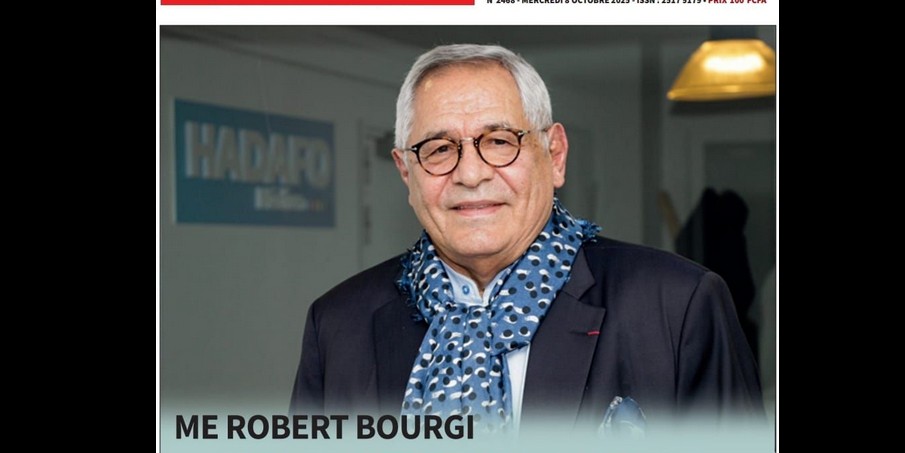
Robert Bourgi Turns on Paul Biya, Declares Him a Political Corpse
- News Team
- 10.Oct.2025
- Details
- Editorial
Heat in Maroua: What Biya’s Return Really Signals
- News Team
- 08.Oct.2025
- Details
- Editorial

Issa Tchiroma: Charles Mambo’s “Change Candidate” for Cameroon
- News Team
- 11.Sep.2025
- Details
- Editorial


