Headlines
- Details
- Headlines
Cameroon has accepted an Economic Partnership Agreement (EPA) with the European Union on the dismantling of customs barriers, even though it told members of a regional bloc it would hold out for a better deal.
Cameroon's decision to accept an Economic Partnership Agreement (EPA) with the European Union puts it at loggerheads with the five other members of Central African Economic and Monentary Community (CEMAC), which are Central African Republic, Chad, Republic of Congo, Equatorial Guinea and Gabon.
A week ago, CEMAC leaders met in Malabo, capital of Equatorial Guinea, and the consensus was that they would only sign an agreement that was fair and balanced. But on August 4, Cameroon reneged on the deal and ratified its existing draft EPA.
Civil society activist Jean Paul Fouda told university students in Yaounde that "Cameroon is a shameless state in Central Africa, since it has betrayed other nations."
He said Cameroon earns 600 billion CFA francs ($1 billion, 895 million euros) in customs duties every year and "President Paul Biya is asking us not to collect the revenue from the Europeans? Let's be serious," Fouda added.
Lawmaker Njong Evaristus told DW that Cameroon's budget depends on customs duties and the country was at disadvantage compared to the EU. "We don't have developed industries that are up to a level that they can compete with industries in Europe," he said. A trade imbalance was more or less inevitable. "We are a country that is dealing with agricultural products and the rest and they are dealing with goods that are already finalized goods."
Tabe Nkongho, an economist at the University of Buea, is suspicious of the EPA. If it really is going to benefit Africa and Cameroon, as its supporters claim, why then do they feel the need to push so hard for its adoption. Nkongho believes the EPA is a drive in favor of the "capitalist mode of production which benefits the capitalist states but not the peripheral states in the world economy."
Deadline postponed
African countries were given until October 2014 to ratify EPAs, otherwise the preferential treatment their exports were already receiving on European markets would be suspended. Emmanuel Nganou Ndjoumessi, a former economy minister and now minister of works, was on the negotiating team that secured an extension of the deadline until August 1, 2016. He said Cameroon ratified the agreement in order to continue selling its goods without paying customs duties.
"We have been selling to the European Union without paying customs duties and, as a consequence, we could easily sell our bananas, chocolates, beans and so on," Ndjoumessi said.
Francoise Collet, head of the EU delegation to Cameroon, said she was urging other central African states to ratify their EPAs as well. They could help protect their poor populations by liberalizing their economies. One of the goals of the EPAs was to encourage African, Caribbean and Pacific (ACP) countries to negotiate with the EU in regional groupings rather than individually.
"It will be a safer environment for trade, for expanding trade between our regions and also within regions, that's one of our hopes. It's not only a trade agreement, it's a development agreement."
Critics doubt that EPAs are the solution to Africa's economic problems, believing instead that they subjugate ACP economies to the needs of European capital.
DW
- Details
- Rita Akana
- Hits: 3917
- Details
- Headlines
Zimbabwe’s government is drafting a law to penalize “abusive” usage of social media with five-year jail terms in its latest measures to regulate the cyber space law and order, the state media has reported.
The legislation, which is contained in the Computer Crime and Cyber Crime Bill would supplement the National ICT Policy which is still being developed, and is part of the government’s response to recent anti-government protests that have largely been organized and shared via social media. Hashtags such as #ThisFlag have attracted large numbers of followers.
Many Zimbabweans rely on Twitter and WhatsApp, which have been used to rally mass participation in demonstrations. In July, the government temporarily blocked access to WhatsApp, as it faced protests over its inability to pay civil servants salaries.
The government’s planned legislation would allow authorities to arbitrarily seize mobile phones, tablets and laptops; monitor private communications; interrupt broadband service; and sentence violators to imprisonment.
Critics have however warned that the legislation would severely limit citizens access to information.
African News
- Details
- Rita Akana
- Hits: 1177
- Details
- Headlines
The official launch of the new National Identification Cards system was held on Tuesday,August 9 2016 at the national center for the production of identity Securities in Yaounde.The launch was chaired by the secretary general to the presidency of Cameroon, Mr Ferdinand Ngoh Ngoh. The new identification system was authorized in two decrees signed by the Cameroonian president on 4th, August 2016.
One updating the characteristics and issuance of the National Identity Card, and the other on the organization of the functions of the National Centers of identification.
Minister Ferdinand Ngoh Ngoh lauded the system, calling it a means to counter the falsification of documents.
The new sytem will help the General Delegation for National Security to produce crime statistics and trace records of suspects.
Another of its exceptional features is the possibility of the two machines set up to produce up to about 600 identity cards per hour.
According to GEMALTO, the company charged with producing the project, the cards are polycarbonate and include the use of advanced technology and software; a system they say many countries are highly solliciting.
After the Yaounde centre for production situated around the Police Medical Centre, an annex centre will be created in Garoua and then 50 mobile posts will be created all over the country before the end of 2016.
In the meantime, the old National Identity Cards will remain in use till they expire.
CRTV
- Details
- Rita Akana
- Hits: 2655
- Details
- Headlines
Congolese authorities have refused to renew the visa of a prominent American human rights activist, the government said on Tuesday, a decision that follows expulsions of other foreign researchers in a tense election year.
Government spokesman Lambert Mende did not say why the visa of Ida Sawyer, U.S.-based Human Rights Watch's senior researcher in Democratic Republic of Congo, was not renewed or when she would need to leave the country.
Sawyer declined to comment on Tuesday.
Sawyer, who has worked for Human Rights Watch in Congo since 2008, has been among the most vocal critics of what the United Nations and rights groups say is a growing crackdown on dissent before elections scheduled for November.
Term limits require that President Joseph Kabila, in power since 2001, step down after the polls, but opponents accuse him of delaying the vote to hold onto power. The government says that enrolling new voters will take more than a year.
Dozens of people were killed in anti-government protests in January 2015 over a proposed revision to the country's electoral code that could have delayed the election by years.
Sawyer criticised security forces at the time of using "unlawful and excessive force". In January this year, she called for targeted sanctions against officials responsible for violence against civilians.
The government denies using excessive force against protesters or targeting its political opponents.
The U.S. government imposed sanctions on the capital Kinshasa's police chief in June for what it described as the violent suppression of opposition to Kabila's government.
The Congolese government in April expelled Jason Stearns, the American director of New York University's Congo Research Group, shortly after he published a report linking soldiers to massacres of civilians.
Two Global Witness activists investigating logging practices were also forced to leave last month, accused of inciting a local community to revolt. The London-based NGO denied the allegations.
Reuters
- Details
- Rita Akana
- Hits: 1395
- Details
- Headlines
Uganda to get a machine that will detect porn pictures, videos or graphics taken or saved on one’s phone, computer or camera in any form reports the New Vision.
The Machine worth 300 million Ugandan shillings, approximately 88,812 US dollars, will detect, control and scrutinize porn on mobile handsets and other electronic devices.
A South Korean company will supply the machine once the Ministry of Ethics gets their budget allocation.
An anti-pornography committee will monitor and implement the law.
“We have appointed the anti-pornography committee, but it had not been launched due to lack of finance, but the Government has now approved the money to activate the operations,” said Ethics minister Fr. Simon Lokodo
Those found guilty of breaching the Act that prohibits pornography under the anti-pornography law states that subsection (I) a person shall not produce, traffic in, publish, broadcast, procure, import, export, sell or abet form of pornography, will receive a fine not exceeding five hundred currency points (10,000,000 Ugandan shillings) or an imprisonment not exceeding 10 years or both.
Uganda is looking to curb the rising cases of people publishing pornographic content on social media platforms to expose and publish nude pictures to the public. Furthermore media houses that publish pornographic content will be closed.
- Details
- Rita Akana
- Hits: 1486
- Details
- Headlines
New appointments have been made at Cameroon Radio Television, CRTV, less than a year after the now imprisoned General Manager, Ahmadou Vamoulke made sweeping changes. The appointments came at the end of the 38 Ordinary board meeting of the institution, chaired by Communication minister and board chairman, Issa Tchiroma BAKARY.
Some posts of responsibilities have simply been changed and given new heads by the new team. Ibrahim Cherif has been promoted to Director of Central Television ,he replaces Charles Ndongo, now General Manager, News Anchor Adele Mballa formerly Chief of Station Centre Region now replaces Ibrahim Cherif as Director of TV News.
Margaret FOMBE has taken the post of responsibility of Director of TV production from Director of Programs; she has been replaced by Dr Emmanuel MBEDE as Director of programs. Veteran former Editor in Chief English radio news desk, FUL Peter, has been called back from retirement and appointed Editorialist with rank of Director Kelvin MBUNDA is new station manager of the CRTV East.
WINNYAWOKO MOTALE, ASHU NYENTY, KANGE Williams WASSALOKO were both appointed as senior reporters with rank of sub directors. Jean Marie NKA replaces Marc OMBUI as Editor-In-Chief Television News, while Marc OMBUI replaces Adele MBALLA as station manager CRTV Centre. Madeleine MBONOU is the strong woman at CRTV Marketing and Communication Agency, CMCA, she replaces Emmanuel WONGIBE, now Deputy General Manager at CRTV.
- Details
- Prince Nfor Hanson
- Hits: 2892
Breaking News Article Count: 2
# Breaking News
Get the latest and most urgent news from Cameroon and the world with our breaking news section. We deliver you the news as it happens, with live updates, alerts, and analysis. You'll find out about the major events and incidents that affect Cameroon and its people, such as conflicts, disasters, elections, and protests. Our breaking news section also provides you with the reactions and responses from the authorities, experts, and the public. Stay tuned and stay informed with our breaking news section.
Out of Cameroon Article Count: 10
# Top Stories out of Cameroon
Don't miss the most important and trending news out of Cameroon and beyond Africa with our top stories section. We bring you the latest and breaking news from various domains, such as politics, economy, health, security, and diplomacy. You'll also find exclusive reports, investigations, and features that showcase the diversity and challenges of Cameroonians in the diaspora. Our top stories section is updated regularly to keep you informed and aware of the current affairs and developments in the world.
Local News
- Details
- Society

Kribi II: Man Caught Allegedly Abusing Child
- News Team
- 14.Sep.2025
- Details
- Society

Back to School 2025/2026 – Spotlight on Bamenda & Nkambe
- News Team
- 08.Sep.2025
- Details
- Society

Cameroon 2025: From Kamto to Biya: Longue Longue’s political flip shocks supporters
- News Team
- 08.Sep.2025
- Details
- Society

Meiganga bus crash spotlights Cameroon’s road safety crisis
- News Team
- 05.Sep.2025
EditorialView all
- Details
- Editorial
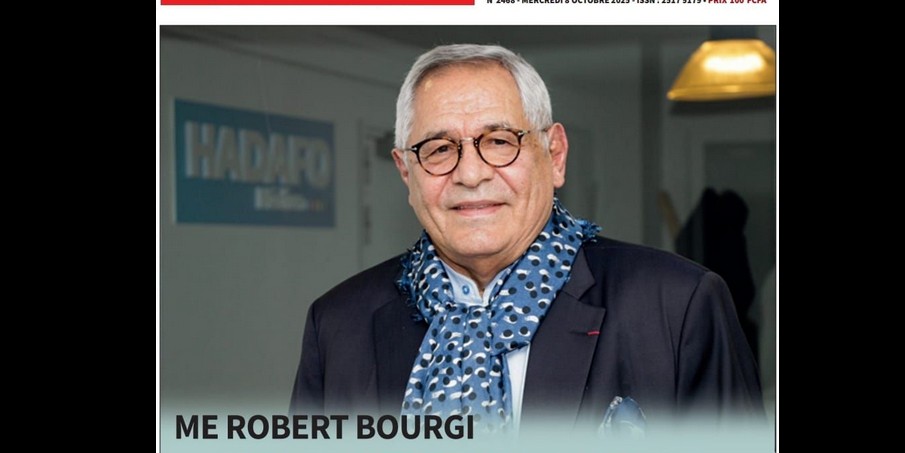
Robert Bourgi Turns on Paul Biya, Declares Him a Political Corpse
- News Team
- 10.Oct.2025
- Details
- Editorial
Heat in Maroua: What Biya’s Return Really Signals
- News Team
- 08.Oct.2025
- Details
- Editorial

Issa Tchiroma: Charles Mambo’s “Change Candidate” for Cameroon
- News Team
- 11.Sep.2025
- Details
- Editorial


